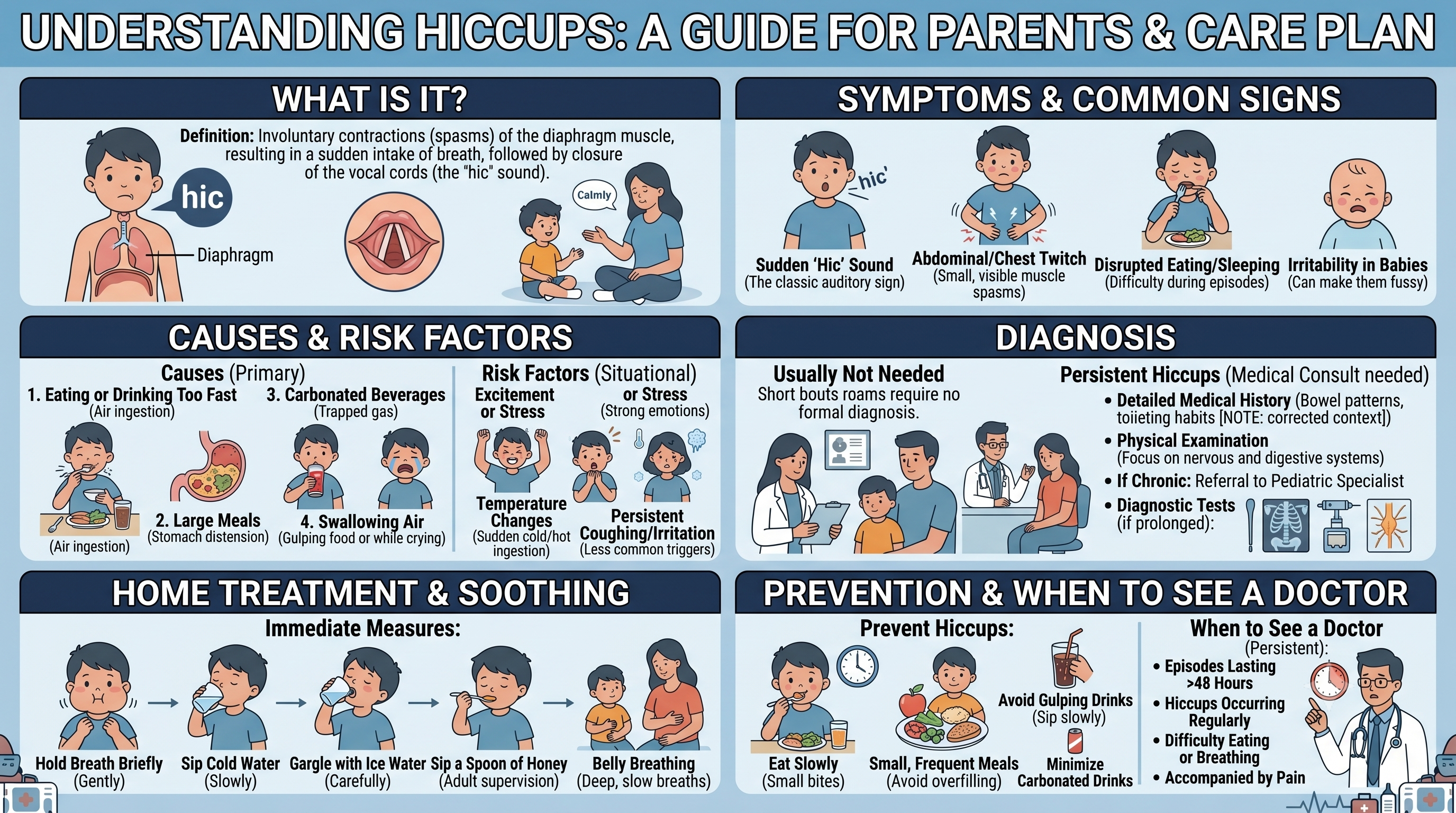
Hiccups are sudden, involuntary spasms of your diaphragm, the large muscle separating your chest from your abdomen that's essential for breathing. Each spasm causes your vocal cords to close suddenly, creating the familiar "hic" sound. While often harmless and brief, lasting just a few minutes, hiccups can sometimes persist for days, weeks, or even months. Common triggers include eating large meals, drinking fizzy or alcoholic beverages, sudden excitement, or abrupt temperature changes. Rarely, prolonged hiccups may signal an underlying health issue and can significantly impact daily life, leading to problems with eating, sleeping, and severe tiredness.
Understanding the Condition
Hiccups: Understanding and Managing Them
Understanding the Condition
Common Symptoms
Diaphragm Spasms: Uncontrolled, rhythmic jerking movements in the diaphragm muscle.
"Hic" Sound: A characteristic sharp sound produced as vocal cords close suddenly.
Chest, Stomach, or Throat Sensation: Sometimes, a slight feeling of tightness or mild discomfort in these areas may precede or accompany the hiccup.
Consultation Guide
Which Specialist to Meet
Initially, consult your general practitioner (family doctor). If your hiccups are prolonged, severe, or linked to other symptoms, your doctor might refer you to a specialist such as a neurologist (for nerve-related issues), a gastroenterologist (for digestive concerns), or an ear, nose, and throat (ENT) specialist.
Preparations Before Your Visit
Before your appointment, be prepared to discuss when your hiccups started, how long they typically last, how often they occur, and any potential triggers. Note if they interfere with eating, sleeping, or breathing, and mention any other symptoms you might be experiencing.
Book a doctor visit near me
During the exam, your doctor will ask about your medical history and perform a series of tests to evaluate your mental status, coordination, reflexes, muscle strength, sensation, and balance. This might involve tasks like following a finger with your eyes, walking heel-to-toe, tapping your fingers, or responding to light touches. The exam duration varies, from a few minutes to over an hour, depending on your symptoms and the findings.
Other Symptomatic Relief: Depending on the suspected cause (e.g., acid reflux), specific drugs might be used to address underlying triggers. (Duration: As directed by a healthcare professional.)
Nerve Blocks: Injections of anesthetic near the phrenic nerve (controlling the diaphragm) can temporarily block nerve activity to stop severe, persistent hiccups. (Duration: Relief can last hours to days, aiming to break the hiccup cycle.)
Alternative Therapies: Acupuncture or hypnosis may be explored for persistent hiccups, though their effectiveness varies among individuals. (Duration: Variable.)
Surgical Intervention (Very Rare)
Address Underlying Conditions: If your hiccups are chronic or severe, they might be a symptom of an underlying medical issue. Working with your doctor to diagnose and treat these conditions is crucial for long-term relief.
Consultation Guide
Hiccups are sudden, involuntary spasms of your diaphragm, the large muscle separating your chest from your abdomen that's essential for breathing. Each spasm causes your vocal cords to close suddenly, creating the familiar "hic" sound. While often harmless and brief, lasting just a few minutes, hiccups can sometimes persist for days, weeks, or even months. Common triggers include eating large meals, drinking fizzy or alcoholic beverages, sudden excitement, or abrupt temperature changes. Rarely, prolonged hiccups may signal an underlying health issue and can significantly impact daily life, leading to problems with eating, sleeping, and severe tiredness.
You will lie on a motorized table that slides into a large, tunnel-like machine. You'll need to remain very still during the scan. The machine may make some whirring or clicking noises. Sometimes, a special dye (contrast material) is given orally or injected into a vein to highlight certain areas, which might cause a temporary warm sensation or metallic taste. The scan can take from a few minutes to half an hour.
Neurological Examination
A neurological exam assesses the function of your nervous system, which includes your brain, spinal cord, nerves, and muscles. It helps your healthcare team identify any underlying nervous system conditions that might be contributing to your hiccups, especially if they are long-lasting.
Muscle Relaxants and Nerve Agents: For persistent hiccups, doctors may prescribe medications that relax the diaphragm or calm overactive nerve signals. (Duration: As prescribed, typically from a few days to weeks, varying by cause.)
Identify and Avoid Triggers: Pay attention to what causes your hiccups. Common triggers include eating large meals quickly, drinking carbonated or alcoholic beverages, sudden excitement, or rapid changes in temperature. Avoiding these can reduce episodes.
Manage Stress and Anxiety: Emotional stress, excitement, and anxiety are known to trigger hiccups for some individuals. Practicing relaxation techniques, mindfulness, or seeking support for stress management can be beneficial.
Mindful Eating and Drinking: Eat slowly, chew food thoroughly, and avoid gulping drinks to prevent swallowing excess air, which can sometimes lead to hiccups.
Long-Term Management and Monitoring
Diagnostic Procedures
A chest X-ray uses a small amount of radiation to create images of the structures inside your chest, including your heart, lungs, blood vessels, airways, and the bones of your chest and spine. It helps doctors detect issues like lung infections, heart problems, collapsed lungs, or other abnormalities.
What to Expect
You will typically stand or sit against a special plate, and the technician will ask you to hold your breath for a few seconds while the image is taken. The procedure is quick, generally painless, and usually takes only a few minutes.
CT Scan (Computed Tomography Scan)
A CT scan combines a series of X-ray images taken from different angles around your body and uses computer processing to create detailed cross-sectional "slices" of your bones, blood vessels, and soft tissues. These images provide more detail than standard X-rays and are used to diagnose diseases or injuries and plan treatments.
What to Expect
What to Expect
Treatment Options
Breathing Maneuvers: Holding your breath, breathing into a paper bag, or trying to swallow rapidly can sometimes help reset the diaphragm's rhythm. (Duration: Immediate, temporary relief.)
Oral Stimulations: Drinking water quickly, gargling with ice water, sipping water from the opposite side of a glass, or eating a teaspoon of sugar can help interrupt the hiccup reflex. (Duration: Immediate, temporary relief.)
Medications (Prescription)
Phrenic Nerve Modulation: In extremely rare, severe cases unresponsive to all other treatments, surgical options like implanting a nerve stimulator or, as a last resort, partially cutting the phrenic nerve may be considered. (Duration: Potentially long-term or permanent relief, with significant risks.)
Prevention & Long-Term Wellbeing
Prevention Strategies
Lifestyle Adjustments: Maintaining a balanced diet, staying hydrated, and getting adequate rest can support overall health and potentially reduce the frequency of hiccups.
Monitor for Complications: Persistent hiccups can interfere with eating, drinking, sleeping, and speaking, potentially leading to weight loss and extreme tiredness. If this occurs, regular medical follow-ups are important to manage these impacts and prevent further issues.
Tags & Topics
Notice an error or need an update?
Help us keep medical information accurate. Report incorrect info or suggest an edit.


