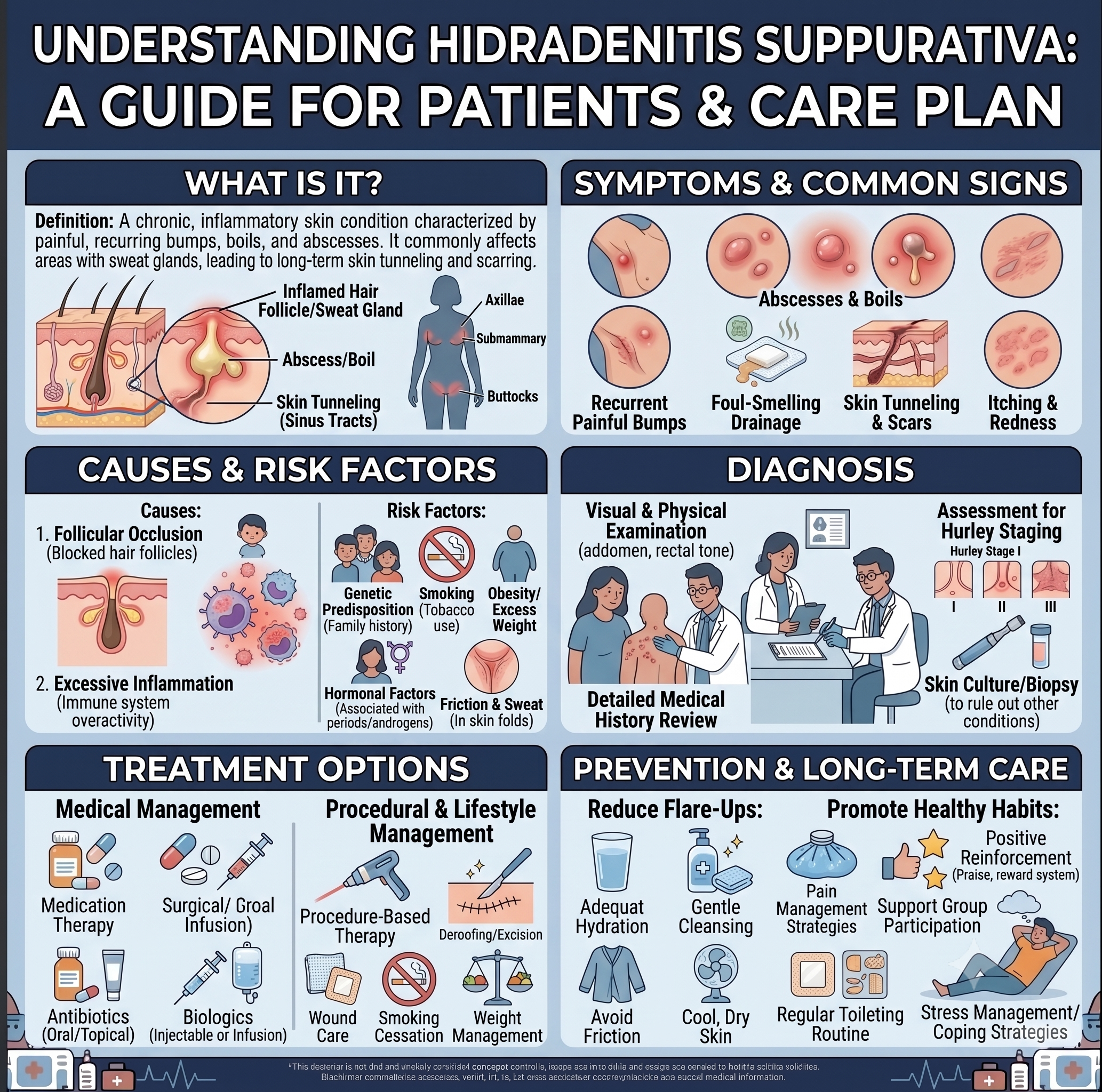
Hidradenitis Suppurativa (HS), pronounced hi-drad-uh-NIE-tis sup-yoo-ruh-TIE-vuh, also known as acne inversa, is a chronic skin condition that causes painful, pea-sized to larger lumps to form under the skin. These lumps typically appear in areas where skin rubs together, such as the armpits, groin, buttocks, and under the breasts. They heal slowly, often return, and can lead to tunnels beneath the skin and significant scarring. HS usually starts after puberty, often before age 40, and can persist for many years, sometimes worsening over time. It can significantly impact daily life and emotional well-being. Women are three times more likely to develop HS, and people of Black descent have a higher risk, possibly due to genetic factors. It is not caused by poor hygiene or infection, and it is not contagious. Effective management involves a combination of medical and surgical treatments to control symptoms and prevent complications.
Understanding the Condition
Hidradenitis Suppurativa: Understanding and Managing a Chronic Skin Condition
Understanding the Condition
Hidradenitis Suppurativa (HS), pronounced hi-drad-uh-NIE-tis sup-yoo-ruh-TIE-vuh, also known as acne inversa, is a chronic skin condition that causes painful, pea-sized to larger lumps to form under the skin. These lumps typically appear in areas where skin rubs together, such as the armpits, groin, buttocks, and under the breasts. They heal slowly, often return, and can lead to tunnels beneath the skin and significant scarring. HS usually starts after puberty, often before age 40, and can persist for many years, sometimes worsening over time. It can significantly impact daily life and emotional well-being. Women are three times more likely to develop HS, and people of Black descent have a higher risk, possibly due to genetic factors. It is not caused by poor hygiene or infection, and it is not contagious. Effective management involves a combination of medical and surgical treatments to control symptoms and prevent complications.
Common Symptoms
Blackheads: Small, dark, pitted areas of skin, often appearing in pairs, typically in the affected regions.
Painful Pea-Sized Lumps: The condition usually begins with a single, painful lump under the skin that can persist for weeks or months. More bumps may develop later, often in areas with many sweat and oil glands or where skin rubs together, like armpits, groin, buttocks, and breasts.
Leaking Bumps or Sores: Some lumps or sores can grow larger, eventually breaking open to drain pus, which may have an unpleasant odor.
Tunnels Under the Skin: Over time, inflamed areas can connect beneath the skin, forming channels or 'tunnels.' These wounds heal very slowly, if at all, and can continuously drain blood and pus.
Consultation Guide
Which Specialist to Meet
Before your visit, create a detailed list of your symptoms, including when they started, their severity, and how frequently they occur. Note all affected body areas and any over-the-counter or prescription treatments you have tried. Be prepared to discuss your medical history, including any family history of skin conditions, and how HS affects your daily life and emotional well-being. Write down any questions you have for your doctor.
Book a doctor visit near me
Your doctor will ask detailed questions about your symptoms, including when they first appeared, how they have progressed, their location, and their impact on your life. They will then thoroughly examine the affected skin areas for the characteristic lumps, blackheads, draining sores, and tunnels. The doctor will also inquire about your family medical history, lifestyle factors such as smoking and weight, and any other health conditions you may have, as these can be associated with HS.
Warm Compresses: Apply warm compresses to affected areas to help reduce pain and swelling. (Duration: As needed, for symptom relief)
Gentle Cleansing: Wash affected skin areas gently with a mild, antibacterial soap to help prevent secondary infections. (Duration: Daily, ongoing)
Loose Clothing: Wear loose-fitting, breathable clothing to minimize skin friction and irritation in susceptible areas. (Duration: Ongoing)
Over-the-Counter Pain Relievers: Use pain relievers available without a prescription to manage discomfort and reduce inflammation. (Duration: As needed, for symptom relief)
Quit Smoking: Smoking is strongly linked to worsening HS symptoms; quitting can significantly improve the condition. (Duration: Long-term, permanent cessation)
Incision and Drainage: A doctor carefully lances and drains individual painful lumps to provide immediate symptom relief. This is usually a temporary solution as lumps often recur. (Duration: Single procedure per lump, recurrence possible)
Laser Hair Removal: Targets hair follicles in affected areas to reduce blockages, which can prevent new lesions. (Duration: Multiple sessions over several months)
Botulinum Toxin Injections: May be injected into affected areas to reduce sweating, potentially improving some symptoms. (Duration: Every few months, as needed)
Punch Debridement: Removal of small, isolated lesions using a specialized punch tool. This is suitable for individual, non-connected bumps. (Duration: Single procedure for specific lesions)
Deroofing: A procedure where the 'roof' of skin tunnels is removed, allowing the underlying tissue to heal from the inside out. (Duration: Single procedure for specific tunnels, healing takes weeks)
Wide Excision: Surgical removal of all affected skin and underlying tissue in a problematic area, often followed by skin grafting or closure. This is for extensive, recurrent disease. (Duration: Single extensive procedure, healing takes weeks to months)
Maintain a Healthy Weight: Even a small amount of weight loss can significantly improve HS symptoms by reducing skin friction in areas where lumps commonly appear and impacting hormonal activity.
Quit Smoking: Tobacco use is strongly linked to worse HS symptoms and progression. Quitting smoking is one of the most impactful steps for managing the condition and improving overall health.
Adopt a Balanced Diet: Eat a nutritious, well-balanced diet. Some individuals find that avoiding dairy products and sugary foods may help manage symptoms, though scientific evidence is limited and more research is needed.
Manage Stress: Chronic stress can exacerbate symptoms and make it harder to focus on health goals. Developing stress-reduction techniques can improve overall well-being and symptom management.
Stay Physically Active: Engage in regular physical activity that minimizes skin friction, such as swimming or yoga, to improve overall health and mood. Consult your doctor for suitable exercise routines.
Symptom Management and Care
Practice Effective Wound Care: Proper wound care is crucial for healing, preventing infection, and reducing odor. Keep wounds clean and covered with appropriate dressings. Discuss the best type of dressing and changing schedule with your doctor.
Consultation Guide
Seek Support Systems: The location, drainage, and odor of sores can cause embarrassment and social isolation. Connecting with support groups or mental health professionals can help cope with anxiety, depression, and social challenges.
Build a Comprehensive Care Team: Beyond a dermatologist, consider involving a team including a surgeon, pain specialist, and mental health professional to address all aspects of living with HS for holistic care.
Diagnostic Procedures
A dermatologist is the primary specialist for diagnosing and treating hidradenitis suppurativa. For comprehensive care, a multidisciplinary team may be involved, including a surgeon (for advanced cases), a pain management specialist, and a mental health professional.
Preparations Before Your Visit
Clinical Examination and Medical History
Hidradenitis Suppurativa is primarily diagnosed by a doctor examining your skin and carefully reviewing your medical history. There are no specific blood tests, imaging scans, or biopsies that are routinely used for its diagnosis.
What to Expect
Treatment Options
Home Remedies and Self-Care
Medications
Topical Washes and Creams: Applied directly to the skin to reduce inflammation and fight bacteria, often for milder cases. (Duration: Daily, as prescribed)
Oral Antibiotics: Taken by mouth to combat bacterial infections and decrease inflammation. These may be prescribed for weeks to several months. (Duration: Weeks to months, as prescribed)
Anti-inflammatory Medications: Prescribed to reduce widespread inflammation and pain associated with HS. (Duration: As prescribed, often ongoing)
Hormone Therapy: May be used in women to help balance hormone levels, which can influence the condition. (Duration: Months to years, as prescribed)
Biologic Medications: Injectable medications that specifically target and block certain parts of the immune system to significantly reduce inflammation. (Duration: Long-term, as prescribed by a specialist)
Laser Surgery: Uses a laser to destroy affected tissue and hair follicles, which can be effective for localized disease. (Duration: Multiple sessions or a single procedure, depending on extent)
Improve Sleep Quality: Pain and itching from HS can disrupt sleep. Use prescribed treatments, apply cool compresses, wear loose pajamas, and establish a consistent sleep routine to enhance rest.
Collaborate on Pain Management: Work closely with your healthcare team to develop a comprehensive pain management plan. This may involve various medications, therapies, and strategies to reduce discomfort and improve quality of life.
Emotional and Social Support
Prevention & Long-Term Wellbeing
Weight Management: Losing excess weight can reduce skin friction in affected areas and may impact hormonal factors influencing HS. (Duration: Long-term lifestyle change)
Dietary Changes: Some individuals report improvement by avoiding dairy products and sugary foods, though more research is needed in this area. Consult your doctor before making significant dietary changes. (Duration: Ongoing, adjust as needed)
Lifestyle Management
Tags & Topics
Notice an error or need an update?
Help us keep medical information accurate. Report incorrect info or suggest an edit.


