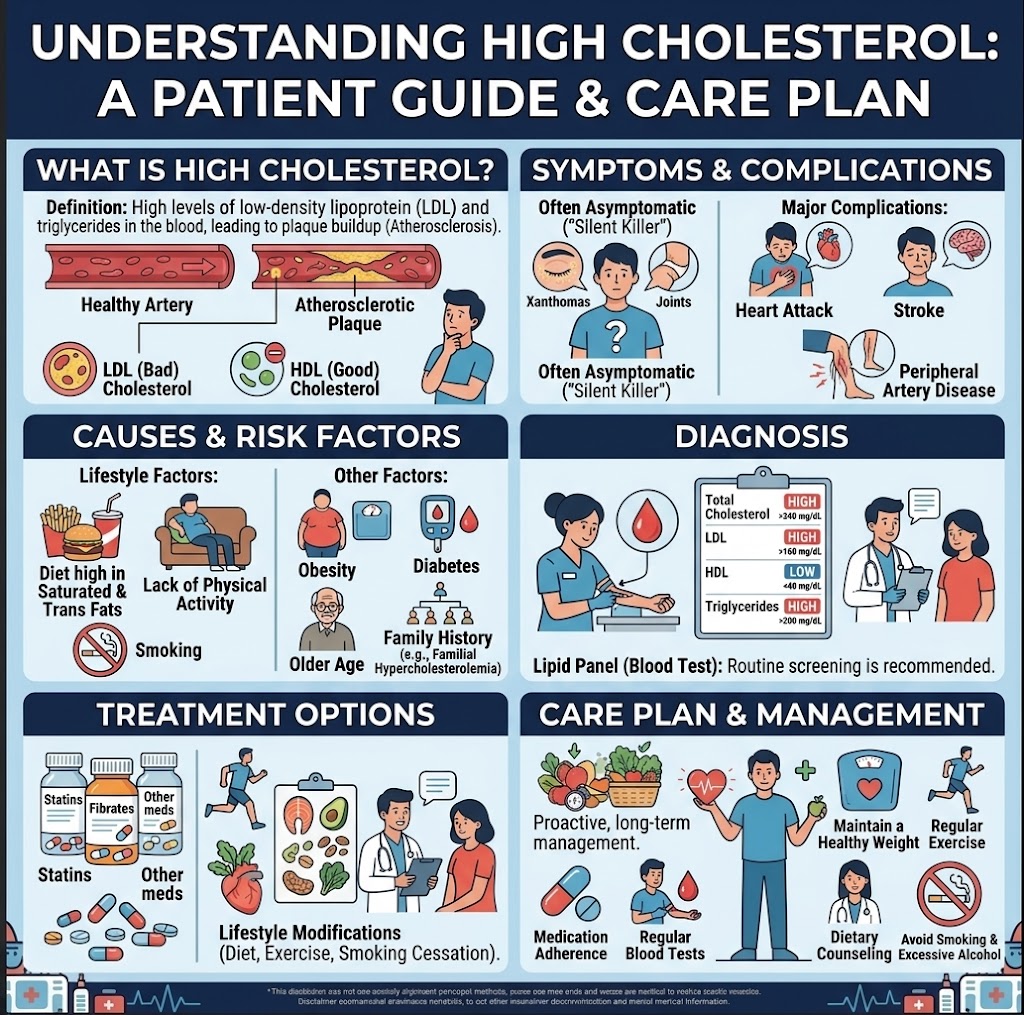
High cholesterol, also known as hypercholesterolemia, means having too much of a waxy, fat-like substance called cholesterol in your blood. While your body needs some cholesterol to build healthy cells, too much can be dangerous. There are two main types: 'bad' cholesterol (Low-Density Lipoprotein or LDL) which contributes to fatty deposits in your arteries, and 'good' cholesterol (High-Density Lipoprotein or HDL) which helps remove excess cholesterol. High levels of LDL cholesterol can narrow arteries, leading to serious problems like heart attack and stroke. This condition often has no symptoms, making regular screening vital for early detection and management.
Understanding the Condition
High Cholesterol Explained for Everyone
Understanding the Condition
High cholesterol, also known as hypercholesterolemia, means having too much of a waxy, fat-like substance called cholesterol in your blood. While your body needs some cholesterol to build healthy cells, too much can be dangerous. There are two main types: 'bad' cholesterol (Low-Density Lipoprotein or LDL) which contributes to fatty deposits in your arteries, and 'good' cholesterol (High-Density Lipoprotein or HDL) which helps remove excess cholesterol. High levels of LDL cholesterol can narrow arteries, leading to serious problems like heart attack and stroke. This condition often has no symptoms, making regular screening vital for early detection and management.
Common Symptoms
Silent Condition: High cholesterol itself typically causes no noticeable symptoms. Most people are unaware they have high cholesterol until they have a routine blood test or experience complications such as a heart attack or stroke, which are consequences of narrowed or blocked arteries caused by long-term high cholesterol.
Consultation Guide
Which Specialist to Meet
Regular Medical Check-ups: Even without symptoms, regular visits to your doctor for routine health screenings, including cholesterol checks, are crucial for early detection.
Consultation Guide
Cholesterol-Lowering Medications: If lifestyle changes aren't enough, your doctor may prescribe medications. These include drugs that reduce the liver's cholesterol production, medications that block cholesterol absorption from food, treatments that help remove cholesterol from the body, and injections for severe cases. The choice depends on your specific cholesterol levels and risk factors. (Duration: Often long-term or lifelong, as prescribed by your doctor)
Diagnostic Procedures
Start by consulting your primary care doctor. They can assess your risk and order initial tests. If your condition is complex or severe, or if you have existing heart disease, you may be referred to a cardiologist (a heart specialist).
Preparations Before Your Visit
Before your appointment, be prepared to discuss your medical history, any family history of heart disease or high cholesterol, and a list of all medications, vitamins, and supplements you are currently taking. Your doctor may ask you to fast for 9-12 hours before your blood test, so clarify this requirement beforehand. Write down any questions you have.
Book a doctor visit near me
Lipid Panel (Cholesterol Test)
This is a simple blood test that measures the levels of different types of fats and fat-like substances in your blood. It typically includes: * **Total Cholesterol:** The overall amount of cholesterol. * **Low-Density Lipoprotein (LDL) Cholesterol:** Often called 'bad' cholesterol; high levels increase heart disease risk. * **High-Density Lipoprotein (HDL) Cholesterol:** Often called 'good' cholesterol; higher levels are generally protective. * **Triglycerides:** Another type of fat in your blood; high levels can also increase heart disease risk.
What to Expect
You will likely be asked to fast (not eat or drink anything except water) for 9 to 12 hours before the test to ensure accurate results. A healthcare professional will draw a small sample of blood, usually from a vein in your arm, using a needle. You might feel a brief pinch or sting. The blood is collected in a tube and sent to a lab for analysis. The procedure is quick, usually taking only a few minutes, and you can typically resume your normal activities immediately afterward. Mild bruising at the injection site is possible.
Regular Lipid Panel Tests: Follow your doctor's recommendations for follow-up cholesterol tests to monitor your levels and adjust treatment as needed.
Monitor Blood Pressure and Blood Sugar: High blood pressure and diabetes are often linked with high cholesterol and can worsen heart health risks. Manage these conditions effectively.
Ongoing Doctor Consultations: Regular follow-up with your primary care doctor or specialist ensures your condition is well-managed and helps address any new concerns.
Treatment Options
Medications
Consistent Adherence to Treatment Plan: If prescribed medication, take it exactly as directed. Continue practicing healthy lifestyle habits diligently.
Prevention & Long-Term Wellbeing
Lifestyle Changes (Home Remedies)
Heart-Healthy Diet: Focus on a diet rich in fruits, vegetables, whole grains, lean proteins, and healthy fats (like those found in olive oil or avocados). Limit foods high in saturated fats (red meat, full-fat dairy), trans fats (fried foods, processed snacks), and dietary cholesterol. Reduce sugar and refined carbohydrates. (Duration: Lifelong)
Regular Physical Activity: Aim for at least 150 minutes of moderate-intensity aerobic exercise or 75 minutes of vigorous exercise per week. Activities like brisk walking, swimming, cycling, or jogging can help raise 'good' HDL cholesterol and lower 'bad' LDL cholesterol. (Duration: Ongoing, lifelong)
Weight Management: If you are overweight or obese, losing even a small amount of weight can significantly improve cholesterol levels. (Duration: Ongoing)
Quit Smoking: Smoking damages blood vessels and lowers HDL cholesterol. Quitting is one of the most effective ways to improve your cholesterol and overall heart health. (Duration: Permanent cessation)
Moderate Alcohol Consumption: If you drink alcohol, do so in moderation. Excessive alcohol intake can increase triglyceride levels. (Duration: Ongoing)
Prevention
Maintain a Healthy Lifestyle: Adopting a heart-healthy diet, getting regular exercise, and maintaining a healthy weight are fundamental to preventing high cholesterol from developing or worsening.
Avoid Tobacco Products: Smoking and exposure to secondhand smoke significantly increase the risk of high cholesterol and related heart problems.
Limit Saturated and Trans Fats: Be mindful of food labels and choose foods low in unhealthy fats to keep your cholesterol levels in check.
Tags & Topics
Notice an error or need an update?
Help us keep medical information accurate. Report incorrect info or suggest an edit.


