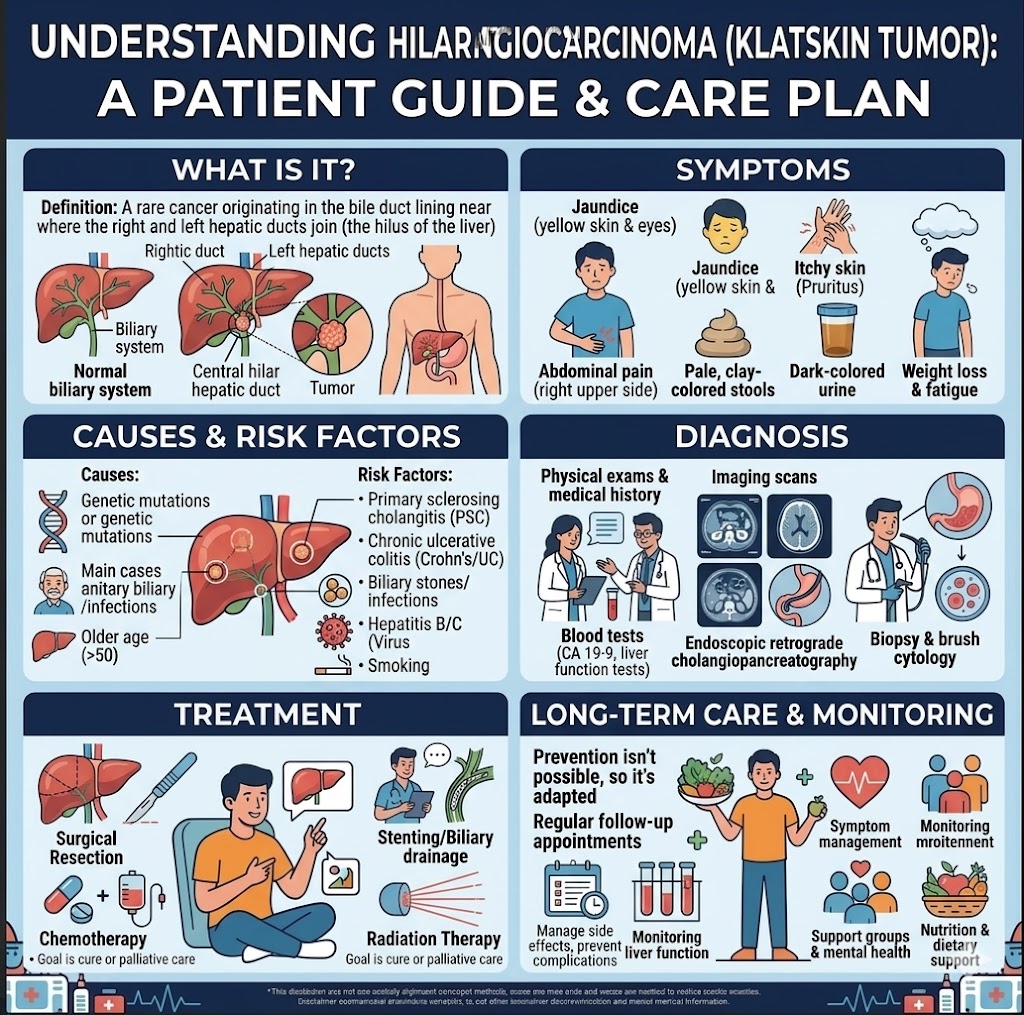
Hilar (HY-lur) cholangiocarcinoma, also known as perihilar (per-e-HY-lur) cholangiocarcinoma or Klatskin tumor, is a rare but serious type of cancer. It begins as an abnormal growth of cells in the bile ducts, which are thin tubes that carry a digestive fluid called bile from the liver to the small intestine. This specific type of cancer occurs at the central point where the main bile ducts exit the liver and join. The cancer starts when cells in a bile duct develop changes in their DNA, leading to uncontrolled growth and the formation of a tumor. While the exact cause is often unclear, it's frequently linked to long-term inflammation or injury of the bile ducts. If left untreated, the tumor can grow, block bile flow, and potentially spread to other parts of the body.
Understanding the Condition
Hilar Cholangiocarcinoma: Understanding Bile Duct Cancer
Understanding the Condition
Common Symptoms
Itching: Generalized skin itching, a symptom that can occur with jaundice due to bile salt accumulation under the skin.
Consultation Guide
Which Specialist to Meet
If you experience any concerning symptoms, start by consulting your primary care doctor. They may refer you to specialists such as a gastroenterologist (digestive system expert), a hepatobiliary surgeon (liver and bile duct surgeon), or an oncologist (cancer specialist) for further evaluation and treatment.
Preparations Before Your Visit
Before your appointment, gather information about your symptoms, including when they started and their severity. Compile your complete medical history, including any existing conditions like primary sclerosing cholangitis or inflammatory bowel disease, and a list of all medications and supplements you take. Prepare a list of questions for your doctor. You may be advised to fast for a certain period before some diagnostic tests, so follow any specific dietary instructions. Wear comfortable clothing for your visit.
Book a doctor visit near me
Radiofrequency Ablation (RFA): A minimally invasive procedure that uses electrical energy and heat, delivered through a thin needle guided by imaging, to destroy cancer cells. It's often used for smaller tumors or to manage symptoms. (Duration: The procedure typically lasts 1 to 3 hours. Recovery is often quick, ranging from a few days to a week.)
Palliative Care: Specialized medical care focused on providing relief from pain and other symptoms of a serious illness, regardless of the stage of the disease. It aims to improve quality of life for both the patient and their family, working alongside other treatments. (Duration: Ongoing for the duration of the illness, adapting to the patient's changing needs.)
Symptom Management: Work closely with your healthcare providers, including palliative care specialists, to effectively manage symptoms like pain, itching, fatigue, and digestive issues to maintain quality of life.
Consultation Guide
Hilar (HY-lur) cholangiocarcinoma, also known as perihilar (per-e-HY-lur) cholangiocarcinoma or Klatskin tumor, is a rare but serious type of cancer. It begins as an abnormal growth of cells in the bile ducts, which are thin tubes that carry a digestive fluid called bile from the liver to the small intestine. This specific type of cancer occurs at the central point where the main bile ducts exit the liver and join. The cancer starts when cells in a bile duct develop changes in their DNA, leading to uncontrolled growth and the formation of a tumor. While the exact cause is often unclear, it's frequently linked to long-term inflammation or injury of the bile ducts. If left untreated, the tumor can grow, block bile flow, and potentially spread to other parts of the body.
Yellow Skin and Eyes (Jaundice): A noticeable yellowing of the skin and the whites of the eyes, caused by bile buildup when ducts are blocked.
Dark Urine: Urine may appear unusually dark, often brownish, due to excess bilirubin (a bile component) being filtered by the kidneys.
Clay-Colored Stools: Stools may lose their normal brown color and become pale, like clay, because bile, which gives stool its color, is not reaching the intestine.
Stomach Pain: Discomfort or pain in the abdominal area, often in the upper right quadrant.
Weight Loss: Unexplained loss of body weight, which can be a common sign of advanced cancer.
Regular Health Check-ups: For individuals with known risk factors, regular medical examinations and open discussions with your doctor are vital for early detection and intervention.
Long-Term Monitoring and Support
Diagnostic Procedures
CT Scan (Computerized Tomography Scan)
A CT scan uses X-rays and computer processing to create detailed cross-sectional images (like slices) of your bones, blood vessels, and soft tissues inside the body. These images provide more detail than standard X-rays and help doctors detect tumors and assess their extent.
What to Expect
You will lie on a motorized table that slides into a large, donut-shaped machine. You may receive a contrast dye, either orally or through an intravenous (IV) line, to make certain structures clearer in the images. The machine may make some whirring or clicking noises. It's crucial to remain still during the scan, which typically takes between 15 to 60 minutes, depending on the area being examined.
Ultrasound (Sonography)
An ultrasound uses high-frequency sound waves to create live, real-time pictures of internal body structures. This safe procedure helps visualize the bile ducts, liver, and surrounding organs, identifying potential blockages or tumors.
What to Expect
You will lie on an exam table. A technician will apply a special gel to your skin over the area to be examined (usually your abdomen). A small handheld device called a transducer is then pressed against your skin and moved around. This device sends and receives sound waves, which are converted into images on a monitor. The procedure is generally painless and takes about 15 to 45 minutes. You might be asked to fast or have a full bladder beforehand, depending on the specific area being scanned.
Liver Function Tests (LFTs)
These are blood tests that measure the levels of specific enzymes and proteins in your blood. Elevated or lowered levels can indicate liver damage, inflammation, or issues with bile flow, helping to assess liver health and function.
What to Expect
A healthcare professional will draw a small sample of blood, typically from a vein in your arm. This is a standard blood collection procedure that usually takes only a few minutes. You may be advised to fast for a certain period before the test, as some foods and drinks can affect the results. Your doctor will provide specific instructions if fasting is required.
Treatment Options
Surgical Procedures
Cancer Removal Surgery: This complex surgery involves removing the cancerous tumor along with parts of the liver and affected bile ducts. Nearby lymph nodes may also be removed. The goal is to remove all visible cancer. (Duration: Surgery typically takes several hours. Recovery in the hospital can range from days to weeks, with full recovery taking several months.)
Liver Transplant: For certain cases where the cancer is confined but extensive, and other treatments like radiation have been used, a liver transplant may be an option. This procedure replaces the diseased liver with a healthy one from a deceased or living donor. (Duration: The transplant surgery itself is lengthy (many hours). Post-transplant recovery involves an extensive hospital stay (weeks) and lifelong immune-suppressing medications.)
Chemotherapy: This treatment uses powerful anti-cancer drugs, given orally or intravenously, to kill fast-growing cancer cells throughout the body. It can be used before or after surgery, or for advanced disease. (Duration: Administered in cycles, typically over several months. The specific duration depends on the drug regimen and the patient's response to treatment.)
Radiation Therapy: High-energy beams (like X-rays or protons) are precisely aimed at the tumor to damage cancer cells' genetic material, preventing them from growing and dividing. It can be external (from a machine outside the body) or internal (small implant near the tumor). (Duration: Typically involves daily sessions for several weeks, or a few concentrated sessions for internal radiation.)
Immunotherapy: These treatments harness and boost the body's own immune system to recognize and fight cancer cells. They help the immune system identify and destroy cancer that might otherwise evade detection. (Duration: Administered intravenously, typically in cycles over several months or longer, depending on effectiveness and patient tolerance.)
Targeted Therapy: Medications designed to specifically target certain weaknesses or changes within cancer cells that allow them to grow and spread. These are often chosen based on the genetic makeup of the individual's tumor. (Duration: Varies widely; often taken long-term as long as the treatment is effective and well-tolerated.)
Addressing Gallbladder Health: Seek treatment for ongoing inflammation of the gallbladder (cholecystitis) and manage gallstones, which can be associated with increased risk.
Food Safety Practices: Avoid consuming raw or undercooked fish, especially in regions where liver fluke infections are common, to prevent parasitic infections that can lead to bile duct damage.
Ongoing Medical Follow-up: Regular appointments with your medical team are crucial to monitor the condition, assess the effectiveness of treatments, manage any side effects, and check for signs of recurrence.
Prevention & Long-Term Wellbeing
Prevention and Risk Reduction
Managing Underlying Conditions: Actively treat and monitor chronic conditions like primary sclerosing cholangitis, inflammatory bowel disease, and liver cirrhosis, as these significantly increase the risk of bile duct cancer.
Nutritional Support: Due to potential issues with fat digestion from bile duct problems, dietary counseling and appropriate vitamin supplementation may be recommended to prevent malnutrition and weakness.
Emotional and Psychological Support: Coping with cancer can be challenging. Seek support from family, friends, cancer support groups, or mental health professionals to address emotional and psychological wellbeing.
Tags & Topics
Notice an error or need an update?
Help us keep medical information accurate. Report incorrect info or suggest an edit.


