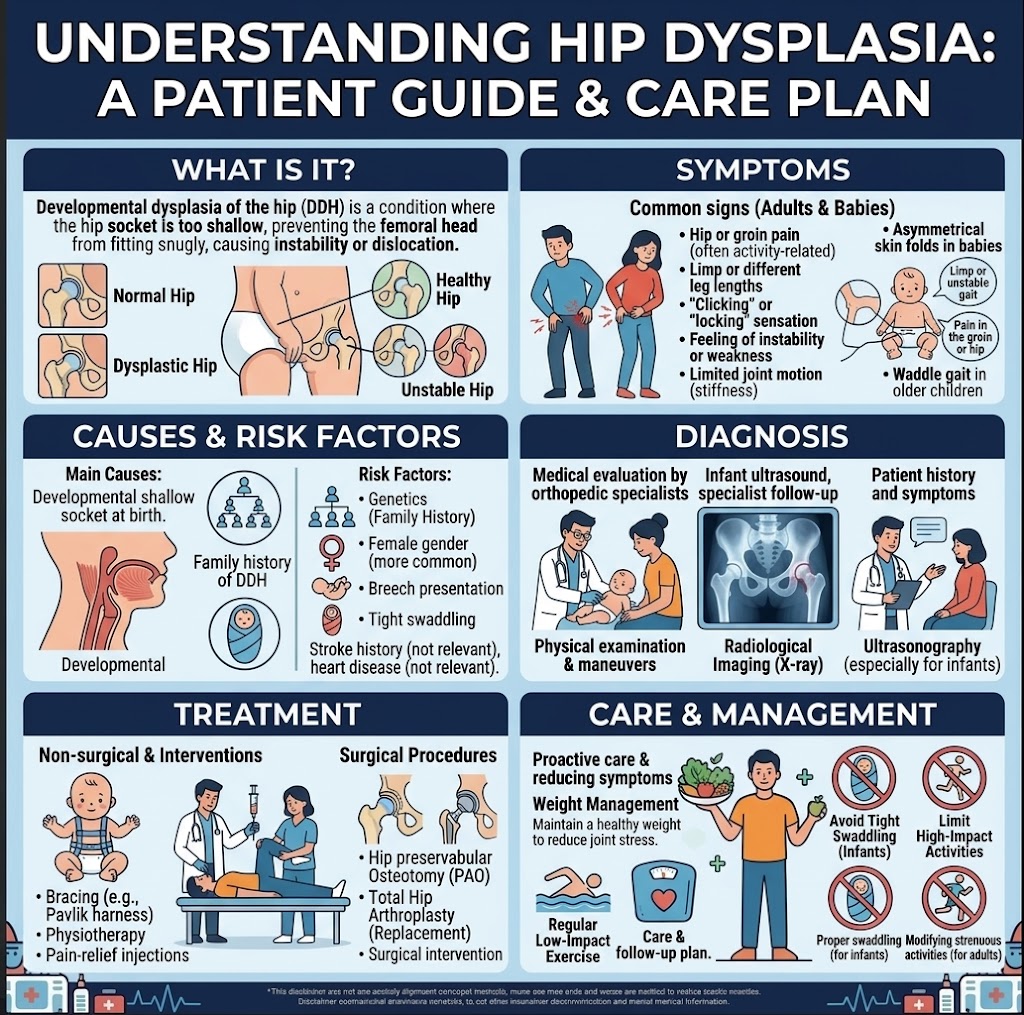
Hip dysplasia means the hip socket doesn't fully cover the ball of the thigh bone, making the joint unstable and prone to slipping out of place. Most commonly, people are born with this condition. At birth, the hip joint is soft cartilage that hardens into bone. If the ball isn't snugly held in the socket during this development, the socket remains shallow. This can occur if the womb is crowded in late pregnancy (e.g., first pregnancy, large baby, breech position). Risk factors include family history, being female, breech birth, and tight swaddling that keeps legs straight. If untreated, even mild dysplasia can damage joint cartilage and the rimming labrum, leading to pain and early osteoarthritis where joint surfaces wear away.
Understanding the Condition
Understanding Hip Dysplasia: A Guide for Non-Medical Readers
Understanding the Condition
Common Symptoms
In Infants: One leg might appear slightly shorter than the other. During diaper changes, one hip may seem less flexible or harder to spread wide. A subtle 'click' or 'clunk' might be felt when moving the baby's hip.
In Walking Children: A noticeable limp may develop when the child starts walking.
In Teenagers and Young Adults: Pain in the groin area, often triggered or worsened by physical activity. A feeling that the hip is not secure or might give way. Pain resulting from complications like a hip labral tear or the early onset of osteoarthritis.
Consultation Guide
Which Specialist to Meet
Before your appointment, note down symptoms, their duration, and any family history of hip problems. Prepare a list of questions you have for the doctor.
Book a doctor visit near me
Consultation Guide
Hip dysplasia means the hip socket doesn't fully cover the ball of the thigh bone, making the joint unstable and prone to slipping out of place. Most commonly, people are born with this condition. At birth, the hip joint is soft cartilage that hardens into bone. If the ball isn't snugly held in the socket during this development, the socket remains shallow. This can occur if the womb is crowded in late pregnancy (e.g., first pregnancy, large baby, breech position). Risk factors include family history, being female, breech birth, and tight swaddling that keeps legs straight. If untreated, even mild dysplasia can damage joint cartilage and the rimming labrum, leading to pain and early osteoarthritis where joint surfaces wear away.
Diagnostic Procedures
Start with a pediatrician for children; they can refer to a pediatric orthopedic specialist or orthopedic surgeon for diagnosis and treatment. Physical therapists aid in recovery and strengthening.
Preparations Before Your Visit
A doctor thoroughly checks hip and leg movement. For infants, special maneuvers are used to gently test for hip instability, checking if the hip ball can be moved in and out of the socket. For older individuals, the doctor will assess gait, range of motion, and check for tenderness.
What to Expect
For infants, the examination is usually quick and involves the doctor gently rotating and flexing the baby's hips. The baby might briefly fuss due to the manipulation. For older patients, you will be asked to perform certain movements, walk, and lie down so the doctor can move your leg to check hip mobility and stability. The exam is typically quick and non-invasive.
An X-ray is a quick, painless imaging test that uses a small amount of radiation to create pictures of the bones inside the body. For hip dysplasia, it helps visualize the shape of the hip socket and the position of the thigh bone's ball within it, which is crucial for assessing the condition in older children and adults.
What to Expect
You or your child will lie on a table, and a technician will position the hip to get clear images. You might need to hold still for a few seconds during each image capture. The procedure is generally very quick, lasting only a few minutes, and is painless. For children, a parent may be able to stay in the room wearing a protective lead apron to help comfort them.
Arthroscopy: A minimally invasive procedure where a surgeon inserts a small camera and specialized instruments through tiny incisions to look inside the hip joint. It can be used to diagnose and repair damaged cartilage, such as a labral tear, without a large incision. (Duration: Recovery time is generally shorter than open surgery, ranging from a few weeks to a few months, depending on the extent of repair.)
Early Detection: Attend all recommended well-baby check-ups. Healthcare professionals routinely check for signs of hip dysplasia, and early diagnosis is key for simple, effective treatment.
Regular Monitoring: For those diagnosed with hip dysplasia, ongoing follow-up with a specialist is important, especially during growth spurts, to monitor hip development and address any emerging issues promptly.
Physical Activity: Engage in appropriate low-impact physical activity, such as swimming or cycling, to strengthen muscles around the hip joint and maintain flexibility. Consult with a physical therapist for guidance.
Maintain Healthy Weight: Carrying excess weight puts additional stress on the hip joints, potentially accelerating wear and tear, especially in a dysplastic hip.
Treatment Options
Non-Surgical Treatments
Soft Brace (Pavlik Harness): A fabric brace typically used for infants that gently holds the hips bent and spread apart. This position keeps the ball of the hip joint centered in its socket, encouraging the socket to deepen and mold properly around the ball. (Duration: Worn continuously for several weeks to months, often 6-12 weeks, with regular specialist monitoring.)
Body Cast (Spica Cast): If a soft brace is not sufficient or for slightly older infants, a healthcare professional might manually position the hip joint bones into place. A rigid body cast is then applied to hold the hip firmly in this corrected position. It typically covers the trunk and one or both legs. (Duration: Worn for several months, usually 2-3 months, requiring specific care for hygiene and skin.)
Surgical Procedures
Periacetabular Osteotomy: This surgery is typically performed on older children, teenagers, or young adults. It involves carefully cutting and repositioning the hip socket within the pelvis so that it better covers the ball of the thigh bone. This creates a more stable and functional joint, aiming to prevent future damage. (Duration: Requires a significant recovery period lasting several months, involving crutches and rehabilitation exercises.)
Hip Replacement (Total Hip Arthroplasty): For severe hip dysplasia in adults, especially if significant osteoarthritis has developed, the damaged parts of the hip joint are removed and replaced with artificial components made of metal, ceramic, and plastic. This creates a new, smooth-gliding joint to reduce pain and improve function. (Duration: Recovery involves several weeks of physical therapy and mobility restrictions, with full recovery taking several months. Artificial joints can last many years, but may eventually need revision surgery, particularly in younger, active individuals.)
Activity Modification: Adults with mild hip dysplasia or those who have undergone treatment may need to modify certain activities to avoid repetitive high-impact stress on the hip joint, helping to preserve joint health.
Pain Management: If pain arises, discuss options with your doctor, including over-the-counter pain relievers or other therapies, to manage discomfort and maintain quality of life.
Prevention & Long-Term Wellbeing
Prevention
Proper Swaddling: When swaddling an infant, ensure their hips and knees can bend and move freely, similar to a frog's natural position. Avoid tight swaddling that forces the legs straight and together, as this can interfere with proper hip development.
Tags & Topics
Notice an error or need an update?
Help us keep medical information accurate. Report incorrect info or suggest an edit.


