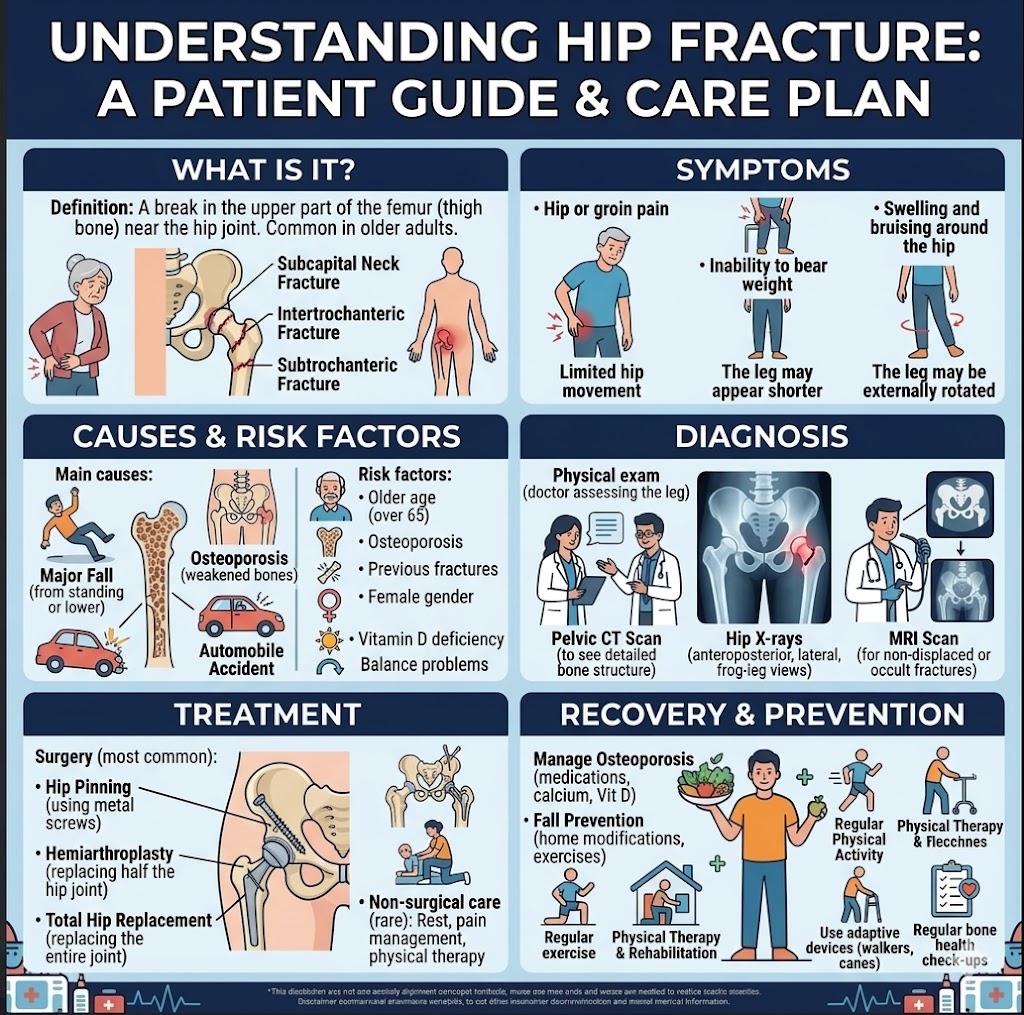
A hip fracture is a serious break in the upper part of the thigh bone, close to the hip joint. This injury is particularly dangerous and can lead to severe, even life-threatening, health complications, especially in older adults. The risk of a hip fracture increases significantly with age because bones naturally tend to weaken, a condition known as osteoporosis. Other factors like certain medications, poor vision, and balance issues also make older individuals more prone to falls, which are a primary cause of hip fractures. While often resulting from a fall from a standing height in older people, severe impacts like car crashes can cause hip fractures in anyone. In cases of extremely weak bones, a simple twist or shift of weight might be enough to cause a fracture. Most hip fractures require surgical intervention and subsequent physical therapy. Taking steps to maintain bone strength and prevent falls is crucial for prevention.
Understanding the Condition
Common Symptoms
Severe Hip or Groin Pain: Sudden, intense pain in the hip or groin area, which typically worsens with movement or when attempting to bear weight.
Inability to Move: Difficulty or complete inability to stand, walk, or put any weight on the injured leg.
Stiffness, Bruising, Swelling: Noticeable stiffness, bruising, and swelling in and around the hip and upper thigh area.
Shorter Leg: The injured leg may visually appear shorter than the uninjured leg.
Outward Turning Leg: The foot and leg on the injured side may be noticeably turned outward.
Consultation Guide
Which Specialist to Meet
Before your medical visit, be prepared to discuss the details of your symptoms and how the injury occurred. Bring a complete medical history, including any existing health conditions, previous surgeries, and a list of all current medications, supplements, and known allergies. Prepare a list of questions to ask your doctor about the diagnosis, available treatment options, and the expected recovery process.
Book a doctor visit near me
Consultation Guide
A hip fracture is a serious break in the upper part of the thigh bone, close to the hip joint. This injury is particularly dangerous and can lead to severe, even life-threatening, health complications, especially in older adults. The risk of a hip fracture increases significantly with age because bones naturally tend to weaken, a condition known as osteoporosis. Other factors like certain medications, poor vision, and balance issues also make older individuals more prone to falls, which are a primary cause of hip fractures. While often resulting from a fall from a standing height in older people, severe impacts like car crashes can cause hip fractures in anyone. In cases of extremely weak bones, a simple twist or shift of weight might be enough to cause a fracture. Most hip fractures require surgical intervention and subsequent physical therapy. Taking steps to maintain bone strength and prevent falls is crucial for prevention.
You will lie on a motorized table that slides into a large, donut-shaped machine. You may be asked to hold your breath briefly at certain times. The machine will make quiet whirring or clicking noises as it captures the images. For some CT scans, a special contrast dye might be injected into a vein to highlight specific areas; this can cause a warm sensation or a metallic taste. The entire scan typically takes about 10 to 30 minutes.
Medication Review: Regularly discuss all your medications with your doctor or pharmacist. Identify any drugs or combinations that might cause dizziness, drowsiness, or affect your balance, and explore safer alternatives or dosage adjustments.
Vision Check-ups: Schedule routine eye exams to ensure your vision is properly corrected. Impaired vision significantly increases the risk of falls, especially in unfamiliar environments.
Appropriate Footwear: Wear sturdy, low-heeled shoes with non-slip soles both indoors and outdoors. This provides better stability and reduces the risk of slips and falls.
Bone Health Maintenance
Diagnostic Procedures
An X-ray is a quick, painless imaging test that uses a small amount of radiation to create pictures of the structures inside your body, particularly bones. It effectively helps doctors visualize broken bones and assess their alignment.
What to Expect
You will be asked to remove any metal objects or jewelry and may need to change into a gown. You will then lie or sit on an X-ray table, and a technician will carefully position the affected hip area. You may need to hold still for a few seconds while the X-ray machine captures images from different angles. The entire procedure is typically very fast, usually lasting only a few minutes.
CT Scan (Computerized Tomography Scan)
A CT scan is a more advanced imaging technique that uses multiple X-rays taken from various angles. A computer then processes these images to create detailed cross-sectional 'slices' of bones, blood vessels, and soft tissues. This provides much more detailed information than a standard X-ray, which is especially useful for detecting subtle fractures or assessing the full extent of the injury.
What to Expect
Treatment Options
If a hip fracture is suspected, immediate medical attention is critical, usually in an emergency department. Following initial emergency care, you will likely consult with an orthopedic surgeon, who specializes in surgery for bones and joints. For older adults, a geriatrician, a doctor specializing in the care of seniors, may also be involved to manage overall health and address underlying risks for falls or bone weakening. Your primary care physician will play a role in coordinating your long-term recovery and ongoing care.
Preparations Before Your Visit
Surgical Procedures
Hip Fracture Repair (Internal Fixation): For certain types of hip fractures where the bone fragments are in a good position or can be realigned, the surgeon uses metal screws, plates, or rods to hold the broken bone pieces together. These implants stabilize the bone, allowing it to heal naturally. (Duration: The surgical procedure typically lasts a few hours. Full bone healing can take several months (3-6 months or more), with rehabilitation continuing for weeks to months after.)
Partial Hip Replacement (Hemiarthroplasty): If the fracture damages only the ball portion of the hip joint, particularly in older adults, the surgeon removes the damaged ball part of the thigh bone and replaces it with an artificial metal component. The hip socket remains untouched. (Duration: Surgery usually takes a few hours. Recovery involves weeks to months of physical therapy, with significant improvement seen over 3-6 months.)
Total Hip Replacement (Total Hip Arthroplasty): In cases where both the ball and socket of the hip joint are severely damaged, or for younger, more active individuals with certain fracture types, the entire hip joint (both the ball and the socket) is removed and replaced with artificial components made of metal, ceramic, and hard plastic. (Duration: This complex surgery can take several hours. Comprehensive rehabilitation typically spans 3-6 months, with continued strength and mobility improvements for up to a year or more.)
Therapies
Physical Therapy: Essential after hip fracture surgery, physical therapy helps patients regain strength, flexibility, balance, and the ability to walk. It involves guided exercises, mobility training, and education on safe movement techniques to prevent re-injury. (Duration: Begins within days of surgery and continues intensively for several weeks to months, often transitioning to home exercises or outpatient therapy for an extended period.)
Medication Management
Pain Relief and Supportive Medications: After surgery, various medications are used to manage pain, prevent blood clots (a common complication), and address any underlying bone-weakening conditions like osteoporosis. These may include pain relievers, blood thinners, and bone-strengthening treatments. (Duration: Pain medication is typically used short-term (days to weeks). Blood thinners may be used for several weeks. Bone-strengthening treatments, if prescribed for conditions like osteoporosis, are often long-term, potentially for years.)
Ongoing Medical Follow-up: Regular appointments with your healthcare team are crucial. These visits allow for monitoring of bone health, assessment of recovery progress, management of any chronic conditions, and adjustment of treatment or prevention strategies as needed for optimal long-term wellbeing.
Prevention & Long-Term Wellbeing
Hip Fracture: Understanding a Serious Injury and Recovery
- Understanding the Condition
Prevention of Falls
Home Safety Modifications: Remove tripping hazards such as loose rugs, clutter, and electrical cords. Install grab bars in bathrooms and near stairways, ensure adequate lighting throughout your home, and consider using non-slip mats in wet areas.
Regular Exercise: Engage in physical activities that improve balance, strength, and flexibility, such as walking, tai chi, yoga, or specific balance exercises recommended by a professional. Always consult a healthcare provider before starting new exercise routines.
Nutritional Support: Ensure an adequate intake of calcium and vitamin D through a balanced diet. If recommended by your doctor, consider supplements to support strong bones, as these nutrients are vital for bone density.
Regular Weight-Bearing Exercise: Engage in activities like walking, jogging, and strength training. These types of exercises help stimulate bone growth and maintain existing bone density, making bones stronger.
Avoid Harmful Habits: Limit alcohol consumption and avoid smoking, as both habits can contribute to significant bone loss over time and increase your overall risk of fractures.
Long-Term Monitoring
Tags & Topics
Notice an error or need an update?
Help us keep medical information accurate. Report incorrect info or suggest an edit.


