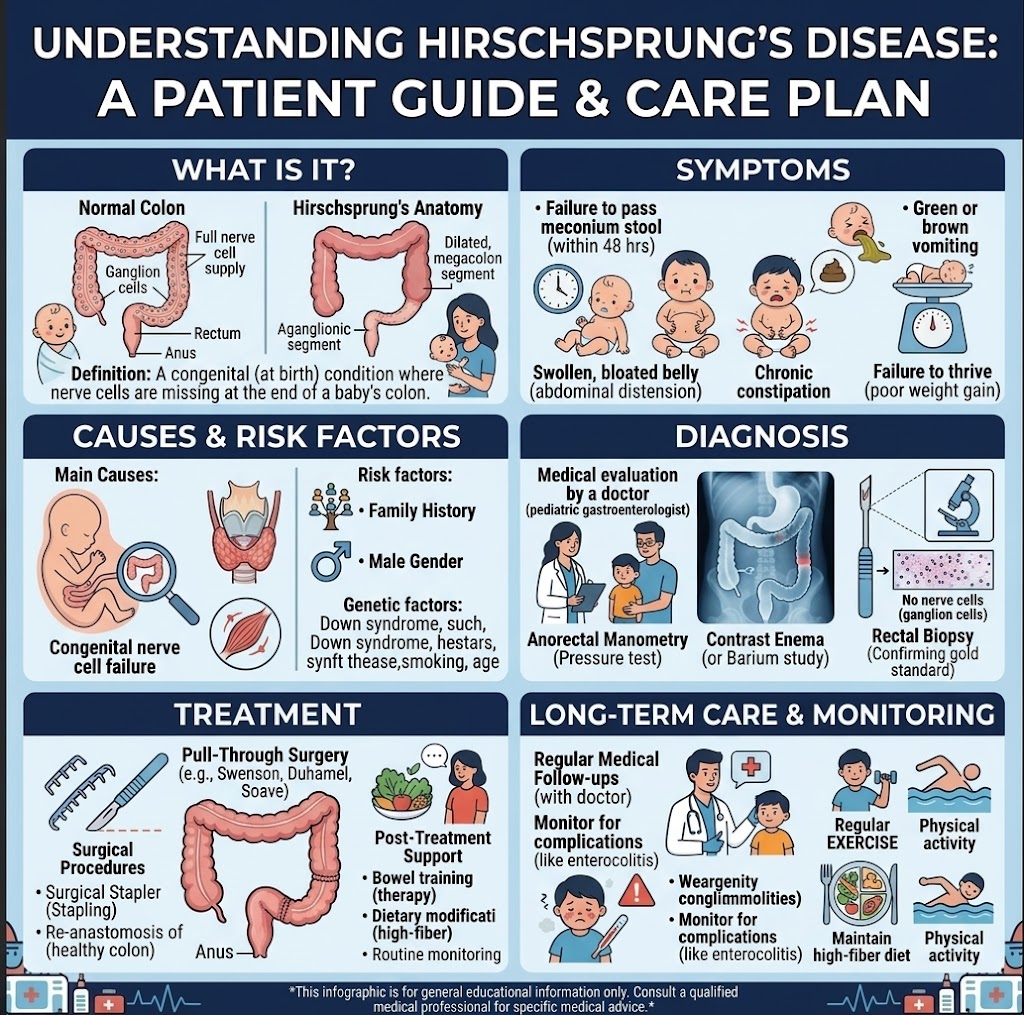
Hirschsprung's disease is a condition present at birth where crucial nerve cells are missing from a part of the large intestine. These nerves are essential for helping the bowel muscles push stool through. Without them, stool gets stuck, leading to blockages and difficulty passing bowel movements. While most often noticed in newborns, symptoms can sometimes appear later in childhood or, rarely, in adulthood. The main treatment involves surgery to remove or bypass the affected part of the bowel.
Understanding the Condition
Hirschsprung's Disease: Understanding a Bowel Condition
Understanding the Condition
Hirschsprung's disease is a condition present at birth where crucial nerve cells are missing from a part of the large intestine. These nerves are essential for helping the bowel muscles push stool through. Without them, stool gets stuck, leading to blockages and difficulty passing bowel movements. While most often noticed in newborns, symptoms can sometimes appear later in childhood or, rarely, in adulthood. The main treatment involves surgery to remove or bypass the affected part of the bowel.
Common Symptoms
In Newborns (usually within 48 hours of birth): Failure to have a first bowel movement (meconium) within 48 hours after birth, a swollen belly, vomiting green or brown fluid, constipation, and fever.
In Older Children and Adults: Chronic constipation, a swollen belly, gas, fatigue, delayed growth or poor weight gain, and sometimes passing watery stools.
Consultation Guide
Which Specialist to Meet
You should initially consult with your pediatrician or family doctor. If Hirschsprung's disease is suspected, you may be referred to a pediatric gastroenterologist (a doctor specializing in children's digestive systems) or a pediatric surgeon.
Preparations Before Your Visit
Before your visit, make a list of all your child's symptoms, including when they started, how often they occur, and anything that seems to make them better or worse. Gather your child's medical history, including any medications or prior hospitalizations. Note any family history of digestive issues. Prepare a list of questions you want to ask the doctor to ensure all your concerns are addressed.
Book a doctor visit near me
Supportive Care & Symptom Management
Recognizing Early Symptoms: Be vigilant for symptoms like a newborn's failure to pass stool within 48 hours, or chronic constipation, swollen belly, and poor growth in older children. Early diagnosis is key to better outcomes.
Prompt Medical Consultation: Do not delay seeking medical advice if you suspect Hirschsprung's disease. Early intervention by specialists can prevent severe complications like bowel obstruction or infection.
Consultation Guide
This test measures the function of the muscles and nerves in the rectum and anus. A small, flexible tube with a balloon at its tip is inserted into the rectum. The balloon is gently inflated, and the test measures how the muscles and nerves respond, particularly checking for a reflex that causes the anal muscle to relax when the rectum stretches. This reflex is often missing in children with Hirschsprung's disease.
Your child will lie on their side. A thin, lubricated tube will be gently inserted into the rectum. The balloon at the tip will be inflated and deflated several times. The test is generally not painful but may cause a feeling of pressure or fullness. It takes about 15-30 minutes.
Diagnostic Procedures
This quick and painless test uses radiation to create images of the internal structures in the abdomen. It can help identify signs of a bowel blockage, such as trapped air or stool, indicating that something might be preventing normal stool passage.
What to Expect
Your child will lie on an X-ray table while a technician takes images. They may need to hold still briefly. The procedure is quick and generally takes only a few minutes.
Contrast Enema (Barium Enema)
In this specialized X-ray, a safe liquid (contrast material, often barium) is gently introduced into the large intestine through the rectum. This liquid coats the inside of the bowel, making its shape and any abnormalities clearly visible on X-ray images. It can show a narrow section of the bowel (the part missing nerve cells) followed by a wider, swollen section filled with stool, which is typical of Hirschsprung's disease.
What to Expect
Your child will lie on an X-ray table. A small, soft tube will be inserted into their rectum to allow the contrast liquid to flow into the large intestine. You might feel a sensation of fullness or pressure. X-ray images are taken as the liquid fills the bowel. The procedure typically lasts 20-30 minutes.
This is often the most definitive test. A very small tissue sample is carefully taken from the lining of the rectum. This tissue is then examined under a microscope by a pathologist to check for the presence or absence of nerve cells. The absence of these specific nerve cells confirms the diagnosis of Hirschsprung's disease.
What to Expect
What to Expect
Pull-Through Surgery: This is the most common and definitive treatment. The surgeon removes the section of the large intestine that is missing nerve cells and then connects the healthy part of the bowel directly to the anus. This allows stool to pass normally. It can often be done with minimally invasive techniques. (Duration: Typically a single surgery. Recovery can take several weeks, and bowel function gradually improves over weeks to months as the body adjusts.)
Ostomy Surgery (Colostomy or Ileostomy): In some cases, especially if the child is very sick, the affected bowel section is very long, or there is significant inflammation, a temporary ostomy may be performed first. This involves creating an opening (stoma) in the belly where a part of the healthy bowel (large intestine for colostomy, small intestine for ileostomy) is brought to the surface. Stool then passes through this opening into an external collection pouch. This allows the unhealthy part of the bowel to be removed and the remaining bowel to heal before a final connection is made. (Duration: Temporary ostomies are usually in place for several weeks to months, or even longer, until the child is healthy enough for a reversal surgery. In rare cases where the entire colon is affected or reversal is not possible, an ostomy may be permanent.)
Ostomy Reversal Surgery: Once the bowel has healed and the child is stable, a second surgery is performed to close the temporary stoma. The healthy ends of the bowel are reconnected internally, allowing stool to pass through the rectum again, restoring normal bowel function. (Duration: Recovery typically takes several weeks. Bowel function may be irregular at first, with frequent or loose stools, but generally improves over weeks to months as the intestine adapts.)
Treatment Options
Surgical Procedures (Primary Treatment)
Enemas or Bowel Irrigations: Before surgery, or sometimes post-surgery to manage occasional constipation, a doctor may recommend enemas or special bowel irrigations. These involve flushing the colon with a liquid to help empty it and relieve blockages. (Duration: Used as needed, under strict medical supervision, for short periods or until surgery.)
Regular Medical Follow-ups: Children who have undergone surgery for Hirschsprung's disease require ongoing monitoring by their healthcare team, often including a gastroenterologist and surgeon. These visits assess bowel function, growth, and overall development.
Managing Post-Surgical Complications: Some children may experience long-term issues such as ongoing constipation, diarrhea, or a serious bowel infection called enterocolitis. Work closely with your doctor to develop strategies for managing these conditions, which may include diet, medications, or specialized bowel programs.
Nutrition and Hydration: Maintaining a balanced diet and ensuring adequate fluid intake are crucial for promoting healthy bowel function and preventing constipation, especially after surgery. Your healthcare team may provide specific dietary recommendations.
Pelvic Floor Therapy: In some cases, children may benefit from specialized physical therapy focusing on pelvic floor muscles. This can help improve bowel control and address issues like stool leakage or difficulty emptying the bowel after surgery.
Emotional and Psychological Support: Living with a chronic condition can be challenging for both children and families. Seeking support from therapists, support groups, or child life specialists can provide coping strategies and emotional resilience.
Prevention & Long-Term Wellbeing
The biopsy is usually performed under sedation or general anesthesia to ensure your child's comfort. A specialized instrument is used to obtain a tiny tissue sample. The procedure is quick, and your child may experience mild discomfort or spotting afterward. They will be monitored during recovery from anesthesia.
Dietary Adjustments: For older children and after surgical recovery, dietary changes, such as increasing fiber intake and ensuring adequate fluid consumption, can help promote softer stools and regular bowel movements, though these must be carefully managed with a doctor. (Duration: Ongoing, as advised by a healthcare provider, to support bowel health.)
Early Detection & Management
Tags & Topics
Notice an error or need an update?
Help us keep medical information accurate. Report incorrect info or suggest an edit.


