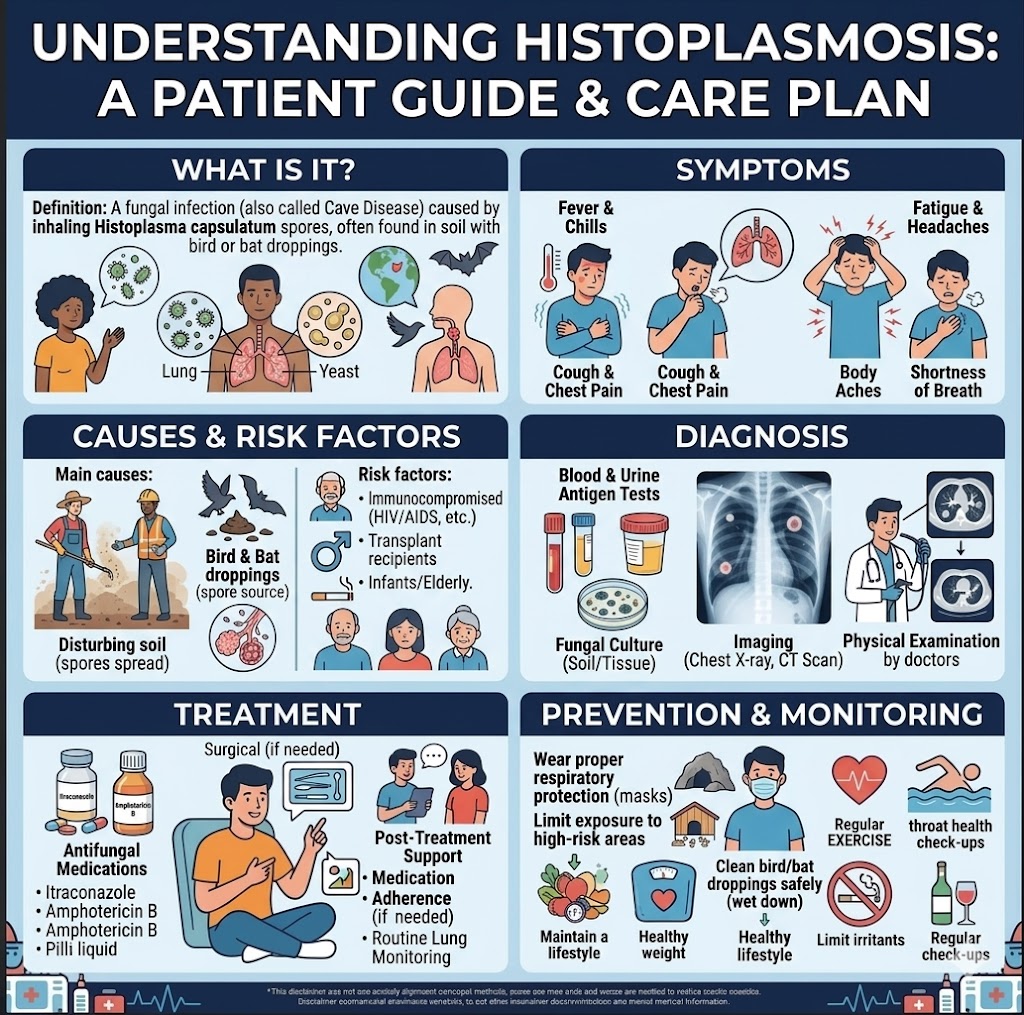
Histoplasmosis is an infection caused by a specific type of fungus commonly found in soil contaminated by bird and bat droppings. People usually get infected by breathing in tiny airborne particles, called spores, from this fungus. These spores can become airborne when contaminated soil is disturbed during activities like demolition, construction, cleanup projects, farming, or landscaping. While most people who encounter the fungus never develop symptoms and don't realize they're infected, histoplasmosis can be serious, particularly for infants and individuals with weakened immune systems. The infection is prevalent in certain regions, including the Midwestern United States along the Mississippi and Ohio River valleys, as well as parts of Africa, Asia, Australia, and Central and South America. Effective treatments are available, even for severe forms of the disease.
Understanding the Condition
Histoplasmosis: Understanding a Fungal Infection
Understanding the Condition
Histoplasmosis is an infection caused by a specific type of fungus commonly found in soil contaminated by bird and bat droppings. People usually get infected by breathing in tiny airborne particles, called spores, from this fungus. These spores can become airborne when contaminated soil is disturbed during activities like demolition, construction, cleanup projects, farming, or landscaping. While most people who encounter the fungus never develop symptoms and don't realize they're infected, histoplasmosis can be serious, particularly for infants and individuals with weakened immune systems. The infection is prevalent in certain regions, including the Midwestern United States along the Mississippi and Ohio River valleys, as well as parts of Africa, Asia, Australia, and Central and South America. Effective treatments are available, even for severe forms of the disease.
Common Symptoms
Mild Infection: Many people who are infected with histoplasmosis experience no symptoms at all and are unaware they have the condition.
Acute Histoplasmosis (Flu-like Illness): When symptoms do occur, they typically appear 3 to 17 days after inhaling the fungal spores. These can include: Fever, Chills, Headache, Muscle aches, Dry cough, Chest pain, Extreme tiredness (fatigue). Less commonly, some individuals may also experience joint pain and rashes.
Chronic Histoplasmosis: This long-term form primarily affects the lungs and often impacts individuals with pre-existing lung conditions or weakened immune systems. Symptoms may develop gradually and can include: Weight loss, Coughing up blood, Difficulty breathing. These symptoms can sometimes be mistaken for those of tuberculosis.
Start by consulting your primary care doctor. Depending on the severity and specific symptoms, they may refer you to an infectious disease specialist, a pulmonologist (lung specialist), or a neurologist (for brain or spinal cord involvement).
Preparations Before Your Visit
Before your appointment, be prepared to: Describe all your symptoms, including when they started and how they have progressed. Share details about any recent activities or exposures, especially those involving bird or bat droppings (e.g., cleaning attics, working in gardens, construction, farming, exploring caves). Provide a complete medical history, including any existing health conditions and all medications you are currently taking. Prepare a list of questions you want to ask your doctor.
Book a doctor visit near me
Antifungal Drugs: The primary treatment for symptomatic histoplasmosis involves specific antifungal medications. These medications work by targeting and eliminating the fungus from the body. Treatment duration varies significantly based on the severity and type of infection. (Duration: For mild to moderate cases, oral medications may be prescribed for several weeks to a few months. For severe, chronic, or disseminated forms, intravenous (IV) antifungal drugs might be initiated, followed by a long course of oral medication, often lasting 6 to 12 months, or even longer in some cases, especially for individuals with weakened immune systems.)
Rest and Symptom Management: For mild cases, rest and general supportive care to manage flu-like symptoms are often recommended. This includes ensuring adequate fluid intake and managing pain or fever with over-the-counter remedies. (Duration: As needed, typically until symptoms subside.)
Complete Treatment Course: Strictly adhere to the full prescribed course of antifungal medication, even if symptoms improve quickly. Stopping treatment early can lead to a relapse or recurrence of the infection.
Immunosuppressed Vigilance: Individuals with weakened immune systems require ongoing vigilance and prompt medical attention for any new or returning symptoms.
Consultation Guide
A urinalysis is a common test that examines a sample of your urine. It is used to help detect, monitor, and manage various health conditions, such as urinary tract infections, kidney disease, and diabetes. The test evaluates the urine's appearance, concentration, and content. For example, cloudy urine might indicate an infection, while elevated protein levels could signal kidney issues. If unusual results are found, further tests are often needed to identify the exact cause of the problem.
Removal of Fungal Growths: In rare instances, surgery may be necessary. This is typically considered if the fungus has formed localized masses (called histoplasmomas) that cause significant problems, or if there is extensive lung damage that needs to be removed. (Duration: Post-operative recovery period, followed by ongoing antifungal treatment if required.)
Diagnostic Procedures
What to Expect
You will be asked to provide a urine sample. Typically, a 'midstream clean catch' method is used to ensure the sample is not contaminated. You will receive instructions on how to clean your genital area first, then you will begin to urinate into the toilet, collect the middle portion of your urine stream into a sterile cup, and finish urinating into the toilet. The collected sample is then sent to a laboratory where it will undergo visual inspection, chemical analysis using a dipstick, and microscopic examination. The procedure is quick, non-invasive, and generally requires no special preparation like fasting.
Monitor Lung Function: If the lungs were affected, periodic lung function tests may be recommended to track recovery and manage any long-term respiratory issues.
Treatment Options
Disseminated Histoplasmosis: This is the most severe and dangerous type of histoplasmosis, mainly seen in infants and people with significantly weakened immune systems. The fungus spreads from the lungs to nearly any other part of the body, such as the mouth, liver, brain, spinal cord, skin, and adrenal glands. Without prompt treatment, disseminated histoplasmosis is frequently fatal.
Consultation Guide
Which Specialist to Meet
Medications
Prevention & Long-Term Wellbeing
Prevention
Avoid High-Risk Areas: Minimize exposure to areas known to have high concentrations of bird or bat droppings, such as caves, old chicken coops, abandoned buildings, or areas heavily populated by birds.
Use Protective Gear: If you must work in or clean areas potentially contaminated with bird or bat droppings, wear an N95 respirator mask to filter out spores, along with gloves and protective clothing. This is especially crucial for individuals with weakened immune systems or underlying lung conditions.
Dampen Contaminated Material: Before disturbing soil or cleaning contaminated surfaces, lightly mist the area with water to help reduce the amount of airborne dust and spores.
Avoid Stirring Dust: Be mindful during activities like digging, shoveling, or sweeping in potentially contaminated areas to avoid creating dust clouds.
Long-Term Monitoring
Regular Medical Follow-up: For individuals who have experienced chronic or disseminated histoplasmosis, regular check-ups with your healthcare provider are essential to monitor recovery and ensure the infection does not return.
Tags & Topics
Notice an error or need an update?
Help us keep medical information accurate. Report incorrect info or suggest an edit.


