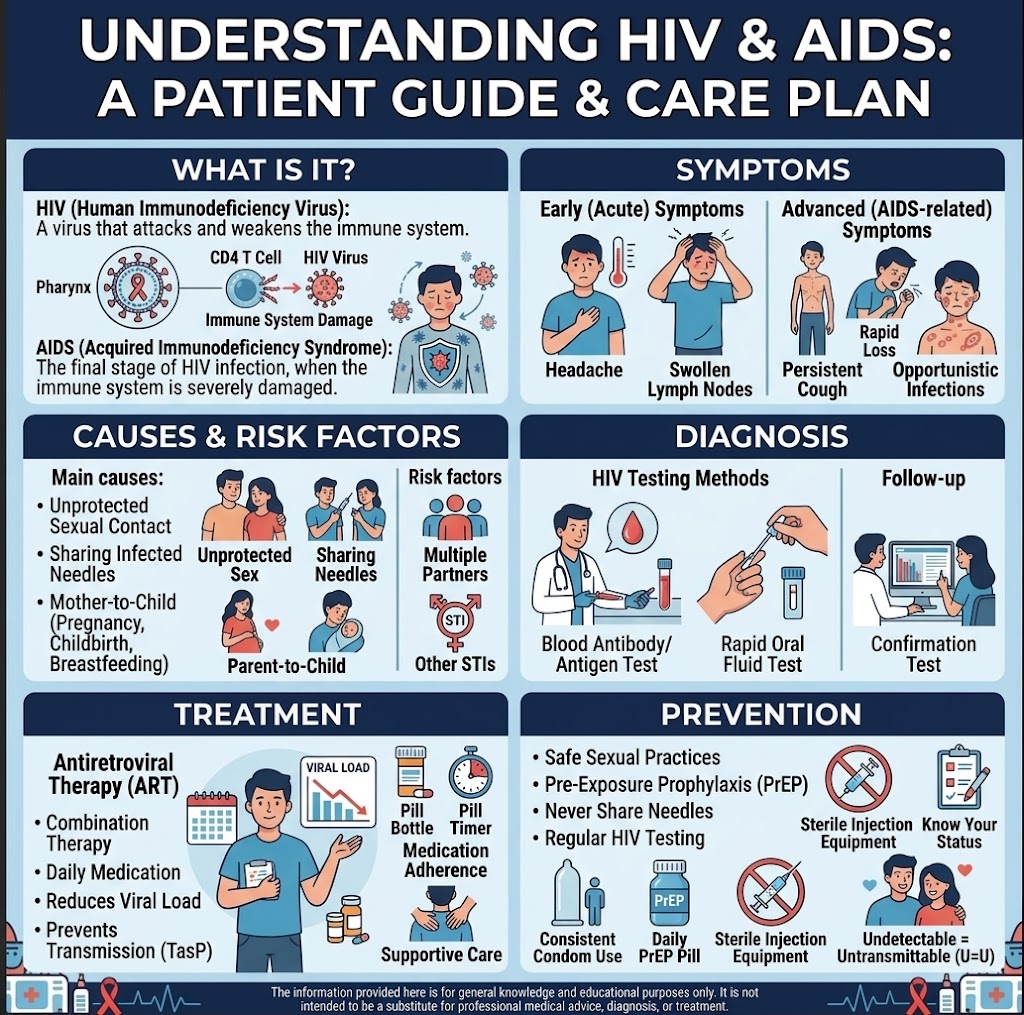
Human Immunodeficiency Virus (HIV) is a virus that attacks the body's immune system, which is its defense against infections and diseases. Over time, if untreated, HIV can severely weaken the immune system, leading to Acquired Immunodeficiency Syndrome (AIDS). AIDS is the most advanced stage of HIV infection, making the body vulnerable to serious illnesses. While there is no cure for HIV/AIDS, modern medical treatments can effectively control the virus, prevent it from progressing to AIDS, and allow people with HIV to live long, healthy lives. HIV is primarily spread through specific body fluids, most commonly during unprotected sex or by sharing needles.
Understanding the Condition
HIV/AIDS: Understanding, Managing, and Preventing
Understanding the Condition
Common Symptoms
Early Stage (Acute HIV Infection): Within 2 to 4 weeks of infection, some people experience flu-like symptoms, which can be mild and easily overlooked. These symptoms typically last a few days to several weeks. During this time, the amount of virus in the bloodstream is very high, increasing the risk of spreading the infection to others. Possible symptoms include: muscle aches and joint pain, sore throat and painful mouth sores, swollen lymph glands (nodes), weight loss, and night sweats.
Latent Stage (Chronic HIV Infection): After the initial acute stage, HIV remains in the body, actively multiplying at lower levels. During this phase, many people have no symptoms or very mild ones, and may not realize they are infected. This stage can last for many years, but without treatment, the virus continues to damage the immune system, leading to a gradual decline in the body's ability to fight off infections.
Advanced Stage (AIDS): When HIV significantly weakens the immune system, it progresses to AIDS. This stage is marked by a very low count of certain immune cells (CD4 T-cells) or the development of specific severe infections or cancers that typically only occur in people with severely compromised immune systems.
Consultation Guide
Which Specialist to Meet
Before your appointment, be prepared to discuss your sexual health history, any past or current drug use, and potential exposures. It can be helpful to write down any questions you have and make a list of any symptoms you've experienced.
Book a doctor visit near me
Diagnostic Procedures
You should see your primary care physician for initial concerns or testing. If diagnosed with HIV, you will be referred to an infectious disease specialist, a doctor who specializes in treating infections, to manage your care. Other specialists may be involved depending on specific health needs or complications.
Preparations Before Your Visit
HIV Antibody/Antigen Combination Test
This is the most common and recommended initial test for HIV. It looks for both HIV antibodies (proteins your body makes to fight the virus) and HIV antigens (parts of the virus itself, which appear sooner than antibodies). This test can usually detect HIV infection earlier than antibody-only tests.
What to Expect
A blood sample is typically drawn from a vein in your arm. Rapid versions of this test can provide results in about 20-30 minutes using a finger-prick blood sample or oral swab. A positive rapid test always requires a follow-up lab test for confirmation.
HIV Viral Load Test (Nucleic Acid Test - NAT)
This test directly detects the genetic material of the HIV virus in the blood. It can identify HIV infection earlier than antibody/antigen tests and precisely measures the amount of virus present. It is used to confirm positive screening results and to monitor the virus's activity and treatment effectiveness in someone already diagnosed with HIV.
What to Expect
A blood sample is drawn from a vein. This test may be used as a primary diagnostic test in certain situations or to confirm other HIV test results. Results typically take several days.
This blood test measures the number of CD4 T-cells, which are white blood cells vital for your immune system. HIV specifically targets and destroys these cells. A low CD4 count indicates a weakened immune system and helps determine the stage of HIV infection, including progression to AIDS.
What to Expect
A blood sample is drawn from a vein in your arm. This test is regularly performed for people living with HIV to monitor their immune health and treatment effectiveness. Results are typically available in a few days.
These blood tests measure levels of certain enzymes and proteins to assess how well your liver is functioning or if it has been damaged. They are important for people with HIV to monitor liver health, especially since some HIV medications can affect the liver or if there are co-existing conditions like hepatitis.
What to Expect
A blood sample is drawn from a vein in your arm. No special preparation like fasting is usually needed, unless your doctor advises it.
This test checks your urine for signs of various conditions, such as urinary tract infections or kidney disease. It can be a part of overall health monitoring for people with HIV, as kidney issues can sometimes occur.
What to Expect
You will provide a urine sample in a sterile cup, usually at the clinic. Your healthcare provider will give instructions for collecting a 'clean catch' sample to avoid contamination.
Communicate HIV Status: Openly discussing your HIV status with current and past sexual partners is crucial so they can get tested and make informed decisions about their health.
Long-Term Management and Support
Treatment Options
Human Immunodeficiency Virus (HIV) is a virus that attacks the body's immune system, which is its defense against infections and diseases. Over time, if untreated, HIV can severely weaken the immune system, leading to Acquired Immunodeficiency Syndrome (AIDS). AIDS is the most advanced stage of HIV infection, making the body vulnerable to serious illnesses. While there is no cure for HIV/AIDS, modern medical treatments can effectively control the virus, prevent it from progressing to AIDS, and allow people with HIV to live long, healthy lives. HIV is primarily spread through specific body fluids, most commonly during unprotected sex or by sharing needles.
Medications
Antiretroviral Therapy (ART): ART involves taking a combination of different medications daily. These medicines work by targeting various stages of the HIV life cycle, preventing the virus from multiplying and significantly reducing the amount of virus in the body. ART strengthens the immune system, prevents progression to AIDS, and helps people with HIV lead long, healthy lives. When taken consistently, ART can reduce the viral load to an undetectable level, making the virus untransmittable through sex. (Duration: Lifelong daily medication)
Management of Complications
Treatment for Opportunistic Infections and Cancers: People with weakened immune systems due to HIV are susceptible to various infections and certain cancers. Treatment involves specific medications (e.g., antibiotics, antifungals, antivirals) for infections like Pneumocystis pneumonia (a fungal lung infection), candidiasis (thrush), tuberculosis, and cytomegalovirus. Therapies (e.g., chemotherapy, radiation) are used for cancers like lymphoma and Kaposi sarcoma. (Duration: Varies depending on the specific complication and its severity, often weeks to months, or ongoing for chronic conditions.)
Pre-Exposure Prophylaxis (PrEP): PrEP involves taking a specific medication daily by mouth or receiving regular injections to significantly reduce the risk of getting HIV for individuals at very high risk. It is highly effective when taken as prescribed.
Post-Exposure Prophylaxis (PEP): PEP is an emergency treatment taken after a potential exposure to HIV (e.g., unprotected sex, shared needles, workplace exposure). It must be started as soon as possible, ideally within 72 hours of exposure, and taken for 28 days to significantly reduce the risk of infection.
Consistent Condom Use: Using a new latex or polyurethane condom correctly every time during vaginal or anal sex is highly effective in preventing HIV transmission and other sexually transmitted infections. During oral sex, barriers like a dental dam can reduce risk.
Avoid Sharing Needles: For people who inject drugs, using sterile needles and syringes for every injection and never sharing them is critical to prevent HIV and other blood-borne infections. Seek help for drug use if needed.
HIV Treatment During Pregnancy and Breastfeeding: Pregnant individuals with HIV who receive antiretroviral treatment throughout pregnancy, during childbirth, and provide medication to their newborns can drastically reduce the risk of passing the virus to their babies.
Male Circumcision: Studies suggest that male circumcision (surgical removal of the foreskin from the penis) can help reduce the risk of acquiring HIV infection in heterosexual men.
Adherence to Antiretroviral Therapy (ART): Taking HIV medications exactly as prescribed every day is vital. Consistent adherence maintains a suppressed viral load, keeps the immune system strong, and prevents the development of drug resistance. An undetectable viral load means the virus cannot be transmitted through sex (Undetectable = Untransmittable or U=U).
Regular Medical Check-ups: Ongoing visits with healthcare providers are essential to monitor viral load, CD4 count, general health, screen for and manage complications, address potential medication side effects, and ensure overall well-being.
Prevention & Long-Term Wellbeing
Prevention
Healthy Lifestyle Choices: Maintaining a balanced diet, engaging in regular exercise, getting adequate sleep, and avoiding smoking and excessive alcohol intake can support overall immune health and improve quality of life for people living with HIV.
Emotional and Mental Health Support: Living with HIV can present emotional challenges. Accessing support groups, counseling, and mental health services can be crucial for coping, managing stress, and maintaining a positive outlook.
Tags & Topics
Notice an error or need an update?
Help us keep medical information accurate. Report incorrect info or suggest an edit.


