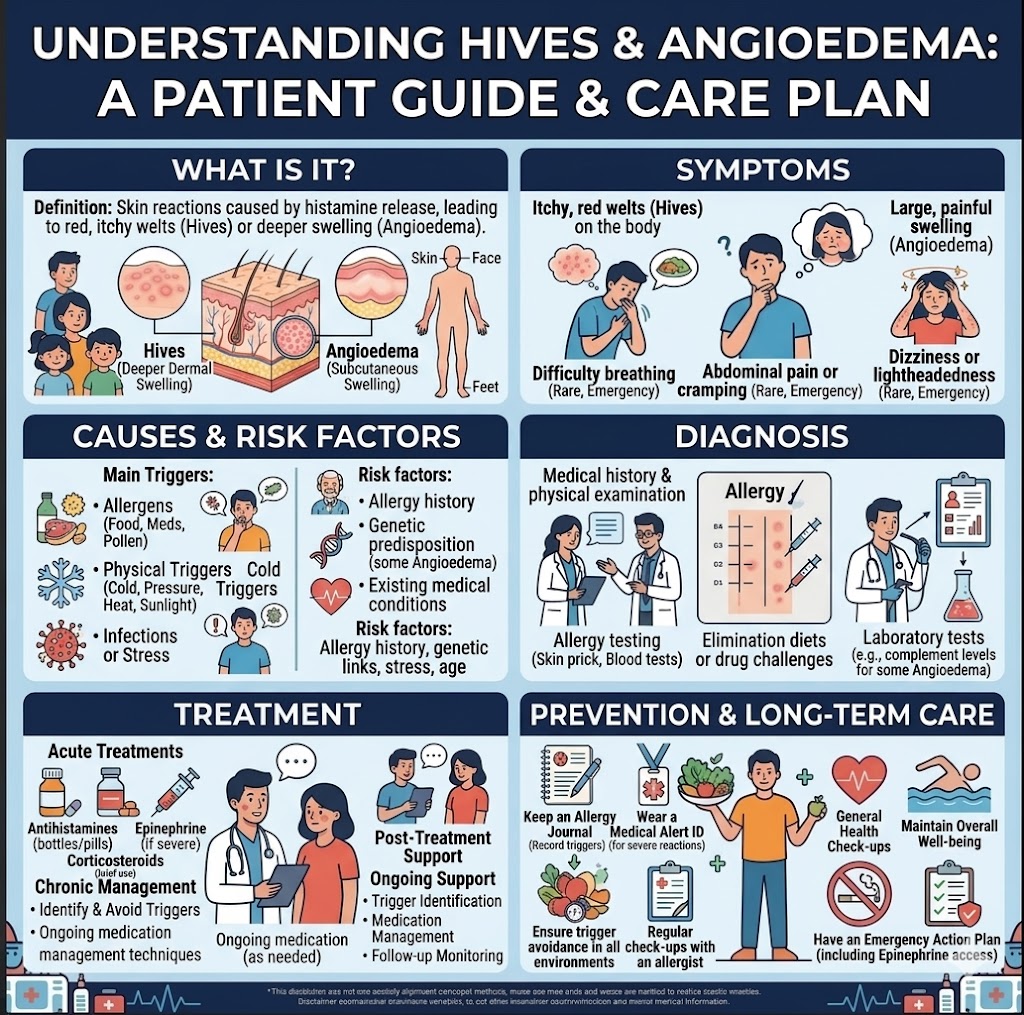
Hives, also known as urticaria, are a common skin reaction causing red or skin-colored, intensely itchy bumps or welts on the skin surface, varying from small spots to large patches. Angioedema is a similar reaction affecting deeper skin layers, causing swelling, often around the face, lips, eyes, or sometimes the tongue and throat. While they can appear together, angioedema can also occur alone. Both are often temporary (acute), clearing within a day without lasting marks. If symptoms persist over six weeks, they are chronic. Though usually harmless, severe angioedema can be life-threatening if swelling blocks the airway.
Understanding the Condition
Hives (Urticaria) and Angioedema: Understanding Skin Reactions
Understanding the Condition
Hives, also known as urticaria, are a common skin reaction causing red or skin-colored, intensely itchy bumps or welts on the skin surface, varying from small spots to large patches. Angioedema is a similar reaction affecting deeper skin layers, causing swelling, often around the face, lips, eyes, or sometimes the tongue and throat. While they can appear together, angioedema can also occur alone. Both are often temporary (acute), clearing within a day without lasting marks. If symptoms persist over six weeks, they are chronic. Though usually harmless, severe angioedema can be life-threatening if swelling blocks the airway.
Common Symptoms
Hives (Urticaria): Raised, intensely itchy welts that can be skin-colored, reddish on lighter skin, or purplish on darker skin. They vary in size and shape, from small bumps to large, irregular patches. Hives typically appear quickly and often disappear within 24 hours, only to reappear elsewhere.
Angioedema: Swelling in the deeper skin layers, commonly affecting the eyes, cheeks, lips, tongue, or throat. Affected areas may feel mildly painful or warm, but are usually not itchy. Swelling develops rapidly (minutes to hours) and typically resolves within a day.
Consultation Guide
Which Specialist to Meet
Start with your primary care doctor. For persistent or severe symptoms, they may refer you to an allergist/immunologist (specializing in allergies and immune system conditions) or a dermatologist (a skin specialist).
Preparations Before Your Visit
Before your appointment, keep a detailed diary of symptoms: when they occur, activities, diet, new medications, and duration. List all current medications, supplements, and herbal remedies. Be ready to discuss your medical and family history of allergies. Prepare questions for your doctor.
Book a doctor visit near me
Your doctor will examine your skin reactions and ask detailed questions about your symptoms, medical history, lifestyle, and potential triggers. This provides crucial diagnostic clues.
The doctor will visually inspect your skin for hives or swelling. They'll ask specific questions: symptom onset, frequency, what helps or worsens them, and other associated symptoms. They'll also inquire about your diet, medications, recent infections, and allergen exposure.
Cool Compresses and Baths: Applying cool, damp cloths or taking a cool bath helps soothe itchy skin. Colloidal oatmeal in bathwater can also provide relief. (Duration: As needed for symptom relief.)
Loose Clothing: Wearing loose, light clothing prevents skin irritation, which can worsen hives. (Duration: As needed during outbreaks.)
Avoid Irritants: Identify and avoid any known substances, temperatures, or activities triggering your reactions. (Duration: Ongoing.)
Oral Corticosteroids: For severe outbreaks, a short course of these powerful anti-inflammatory medications quickly reduces symptoms. Not for long-term use due to side effects. (Duration: Usually a short course of 3-7 days.)
Identify and Avoid Triggers: Keep a symptom diary to pinpoint specific foods, medications, activities, or environmental factors. Consistently avoid identified triggers.
Hygiene After Exposure: If pollen, animal dander, or other airborne allergens trigger hives, shower/bathe and change clothes promptly after exposure.
Manage Stress: Stress can worsen or trigger hives. Practice relaxation techniques like deep breathing, meditation, or yoga to manage stress levels.
Long-Term Monitoring & Management
Consultation Guide
A healthcare professional will prick or scratch your skin (forearm or back) with tiny amounts of common allergens. After 15-20 minutes, they'll check for small, red, itchy bumps, indicating an allergic reaction. The procedure causes minimal discomfort.
A nurse or phlebotomist will draw a small blood sample, usually from an arm vein. This routine procedure typically causes only a brief pinch. The sample is sent to a lab for analysis.
Skin Biopsy (for persistent or unusual cases)
Diagnostic Procedures
Physical Examination and Medical History
What to Expect
These tests help identify specific environmental or food allergens triggering reactions. Small amounts of suspected allergens are applied to your skin to observe for a localized reaction.
What to Expect
Blood tests can help rule out underlying conditions causing chronic hives or angioedema, such as thyroid problems or autoimmune diseases, and sometimes identify specific allergy antibodies.
What to Expect
What to Expect
The doctor will numb a small skin area, then remove a tiny piece of skin. You might feel slight pressure or tugging. The site may be stitched and bandaged. The sample is sent to a lab to identify underlying issues.
Treatment Options
Rarely, for chronic or unusual hives/angioedema unresponsive to typical treatment, a small tissue sample may be taken from an affected area for microscopic examination.
Medications
Antihistamines (Non-Drowsy): These block histamine, a chemical causing itching and swelling in allergic reactions. (Duration: Typically daily for chronic cases, or as needed; weeks to months or longer under guidance.)
Stronger Antihistamines or H2 Blockers: If non-drowsy options fail, stronger antihistamines, sometimes combined with H2 blockers, may be prescribed. (Duration: As prescribed, potentially weeks to months.)
Immunosuppressants: For chronic hives/angioedema unresponsive to antihistamines, immune-suppressing medications may be prescribed. (Duration: Typically months to years, with specialist monitoring.)
Biologic Medications: For specific chronic hives resistant to other treatments, injectable medications targeting immune system pathways may be used. (Duration: Administered regularly (e.g., monthly) for an indefinite period.)
Epinephrine Auto-Injector: Individuals at risk for severe, airway-affecting angioedema may be prescribed an emergency auto-injector for immediate use. (Duration: Emergency use only, carried at all times.)
Regular Medical Follow-ups: Maintain regular appointments with your doctor for chronic hives/angioedema to monitor your condition and adjust treatment.
Emergency Action Plan: For severe angioedema risk (e.g., throat/tongue swelling), work with your doctor to create an emergency plan, including epinephrine auto-injector use if prescribed.
Educate Others: Inform family, friends, and colleagues about your condition and what to do in case of a severe reaction, especially if you carry emergency medication.
Prevention & Long-Term Wellbeing
Home Remedies & Lifestyle Adjustments
Prevention
Tags & Topics
Notice an error or need an update?
Help us keep medical information accurate. Report incorrect info or suggest an edit.


