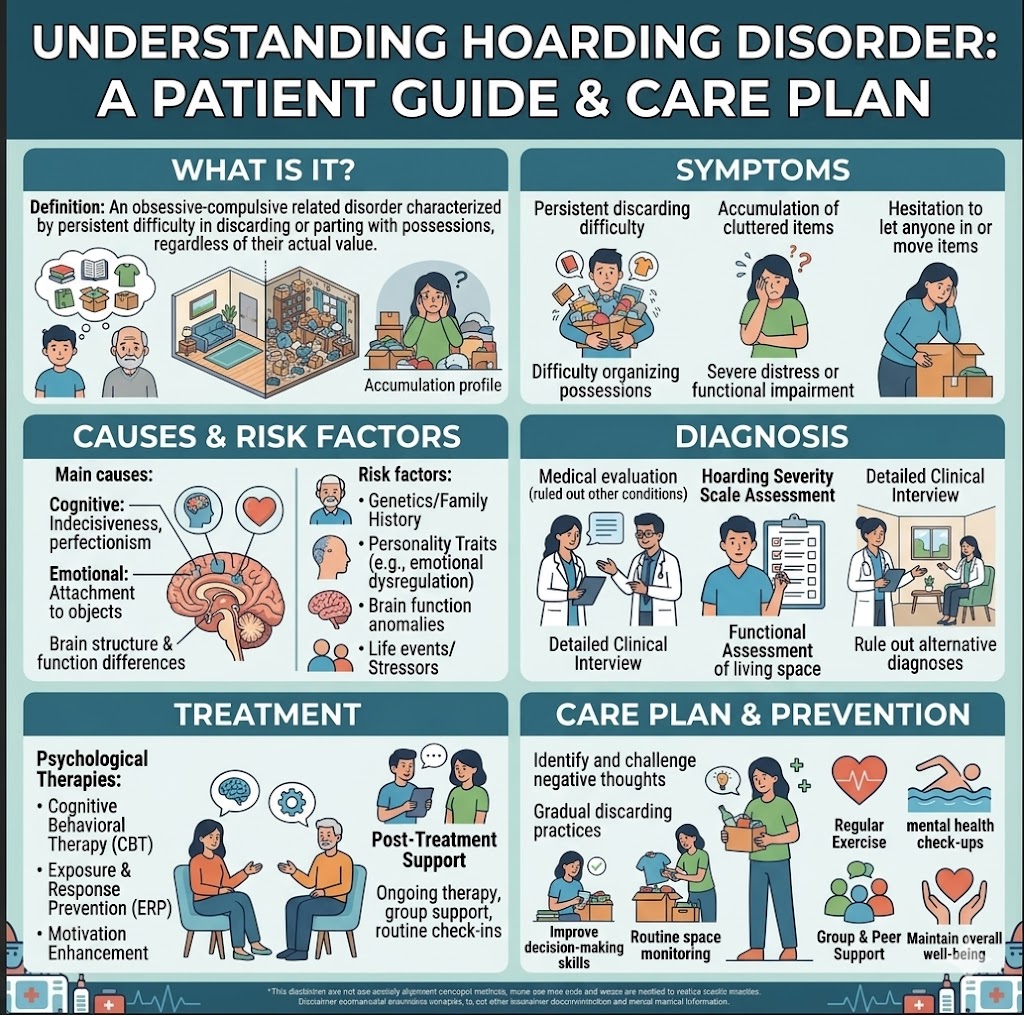
Hoarding disorder is a condition characterized by a persistent difficulty discarding or parting with possessions, driven by a strong perceived need to save them and significant distress at the thought of letting them go. This behavior leads to the accumulation of a vast number of items, regardless of their actual value, creating severely cluttered living spaces. These spaces often become unsafe or unusable for their intended purpose, significantly impacting daily life, relationships, and overall well-being. Hoarding can range from mild to severe. Individuals with hoarding disorder may not see it as a problem, making initial engagement in treatment challenging. However, targeted therapy can help modify behaviors and beliefs, leading to a safer and more fulfilling life.
Understanding the Condition
Hoarding Disorder: Understanding, Managing, and Living Better
Understanding the Condition
Common Symptoms
Excessive Acquiring and Saving: A constant urge to get and keep many items that may not be currently needed or for which there is no available space.
Difficulty Discarding: Persistent trouble throwing out or letting go of possessions, regardless of their actual value, leading to significant distress when attempting to part with them.
Extreme Clutter: Accumulation of items to the point where living areas become unusable for their intended purpose, with narrow pathways and surfaces covered, creating an unsafe or unhygienic environment.
Decision-Making Challenges: Struggling with perfectionism, avoiding decisions, or delaying tasks, especially those related to organizing or discarding possessions.
Planning and Organization Difficulties: Persistent problems with planning, organizing, and maintaining order within one's living environment.
Social Withdrawal: A tendency to keep the problem private, often avoiding visitors like family, friends, or repair workers due to embarrassment or shame over the clutter.
Gradual Onset and Worsening: Symptoms often begin in teenage years, gradually worsen with age, and can become overwhelming by middle age, becoming increasingly difficult to manage.
Consultation Guide
Which Specialist to Meet
Before your visit, consider noting when symptoms began, how they have progressed, and specific ways they impact your daily life, safety, and relationships. Be ready to describe your living situation. Prepare any questions you have for the doctor. If you feel comfortable, bringing a trusted family member or friend can be helpful for support and to provide additional observations.
Book a doctor visit near me
During the assessment, the mental health professional will ask a series of detailed questions about your habits regarding possessions. This includes how often you acquire items, the level of difficulty you experience when trying to discard them, and the extent of clutter in your home. They will also inquire about any distress you feel related to these behaviors and how the clutter affects your daily life, relationships, and safety. You may be asked about your personal history, family background, and any co-occurring mental or physical health concerns. Sometimes, standardized questionnaires or screening tools are used to help gather information and assess symptom severity. The goal is to obtain a clear picture of your situation to determine if your symptoms align with the diagnostic criteria for hoarding disorder.
Seeking Timely Professional Help: If you or a loved one notice these symptoms, consulting a mental health professional early can be crucial. Early intervention can prevent the condition from worsening and make subsequent treatment more effective.
Ongoing Support and Management
Consistent Therapy Engagement: Regularly attending therapy sessions, particularly Cognitive Behavioral Therapy, is vital for developing, practicing, and maintaining effective strategies to manage hoarding behaviors and associated thoughts.
Maintaining Organization Strategies: Continuously applying learned organizing principles and, if necessary, engaging with professional organizers, helps prevent the re-accumulation of clutter and maintains a safe, functional living environment.
Family and Social Support: Involve trusted family members and friends in your journey to foster understanding, encouragement, and practical assistance when needed, which can help combat feelings of isolation.
Addressing Co-occurring Conditions: Continue to manage any associated mental health conditions, such as anxiety or depression, through ongoing therapy and/or medication, as these can significantly impact hoarding symptoms and overall well-being.
Diagnostic Procedures
A primary care doctor can provide an initial assessment and refer you to mental health professionals. Specialists to consult include psychiatrists (medical doctors specializing in mental health), psychologists, or licensed therapists. These professionals are equipped to diagnose and treat hoarding disorder.
Preparations Before Your Visit
Clinical Evaluation and Assessment
Diagnosing hoarding disorder involves a comprehensive evaluation by a mental health professional. This process focuses on understanding your unique thoughts, behaviors, and experiences related to acquiring and discarding items. There are no laboratory tests or imaging scans used for diagnosis; instead, the diagnosis is based on specific clinical criteria and a thorough interview.
What to Expect
Treatment Options
Hoarding disorder is a condition characterized by a persistent difficulty discarding or parting with possessions, driven by a strong perceived need to save them and significant distress at the thought of letting them go. This behavior leads to the accumulation of a vast number of items, regardless of their actual value, creating severely cluttered living spaces. These spaces often become unsafe or unusable for their intended purpose, significantly impacting daily life, relationships, and overall well-being. Hoarding can range from mild to severe. Individuals with hoarding disorder may not see it as a problem, making initial engagement in treatment challenging. However, targeted therapy can help modify behaviors and beliefs, leading to a safer and more fulfilling life.
Therapies
Cognitive Behavioral Therapy (CBT): CBT is a highly effective, structured form of talk therapy that helps identify and change unhelpful thought patterns and behaviors related to acquiring and discarding items. It teaches strategies to improve organizing, decision-making, and problem-solving skills. (Duration: Typically involves weekly sessions for several months, often between 12-20 sessions, but can be longer depending on individual needs and progress.)
Psychotherapy (Talk Therapy): A broader approach to therapy where you discuss your issues with a mental health provider. It helps you understand underlying reasons for your behaviors, manage emotions, and develop healthy coping mechanisms for life's challenges. (Duration: Can vary significantly, from short-term (a few months) to long-term (a year or more), based on the complexity of your needs and personal goals.)
Medications
Certain Medications: While there are no specific medications solely for hoarding disorder, a doctor may prescribe medicines to help manage co-occurring mental health conditions like anxiety or depression, which are common in individuals with hoarding disorder. These can make it easier to engage in therapy and improve overall well-being. (Duration: As prescribed by a doctor, potentially long-term, with regular review and adjustment.)
Regular Follow-ups with Professionals: Schedule periodic check-ups with your mental health professional to monitor progress, address any new challenges that arise, and adjust your treatment plan as necessary for long-term success.
Prevention & Long-Term Wellbeing
Home and Lifestyle Strategies
Organizing and Decluttering Support: Working with professional organizers specializing in hoarding can provide practical, hands-on assistance in sorting, categorizing, and safely removing items. This is often most effective when integrated with ongoing therapy. (Duration: Can range from short-term intensive sessions to ongoing support as needed to maintain progress.)
Support Groups: Joining support groups allows individuals with hoarding disorder and their families to connect with others facing similar challenges, share experiences, and learn coping strategies in a supportive, non-judgmental environment. (Duration: Ongoing participation can be highly beneficial for long-term support and maintenance of gains.)
Prevention and Early Intervention
Recognizing Early Signs: Pay attention to early indications such as persistent difficulty discarding items, a noticeable increase in accumulated possessions, and significant distress related to decluttering, especially during teenage or early adult years.
Tags & Topics
Notice an error or need an update?
Help us keep medical information accurate. Report incorrect info or suggest an edit.


