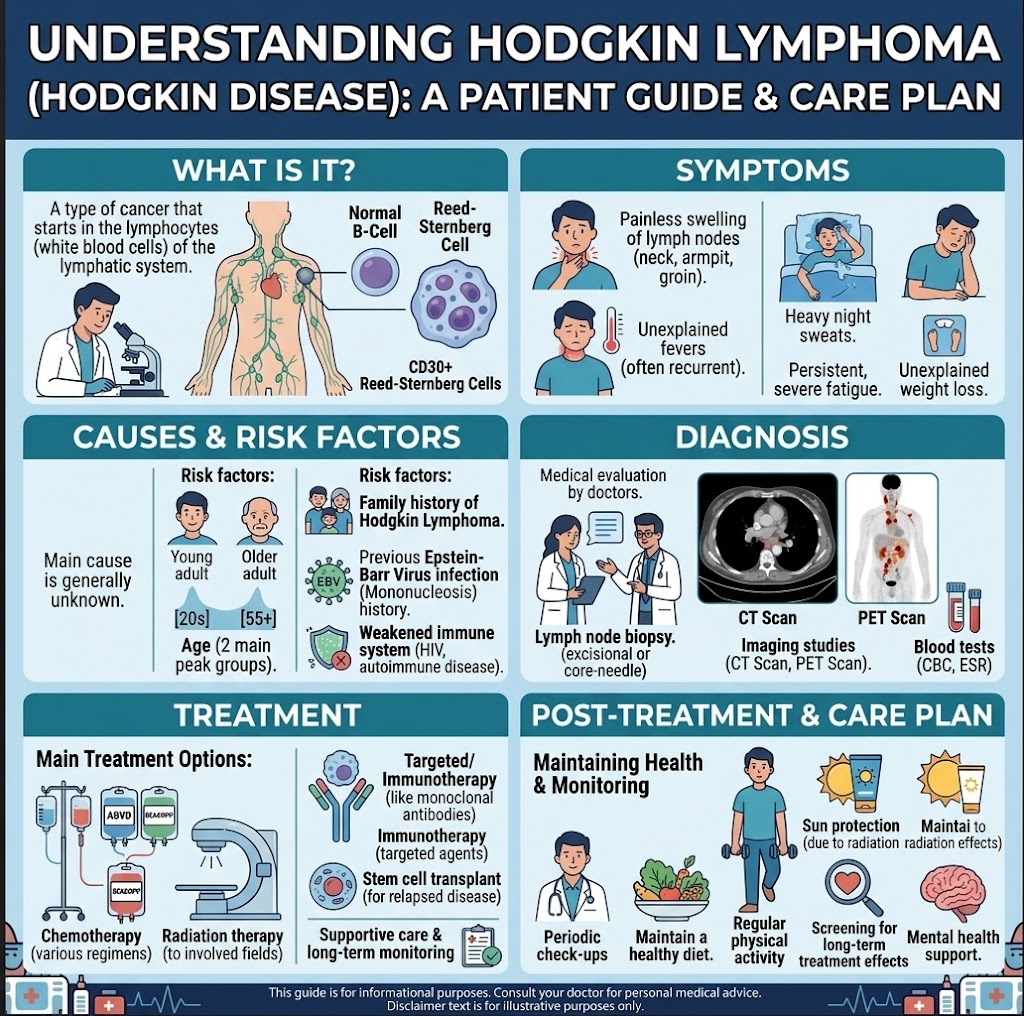
Hodgkin lymphoma is a type of cancer that begins in the lymphatic system, a vital part of your body's immune defense. This system includes lymph nodes (gland-like structures), spleen, thymus, tonsils, and bone marrow. Specifically, Hodgkin lymphoma starts in germ-fighting white blood cells called B lymphocytes and is identified by the presence of unique cancer cells called Reed-Sternberg cells. It is generally highly treatable and often curable. The exact cause is unknown, but it involves changes in cell DNA leading to uncontrolled B lymphocyte growth. Risk factors include certain age groups (20s-30s and over 65), family history, some infections (like HIV, Epstein-Barr virus), and weakened immune systems or autoimmune conditions.
Understanding the Condition
Hodgkin Lymphoma: Understanding and Management
Understanding the Condition
Common Symptoms
Swollen Lymph Nodes: Painless lumps under the skin, most often in the neck, armpit, or groin.
Drenching Night Sweats: Severe sweating during sleep that soaks clothes and bedding.
Other Symptoms: Fatigue and fever can also occur, though less specific.
Consultation Guide
Which Specialist to Meet
Before your visit, list all symptoms, medications, and medical history. Prepare questions for your doctor to ensure all concerns are addressed.
Book a doctor visit near me
Relapse Awareness: Be familiar with Hodgkin lymphoma symptoms and report any concerns to your doctor promptly.
Consultation Guide
Hodgkin lymphoma is a type of cancer that begins in the lymphatic system, a vital part of your body's immune defense. This system includes lymph nodes (gland-like structures), spleen, thymus, tonsils, and bone marrow. Specifically, Hodgkin lymphoma starts in germ-fighting white blood cells called B lymphocytes and is identified by the presence of unique cancer cells called Reed-Sternberg cells. It is generally highly treatable and often curable. The exact cause is unknown, but it involves changes in cell DNA leading to uncontrolled B lymphocyte growth. Risk factors include certain age groups (20s-30s and over 65), family history, some infections (like HIV, Epstein-Barr virus), and weakened immune systems or autoimmune conditions.
Diagnostic Procedures
Initially, see your primary care doctor. If Hodgkin lymphoma is suspected, you'll be referred to a hematologist-oncologist, a specialist in blood cancers, for diagnosis and treatment planning.
Preparations Before Your Visit
Physical Exam and Blood Tests
Initial assessment involves checking for swollen lymph nodes and general health. Blood tests provide clues about overall health and potential issues.
What to Expect
The doctor will physically check for lumps. Blood is drawn from your arm; a quick, minor pinch.
Bone Marrow Biopsy and Aspiration
Samples of liquid and solid bone marrow are collected to check for cancer cell spread.
What to Expect
Lying on your side or stomach, the back of your hip bone is numbed. A needle extracts liquid (aspiration), then a small tissue piece (biopsy). Expect pressure and brief sharp pain. Soreness may last a few days.
CT Scan (Computed Tomography)
Uses X-rays to create detailed cross-sectional images of internal organs, helping locate tumors and enlarged lymph nodes.
What to Expect
You lie on a table that slides into a large scanner. You must remain still. Contrast dye might be given. The scan is painless, lasting 10-30 minutes.
PET Scan (Positron Emission Tomography)
An imaging test that uses a radioactive tracer to highlight areas of high metabolic activity, such as cancer cells, often combined with a CT scan for precision.
What to Expect
A tracer is injected, and after a waiting period (around an hour), you lie still in a scanner. It's painless and takes 30-60 minutes, identifying active cancer.
Treatment Options
Chemotherapy: Powerful drugs, usually given intravenously, to kill fast-growing cancer cells throughout the body. (Duration: Given in cycles over several months to a year.)
Radiation Therapy: High-energy beams precisely target and destroy cancer cells in specific areas. Can be external or internal. (Duration: Daily treatments typically for a few weeks.)
Targeted Therapy: Medications that specifically attack vulnerabilities in cancer cells, blocking their growth with less harm to healthy cells. (Duration: Varies; can be long-term.)
Immunotherapy: Treatments that enhance your body's immune system to recognize and fight cancer cells more effectively. (Duration: Given in cycles over months or years.)
Investigational Treatments
Clinical Trials: Research studies offering access to new or experimental treatments not yet widely available. (Duration: Varies by trial protocol, potentially months to years.)
Regular Follow-Up Care: Crucial appointments after treatment to monitor for recurrence and manage potential long-term side effects.
Side Effect Management: Collaborate with your team to address any short-term or long-term treatment side effects.
Emotional Support: Utilize family, friends, support groups, or mental health professionals to cope with the cancer journey.
Prevention & Long-Term Wellbeing
Unexplained Weight Loss: Significant loss of body weight (10% or more) without dieting.
Itchy Skin: Persistent, sometimes severe, itching all over the body.
Bone Marrow Transplant (Stem Cell Transplant): Replaces diseased bone marrow with healthy blood-forming stem cells after high-dose chemotherapy or radiation. (Duration: Intensive preparation (weeks), transplant, and months of recovery.)
Prevention and Risk Reduction
Manage Infections: Addressing infections like HIV or Epstein-Barr virus may help reduce overall risk for some individuals.
Maintain Immune Health: For those with autoimmune conditions or weakened immunity, working with a doctor to manage these can support general health.
Long-Term Monitoring and Support
Healthy Lifestyle: Balanced diet, regular exercise, and avoiding tobacco/excessive alcohol support overall health and recovery.
Tags & Topics
Notice an error or need an update?
Help us keep medical information accurate. Report incorrect info or suggest an edit.


