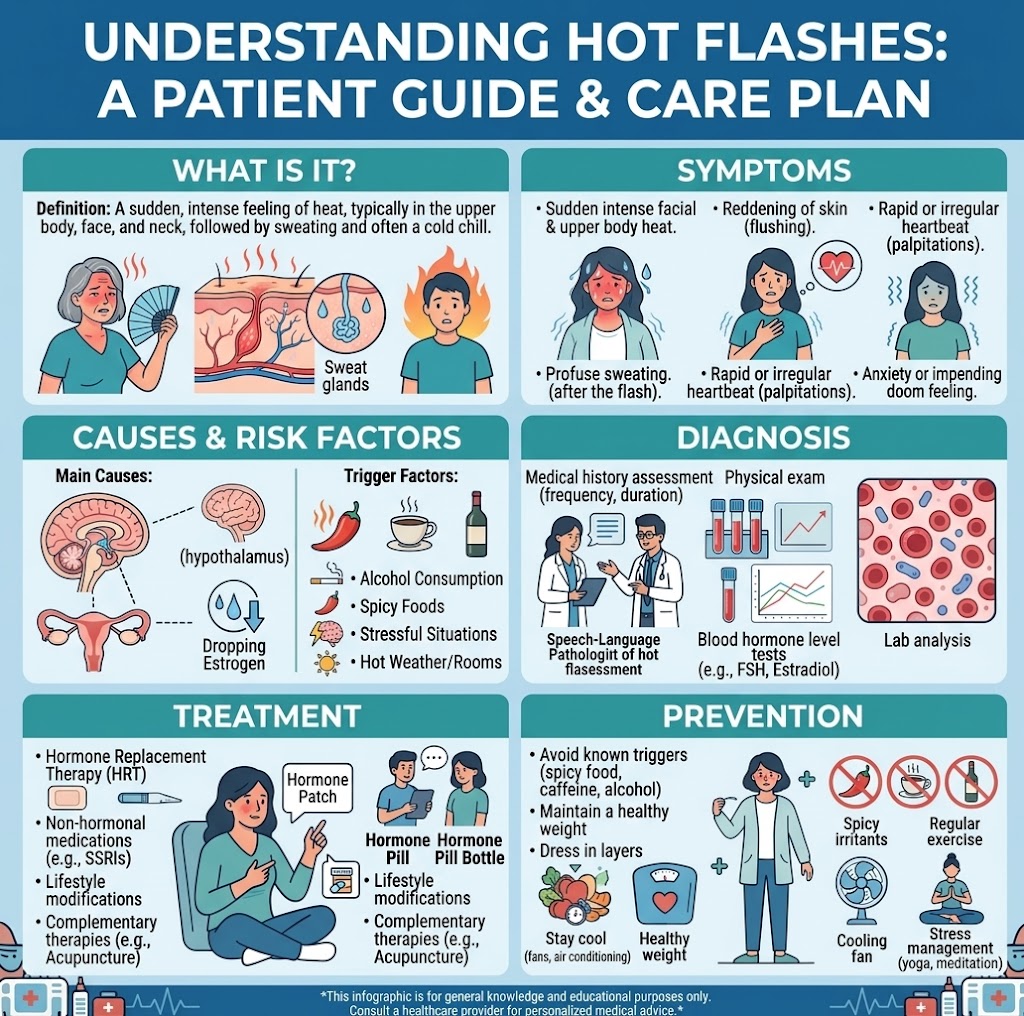
A hot flash is a sudden, intense sensation of warmth that typically affects the upper body, especially the face, neck, and chest. It often leads to sweating and can be followed by a feeling of coldness due to body heat loss. When these episodes occur at night, they are known as night sweats and can significantly disrupt sleep. Hot flashes are most commonly associated with menopause, the natural transition when menstrual periods become irregular and eventually stop. They are a frequent and prominent symptom of this life stage. While the duration and frequency vary, many individuals experience them daily, with each episode lasting 1 to 5 minutes, and they can persist for several years.
Understanding the Condition
Hot Flashes: Understanding and Managing Sudden Warmth
Understanding the Condition
A hot flash is a sudden, intense sensation of warmth that typically affects the upper body, especially the face, neck, and chest. It often leads to sweating and can be followed by a feeling of coldness due to body heat loss. When these episodes occur at night, they are known as night sweats and can significantly disrupt sleep. Hot flashes are most commonly associated with menopause, the natural transition when menstrual periods become irregular and eventually stop. They are a frequent and prominent symptom of this life stage. While the duration and frequency vary, many individuals experience them daily, with each episode lasting 1 to 5 minutes, and they can persist for several years.
Common Symptoms
Sudden Warmth (Hot Flash): An abrupt feeling of intense heat spreading across the face, neck, and chest, often causing the skin to redden (flush). This sensation is typically followed by sweating, which can range from mild dampness to profuse perspiration. After the heat subsides, some individuals may experience chills due to the rapid cooling of the body.
Night Sweats: Hot flashes that occur during sleep, frequently leading to waking up in discomfort from excessive sweating. These can severely disrupt sleep patterns, potentially contributing to long-term sleep deprivation and fatigue.
Other Associated Sensations: Some people may also experience a rapid or irregular heartbeat (palpitations), anxiety, or an uncomfortable feeling of prickling on the skin during a hot flash.
Consultation Guide
Which Specialist to Meet
You should consult with your primary care physician, a gynecologist, or an endocrinologist. These specialists can evaluate your symptoms, determine if they are related to menopause or another condition, and discuss appropriate management strategies.
Preparations Before Your Visit
Before your visit, it is helpful to keep a diary of your symptoms for a few weeks. Note the frequency, duration, and intensity of your hot flashes, as well as any potential triggers (e.g., spicy foods, stress, specific activities). Also, list all current medications, supplements, and herbal remedies you are taking. Prepare a list of questions or concerns you have about your symptoms and treatment options.
Book a doctor visit near me
The diagnosis of hot flashes is primarily clinical, based on a thorough discussion of your symptoms and medical history. Your healthcare provider will ask detailed questions about when your hot flashes started, how often they occur, how long they last, their severity, and any associated symptoms. They will also inquire about your menstrual cycle history, overall health, and any other relevant medical conditions.
During your appointment, the doctor will engage in a conversation to understand your experiences. There are no specific physical examinations or imaging tests typically required to diagnose hot flashes themselves. The focus is on your subjective reports and how these symptoms impact your daily life. This discussion helps confirm that your symptoms align with typical hot flash presentations, especially in the context of menopausal transition.
Hormone Level Assessment (If Needed)
While not always necessary to diagnose hot flashes, blood tests may be performed to measure hormone levels, such as Follicle-Stimulating Hormone (FSH) and estrogen. These tests help to confirm your menopausal status, especially if your menstrual cycles are irregular or if you are experiencing symptoms at an earlier age. This helps to rule out other potential causes of similar symptoms.
Non-Hormonal Prescription Medications: Certain non-hormonal medications, including some antidepressants, anti-seizure medications, and blood pressure medications, have been found to help reduce the frequency and severity of hot flashes, particularly for those who cannot or prefer not to use hormonal therapy. (Duration: As prescribed by a doctor, often ongoing for symptom management, with periodic review.)
Therapies and Other Approaches
Cognitive Behavioral Therapy (CBT): CBT is a type of talk therapy that can help individuals manage the distress and impact of hot flashes by changing negative thought patterns and behaviors related to their symptoms. (Duration: Typically involves several sessions over weeks or months, with booster sessions as needed.)
Clinical Hypnosis: Guided relaxation and visualization techniques used to help reduce the frequency and severity of hot flashes by influencing brain activity related to temperature regulation. (Duration: Varies, often involving a series of sessions (e.g., 5-10 sessions) over several weeks.)
Acupuncture: An ancient Chinese therapy involving the insertion of thin needles into specific points on the body. Some individuals report reduced hot flash frequency and intensity with acupuncture. (Duration: Varies, often involves multiple sessions over several weeks or months.)
Avoid Smoking: Smoking has been linked to an increased risk and severity of hot flashes. Quitting smoking can improve overall health and may reduce symptoms.
Regular Physical Activity: Consistent, moderate exercise can help improve cardiovascular health, regulate body temperature, and reduce stress, all of which contribute to better management of hot flashes.
Manage Stress Effectively: High stress levels are a common trigger for hot flashes. Incorporating stress-reduction techniques like meditation, deep breathing, or yoga into your daily routine can be beneficial.
Long-Term Monitoring and Management
Regular Health Check-ups: Maintain regular appointments with your healthcare provider to discuss any persistent or worsening symptoms and to review the effectiveness and safety of your current treatment plan.
Bone Density Monitoring: Menopause leads to a decrease in bone density, increasing the risk of osteoporosis. Your doctor may recommend regular bone density screenings to monitor bone health and suggest preventive measures.
Ongoing Lifestyle Adjustments: Continue to practice cooling strategies, trigger avoidance, and stress management techniques as part of your daily routine, even if symptoms improve with treatment.
Medication Review: Periodically discuss your medications with your doctor to ensure they are still the most appropriate and effective options for your symptoms and overall health, especially for long-term use.
Diagnostic Procedures
Clinical Evaluation and Medical History
What to Expect
What to Expect
If your doctor determines that hormone level assessment is appropriate, a small blood sample will be drawn from a vein in your arm. This is a quick and routine procedure that involves minimal discomfort, similar to a standard blood test. The sample is then sent to a laboratory for analysis. The results will provide information about your current hormonal state, aiding in the overall assessment and guiding treatment decisions.
Treatment Options
Medications (Prescription)
Hormonal Therapy: These treatments involve prescription medications containing estrogen, or a combination of estrogen and progestin, to replace the hormones that decline during menopause. They are highly effective in reducing hot flashes. (Duration: Typically short-term (e.g., a few years), with the duration determined by your doctor based on individual health factors and risks.)
Prevention & Long-Term Wellbeing
Lifestyle Adjustments and Home Remedies
Keep Cool: Dress in layers so you can remove clothing as needed. Use fans, keep your living and sleeping environments cool, and consider using cooling pillows or gel packs. Opt for cool beverages, especially water, throughout the day. (Duration: Ongoing)
Identify and Avoid Triggers: Pay attention to what seems to bring on your hot flashes. Common triggers include spicy foods, caffeine, alcohol, smoking, and stress. Once identified, try to limit or avoid these triggers. (Duration: Ongoing)
Stress Reduction Techniques: Practices such as deep breathing exercises, meditation, yoga, or mindfulness can help manage stress, which is often a trigger for hot flashes. Regular practice can reduce the frequency and severity of episodes. (Duration: Ongoing, daily practice often recommended)
Regular Physical Activity: Engaging in moderate-intensity exercise most days of the week can improve overall health and may reduce hot flash severity. However, avoid intense exercise close to bedtime, which could worsen night sweats. (Duration: Ongoing)
Prevention
Maintain a Healthy Weight: Excess body fat can act as an insulator, potentially exacerbating hot flashes. Maintaining a healthy weight through diet and exercise can help regulate body temperature.
Tags & Topics
Notice an error or need an update?
Help us keep medical information accurate. Report incorrect info or suggest an edit.


