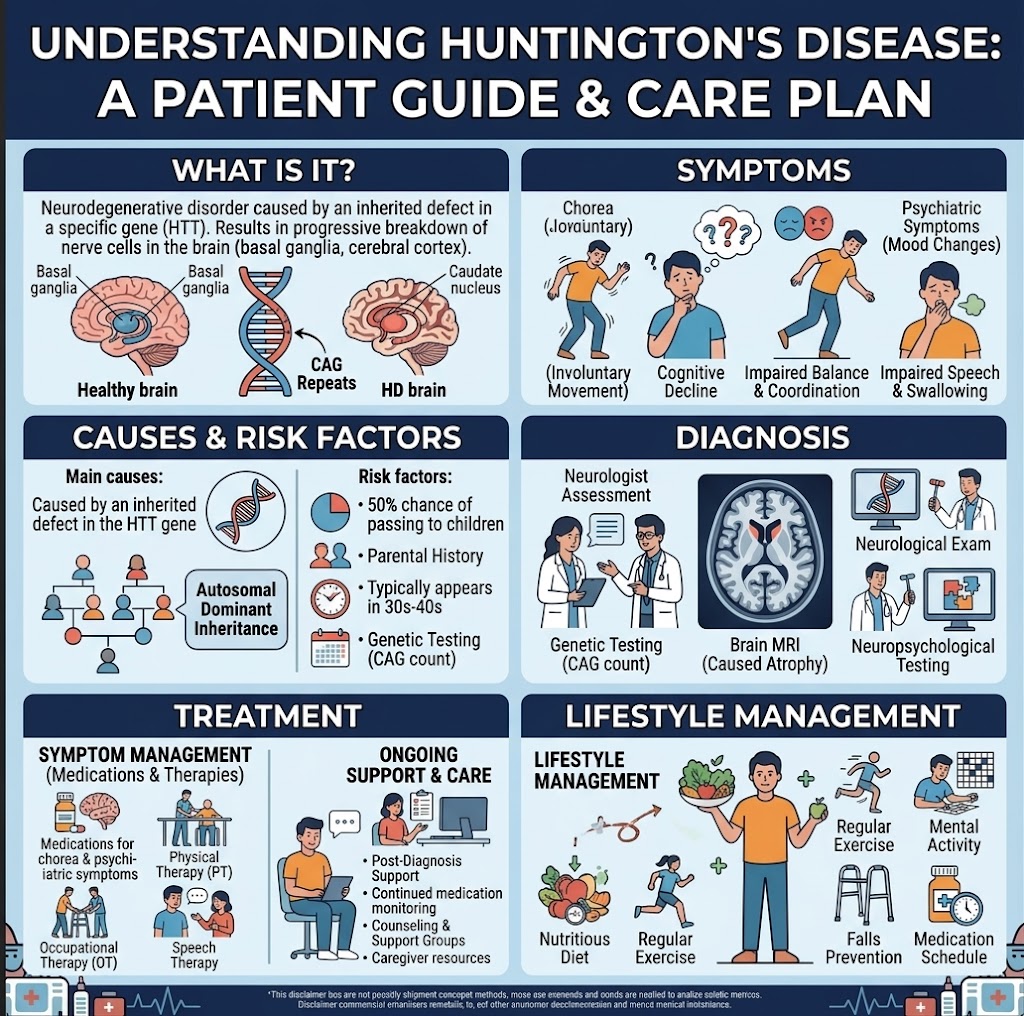
Huntington's disease is a rare, inherited condition that causes the progressive breakdown of nerve cells in the brain over time. This decay impacts physical movement, thinking abilities, and mental health. While symptoms usually emerge in a person's 30s or 40s, they can develop at any age. When symptoms begin before age 20, it is known as juvenile Huntington's disease, which typically progresses faster and presents differently. Although medications can help manage daily symptoms, there is currently no cure to halt the underlying physical and cognitive decline.
Understanding the Condition
Huntington's Disease: Overview, Symptoms, and Management
Understanding the Condition
Huntington's disease is a rare, inherited condition that causes the progressive breakdown of nerve cells in the brain over time. This decay impacts physical movement, thinking abilities, and mental health. While symptoms usually emerge in a person's 30s or 40s, they can develop at any age. When symptoms begin before age 20, it is known as juvenile Huntington's disease, which typically progresses faster and presents differently. Although medications can help manage daily symptoms, there is currently no cure to halt the underlying physical and cognitive decline.
Common Symptoms
Psychiatric and Emotional Changes: Most commonly, severe depression occurs, which may elevate the risk of suicide. Other symptoms include irritability, mood swings, anxiety, social withdrawal, and a lack of self-awareness regarding one's own behaviors.
Consultation Guide
Which Specialist to Meet
You should meet with a neurologist (a brain and nervous system specialist), a genetic counselor, and a mental health professional (such as a psychiatrist or psychologist).
Preparations Before Your Visit
Prepare a detailed family medical history, specifically noting any relatives who experienced movement disorders, dementia, or psychiatric conditions. Write down all physical and emotional symptoms you have noticed, and bring a trusted family member or friend to help navigate the visit and take notes.
Book a doctor visit near me
Symptomatic Medications
Consultation Guide
Movement Disorders: Uncontrolled, jerky, or writhing movements (known as chorea) that affect the arms, legs, face, and tongue. It can also cause muscle stiffness, abnormal eye movements, and severe difficulties with posture, balance, walking, and swallowing.
Cognitive Decline: Difficulty organizing, prioritizing, and focusing on tasks. This includes getting stuck on specific thoughts or actions, a loss of impulse control (leading to sudden outbursts), slowness in processing conversations, and difficulty learning new information.
A lab test analyzing your DNA to check for the specific genetic mutation that causes Huntington's disease.
Diagnostic Procedures
Neurological Examination
A physical assessment to evaluate how well your brain, spinal cord, nerves, and muscles are functioning together.
What to Expect
A neurologist will test your physical reflexes, muscle strength, coordination, balance, eye movements, and hearing. They will also ask basic questions to screen your memory, concentration, and mental status. The exam is completely painless and takes 30 to 60 minutes.
Brain Magnetic Resonance Imaging (Brain MRI)
An imaging scan that uses a powerful magnet and radio waves to take detailed, cross-sectional pictures of your brain's structure.
What to Expect
You will lie flat on a motorized table that slides into a long, tube-shaped scanner. You must remain very still. The machine makes loud tapping and thumping noises, so you will be given earplugs or headphones. The test is painless, does not use radiation, and lasts about 30 to 45 minutes.
Electroencephalogram (EEG)
A diagnostic test that records the electrical activity of your brain to check for abnormal brain wave patterns or seizure activity.
What to Expect
A technician will attach small, flat metal discs called electrodes to your scalp using a temporary adhesive. You will relax in a chair or lie down while a computer records your brain's continuous electrical waves. The test is non-invasive and painless, taking about an hour.
What to Expect
A simple blood draw or cheek swab will be taken. If performing prenatal genetic testing, a doctor may extract fluid from around the developing baby (amniocentesis), which carries a tiny risk of miscarriage. Results are analyzed in a laboratory and typically return in a few weeks.
In Vitro Fertilization (IVF) with Genetic Diagnosis: Couples can use IVF to fertilize eggs in a lab, screening the embryos for the Huntington's gene. Only embryos without the mutation are implanted, ensuring the child does not inherit the disease.
Genetic Counseling: At-risk individuals should consult genetic experts to discuss the emotional and physical implications of learning their genetic status before deciding on testing or family planning.
Long-Term Management and Safety
Treatment Options
Movement-Control Medications: Prescription therapies designed to reduce involuntary jerking and writhing movements (chorea) and manage muscle stiffness. (Duration: Lifelong, with regular dose adjustments as the condition evolves.)
Psychiatric Medications: Medications such as antidepressants, mood stabilizers, or antipsychotic drugs to manage depression, irritability, and behavioral outbursts. (Duration: Long-term, customized continuously based on current mental health needs.)
Rehabilitative Therapies
Psychotherapy (Talk Therapy): Counseling with a mental health professional to develop healthy coping mechanisms, manage grief, and address emotional adjustments. (Duration: Ongoing, based on patient and family requirements.)
Physical and Occupational Therapy: Targeted exercises to improve muscle strength, balance, and coordination, alongside training on how to use assistive devices like handrails or wheelchairs. (Duration: Continuous throughout the disease course.)
Speech and Swallowing Therapy: Exercises to preserve clear communication and teach safe swallowing techniques to prevent choking. (Duration: Ongoing, becoming more critical as physical decline progresses.)
Prevention & Long-Term Wellbeing
Prevention and Family Planning
Home Safety and Fall Prevention: Modifying the living environment by removing tripping hazards, installing grab bars, and utilizing adaptive utensils to maintain physical independence safely.
Nutritional and Swallowing Support: Providing high-calorie, easily chewable, or puréed meals to ensure adequate nutrition as physical chewing and swallowing become more challenging.
Advance Care Planning: Establishing medical directives, living wills, and assigning a healthcare proxy early in the disease course while the patient is fully capable of expressing their choices.
Tags & Topics
Notice an error or need an update?
Help us keep medical information accurate. Report incorrect info or suggest an edit.


