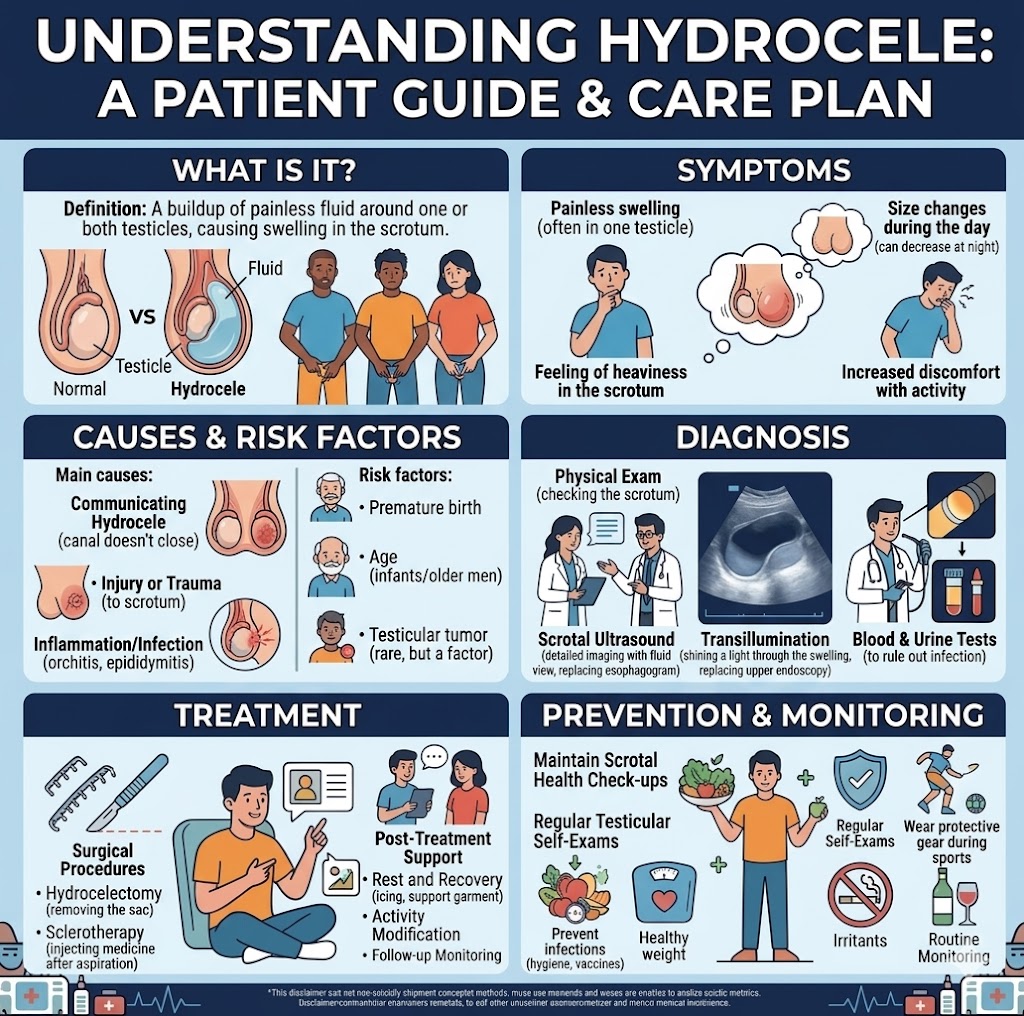
A hydrocele is a type of swelling that occurs when fluid collects in the thin sac surrounding a testicle within the scrotum (the pouch of skin holding the testicles). This condition is very common in newborn males and often resolves on its own by their first birthday. In older children and adults, a hydrocele can develop due to an injury, infection, inflammation, or other health problems affecting the scrotum. While typically not painful or harmful, any swelling in the scrotum requires medical evaluation to rule out more serious conditions like an inguinal hernia or testicular torsion.
Understanding the Condition
Hydrocele: Understanding Scrotal Swelling
Understanding the Condition
Common Symptoms
Before your visit, be prepared to describe all your symptoms, including when they started, how they've changed, and any associated pain or discomfort. Inform your doctor about any recent injuries or medical history. It's helpful to write down any questions you have.
Book a doctor visit near me
A urinalysis is a laboratory test of your urine. It assesses the appearance, concentration, and content of urine to help detect signs of infection, kidney disease, or other underlying health conditions that might be contributing to the swelling or causing other symptoms.
Observation (Watchful Waiting): For most newborn hydroceles, and for small, painless hydroceles in adults, a doctor may recommend simply monitoring the condition. Many infantile hydroceles resolve without intervention. (Duration: Up to 1-2 years for infants; ongoing monitoring for adults if asymptomatic.)
Consultation Guide
An ultrasound, also known as sonography, uses high-frequency sound waves to create real-time images of the structures inside your body. It helps visualize the fluid collection, confirm the presence of a hydrocele, rule out other causes of swelling (like tumors), and assess blood flow to the testicles.
Antibiotics or Anti-inflammatory Medications: If the hydrocele is caused by an underlying infection or significant inflammation, specific medications may be prescribed to treat the root cause, which can lead to the resolution of the hydrocele. (Duration: Typically 7-14 days for antibiotics; as prescribed for anti-inflammatory agents.)
Protecting the Scrotum: To prevent hydroceles caused by injury, wear appropriate protective athletic gear (like a cup) during sports or activities that carry a risk of scrotal trauma. Practicing safe sexual health can also help prevent infections that might lead to scrotal inflammation.
Regular Self-Examinations and Medical Check-ups: Regularly check your scrotum for any new swelling, lumps, or changes. If you notice anything unusual, seek medical attention. Follow your healthcare provider's recommendations for routine check-ups, especially if you have a history of hydroceles or related conditions.
Managing Underlying Conditions
Diagnostic Procedures
Painless Scrotal Swelling: The most common sign is a noticeable, often painless, swelling of one or both testicles. This swelling is due to the fluid buildup.
Feeling of Heaviness: Adults with a hydrocele might experience a sensation of heaviness in the scrotum due to the accumulated fluid.
Fluctuating Swelling Size: The size of the swelling may change throughout the day, often appearing smaller in the morning and becoming larger later in the day.
Associated Discomfort or Pain: While often painless, discomfort can increase as the swelling grows. Sudden, severe pain or swelling in the scrotum can indicate an emergency condition, such as a twisted testicle (testicular torsion), and requires immediate medical attention to prevent serious complications.
Consultation Guide
Which Specialist to Meet
What to Expect
You will lie on an examination table. A clear, warm gel will be applied to the skin of your scrotum. A handheld device called a transducer will be gently moved over the area. This device sends and receives sound waves, creating images on a monitor. The procedure is typically painless, though you might feel slight pressure from the transducer. It usually takes about 15-30 minutes.
What to Expect
You will be provided with a sterile cup and instructions for collecting a clean-catch urine sample. This involves urinating a small amount into the toilet first, then collecting the middle portion of your urine stream into the cup. This is typically done privately in a restroom at the clinic or hospital.
CT Scan (Computed Tomography Scan)
A CT scan uses specialized X-ray equipment and computer processing to create detailed cross-sectional images (slices) of bones, blood vessels, and soft tissues inside the body. It provides more detailed information than a standard X-ray and may be used if other conditions, such as an associated hernia, are suspected.
What to Expect
You will lie on a motorized table that slides into a large, donut-shaped machine. You might hear whirring or clicking noises during the scan. You may be asked to hold your breath for short periods. Sometimes, a special dye (contrast material) is injected into a vein to help certain areas show up more clearly. The scan is painless and typically takes 10-30 minutes.
Treatment Options
You should consult your family doctor or a pediatrician for your child. They may refer you to a urologist, a specialist in the urinary system and male reproductive organs, for further evaluation and treatment.
Preparations Before Your Visit
Conservative Management
Hydrocelectomy (Surgical Removal): Surgery is the most common treatment for hydroceles that are persistent, large, painful, or associated with an inguinal hernia. It involves making a small incision in the groin or scrotum to drain the fluid and remove the sac, preventing fluid recurrence. (Duration: Recovery typically takes a few weeks, with full activity resumed after about a month.)
Fluid Aspiration: In some cases, especially for individuals who are not good candidates for surgery, the fluid can be drained using a needle. However, fluid can often return after this procedure, so it is generally considered a temporary solution. (Duration: A single procedure, but fluid recurrence is common, potentially requiring repeat aspirations.)
Prompt Treatment of Infections and Inflammation: Address any infections (e.g., epididymitis) or inflammatory conditions in the scrotal area promptly. Early treatment can prevent the development or worsening of a hydrocele and minimize potential complications.
Prevention & Long-Term Wellbeing
Prevention
Tags & Topics
Notice an error or need an update?
Help us keep medical information accurate. Report incorrect info or suggest an edit.


