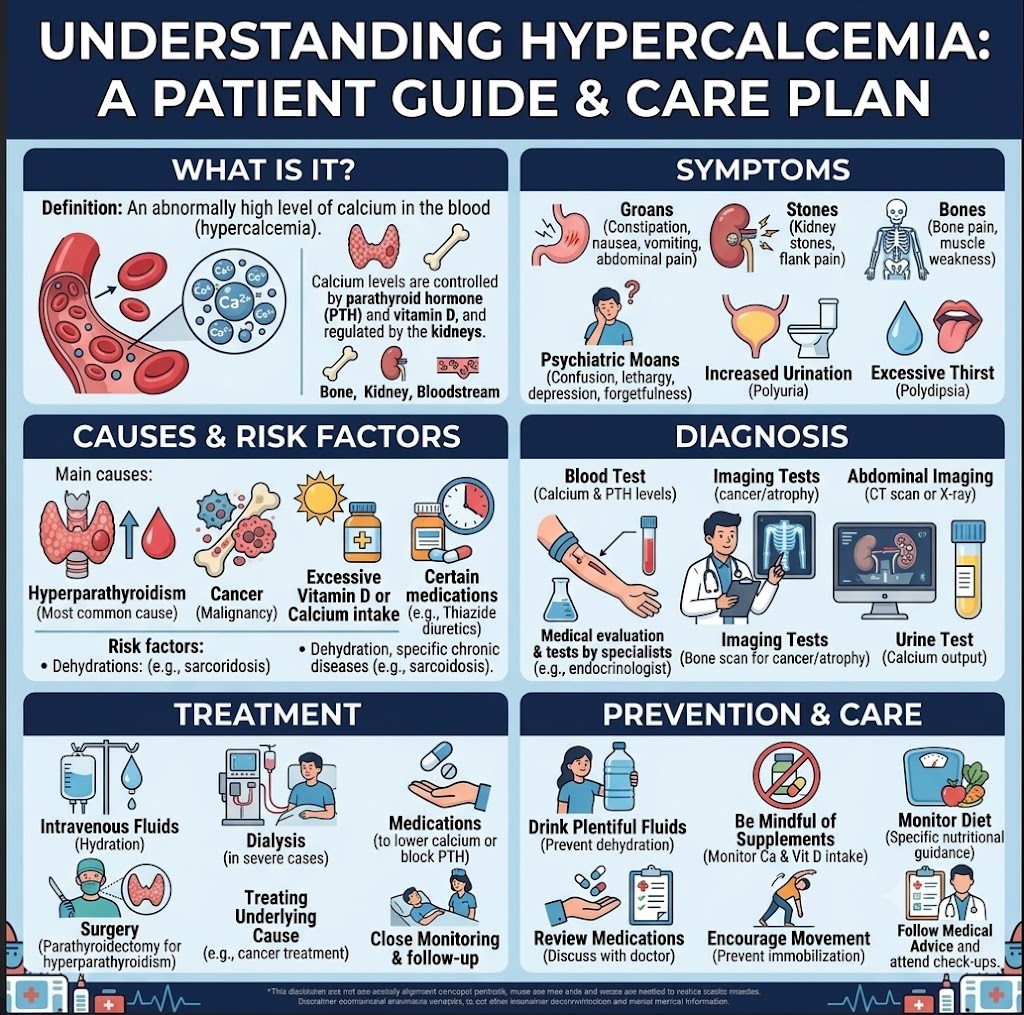
Hypercalcemia is a condition where blood calcium levels are elevated, disrupting vital bodily functions. Calcium is crucial for bones, nerves, muscles, and heart. Excess calcium can impair these systems. Often caused by overactive parathyroid glands or, less commonly, cancer. Mild cases may be symptom-free, but severe hypercalcemia can lead to serious complications.
Understanding the Condition
Understanding Hypercalcemia: When Calcium Levels Are Too High
Understanding the Condition
Hypercalcemia is a condition where blood calcium levels are elevated, disrupting vital bodily functions. Calcium is crucial for bones, nerves, muscles, and heart. Excess calcium can impair these systems. Often caused by overactive parathyroid glands or, less commonly, cancer. Mild cases may be symptom-free, but severe hypercalcemia can lead to serious complications.
Common Symptoms
Kidney Issues: Excessive thirst and frequent urination, increasing the risk of kidney stones.
Digestive Problems: Stomach upset, nausea, vomiting, constipation, and reduced appetite.
Bone and Muscle Pain: Bone pain due to calcium leaching, and muscle weakness.
Brain and Nervous System Effects: Persistent fatigue, lethargy, confusion, memory problems, depression, and irritability.
Heart Issues (Severe): Heart palpitations or abnormal heart rhythms.
Consultation Guide
Which Specialist to Meet
Begin with your primary care doctor. They may refer you to an endocrinologist (hormone specialist) or, if cancer is suspected, an oncologist (cancer specialist).
Preparations Before Your Visit
Prepare a detailed list of all symptoms (when they started, severity), all medications (including supplements), and your full medical history. Note down any questions for your doctor.
Book a doctor visit near me
Report New Symptoms: Promptly inform your doctor of any new or worsening symptoms like thirst, fatigue, bone pain, or mood changes.
Consultation Guide
Measures calcium excreted in urine over 24 hours to assess kidney calcium handling and help pinpoint the cause.
Uses low-dose X-rays to measure bone mineral density, checking for osteoporosis caused by hypercalcemia.
Used if cancer is a suspected cause, identifying tumors or spread.
Corticosteroids: Lower calcium if caused by high vitamin D levels (e.g., from certain diseases or excess supplements). (Duration: Short- or long-term, depending on cause.)
Diuretics: Certain types, with IV fluids, increase kidney calcium excretion. A short-term solution for severe cases. (Duration: Short-term, during acute hospitalization.)
Diagnostic Procedures
A blood sample measures total calcium, parathyroid hormone (PTH), and vitamin D levels, along with kidney function markers.
What to Expect
A healthcare professional will draw blood, usually from a vein in your arm, with a small needle. You might feel a brief pinch. The procedure is quick, lasting minutes.
Urine Test (24-hour collection)
What to Expect
You will collect all urine produced over a full 24-hour period using provided containers and instructions. Start after discarding your first morning urine, collecting all subsequent output until the next morning's first void.
Bone Density Scan (DEXA scan)
What to Expect
You lie flat on a table while a scanner passes over your body, typically targeting your hip and spine. It's painless and takes 10-20 minutes; you must remain still.
Parathyroid Scan (Sestamibi Scan)
A nuclear medicine scan to locate overactive parathyroid glands. A radioactive tracer is injected, which accumulates in abnormal parathyroid tissue.
What to Expect
After a tracer injection, you'll have images taken of your neck/chest by a special camera after a waiting period (hours). You'll need to lie still.
Other Imaging (CT, MRI, PET scans)
What to Expect
You'll lie on a table that moves into a machine. A contrast dye may be injected. These tests are generally painless but require stillness. Duration varies.
Regular Medical Check-ups: Essential for conditions causing hypercalcemia. Follow-up appointments and blood tests monitor calcium and adjust treatment.
Treatment Options
Increased Fluid Intake: For mild cases, drinking plenty of water helps flush excess calcium via the kidneys and prevents dehydration. (Duration: Ongoing daily habit.)
Medications
Intravenous Fluids: Given directly into a vein for moderate to severe cases, these fluids rehydrate and help kidneys excrete calcium. (Duration: Short-term, hours to days, typically in a hospital.)
Bone-Strengthening Agents: Slow bone breakdown, reducing calcium release into the blood. Used for cancer-related hypercalcemia or bone weakening. (Duration: Intravenous (days/weeks) or oral (long-term), as directed.)
Calcium-Sensing Receptor Activators: Reduce parathyroid hormone release, lowering calcium. Used for specific primary hyperparathyroidism or dialysis patients. (Duration: Daily, long-term.)
Dialysis: For severe, life-threatening hypercalcemia with kidney impairment, dialysis rapidly removes blood calcium. (Duration: Emergency treatment, few hours per session, until levels stabilize.)
Surgical Procedures
Prevention & Long-Term Wellbeing
Parathyroidectomy: Removal of overactive parathyroid gland(s) is often curative for primary hyperparathyroidism. (Duration: Single procedure, recovery weeks. Often resolves hypercalcemia permanently.)
Prevention and Monitoring
Stay Hydrated: Drink ample water daily to aid kidney function and reduce kidney stone risk.
Monitor Supplement Intake: Avoid high-dose calcium/vitamin D supplements unless medically advised. Discuss all supplements with your doctor.
Lifestyle Adjustments
Balanced Diet: Eat a healthy diet rich in fruits, vegetables, and whole grains. Moderate calcium intake is usually fine, unless otherwise instructed.
Regular Exercise: Engage in weight-bearing exercises to maintain bone density. Consult your doctor before starting new routines.
Avoid Harmful Habits: Quit smoking and limit alcohol consumption to support overall and bone health.
Tags & Topics
Notice an error or need an update?
Help us keep medical information accurate. Report incorrect info or suggest an edit.


