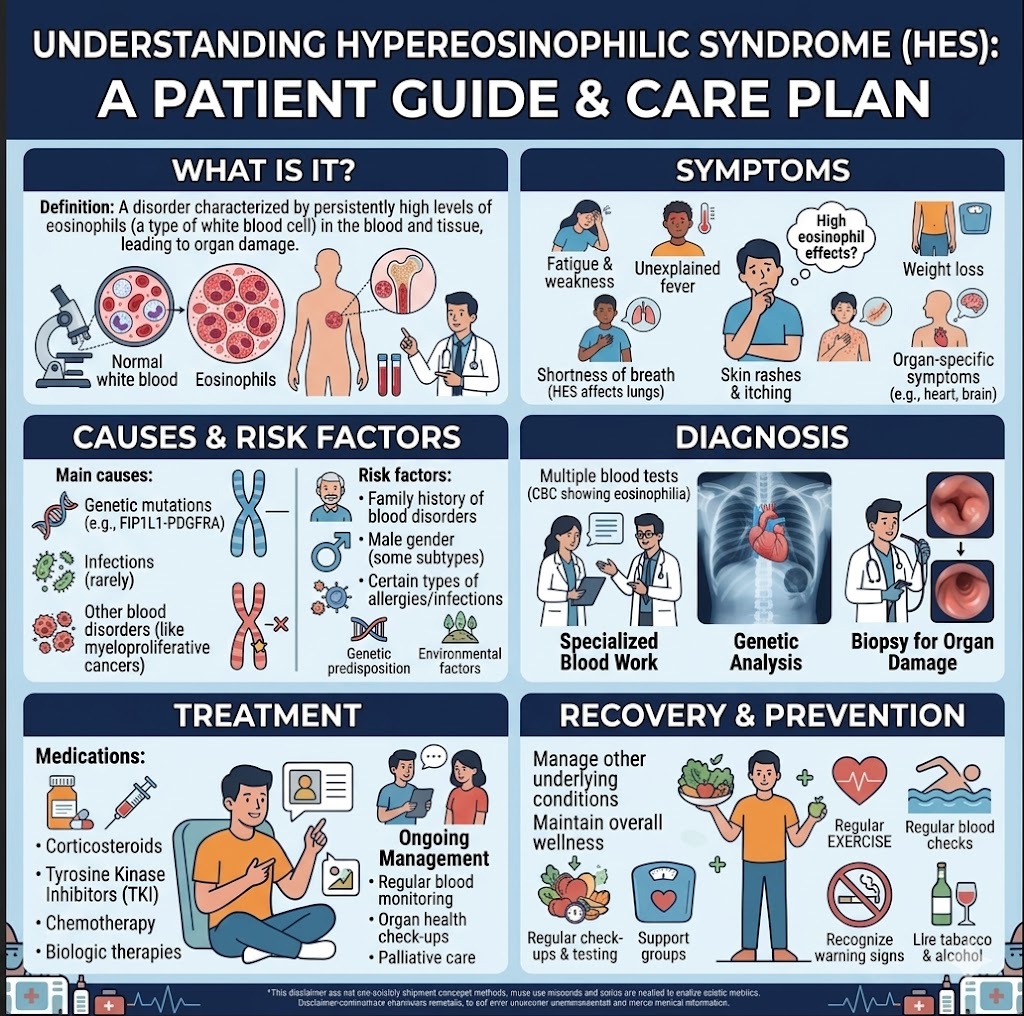
Hypereosinophilic Syndrome (HES) is a rare condition marked by a persistently high number of disease-fighting white blood cells called eosinophils. These excess cells can invade and damage various organs, including the skin, lungs, digestive system, heart, and nervous system, disrupting their function. Untreated HES can lead to severe complications. Treatment focuses on reducing eosinophil levels or addressing the underlying cause.
Understanding the Condition
Hypereosinophilic Syndrome (HES): Understanding High Eosinophil Levels and Organ Damage
Understanding the Condition
Common Symptoms
Varying Symptoms: Symptoms of Hypereosinophilic Syndrome (HES) vary based on affected organs. Early signs may include:
Shortness of Breath: Difficulty breathing or feeling winded, especially if lungs or heart are involved.
Muscle Pain: Aching or soreness in muscles, ranging from mild to severe.
Deep Skin Swelling: Puffy or swollen areas beneath the skin's surface, sometimes red or tender.
Persistent Fatigue: Overwhelming tiredness that does not improve with rest.
If you experience persistent symptoms, consult your primary care doctor, who will likely refer you to a specialist. You'll typically see a **hematologist** (blood disorder specialist) or an **immunologist** (immune system specialist). Depending on which organs are affected, other specialists like a **cardiologist** (heart), **pulmonologist** (lungs), **dermatologist** (skin), **gastroenterologist** (digestive system), or **neurologist** (nervous system) may also be involved in your care.
Preparations Before Your Visit
To make the most of your appointment: list all current symptoms (including when they started and how they've changed), provide your complete medical history, list all medications and supplements you take, and prepare specific questions for your doctor. Consider bringing a family member or friend to help recall information and ask questions.
Book a doctor visit near me
Eosinophil Apheresis: This procedure involves removing blood from the body, filtering out the excess eosinophils, and returning the treated blood. It's used in very severe cases or emergencies to rapidly lower eosinophil counts and alleviate acute symptoms. (Duration: Typically performed as needed, ranging from one-time treatments in crises to several sessions over a period to stabilize the condition.)
Symptom Management and Lifestyle Changes: Managing symptoms, addressing complications (e.g., pain relief, respiratory support), and making dietary or activity adjustments to support overall health and reduce stress on affected organs. (Duration: Ongoing, for the entire duration of living with the condition.)
Early Symptom Recognition: Learn to recognize any new or worsening symptoms, which could indicate disease progression or a complication. Promptly report these to your healthcare provider for timely intervention.
Support Networks: Connecting with others who have HES or chronic conditions can provide emotional support and practical advice. Consider joining support groups or seeking counseling to help manage the psychological impact of living with a rare disease.
Consultation Guide
Hypereosinophilic Syndrome (HES) is a rare condition marked by a persistently high number of disease-fighting white blood cells called eosinophils. These excess cells can invade and damage various organs, including the skin, lungs, digestive system, heart, and nervous system, disrupting their function. Untreated HES can lead to severe complications. Treatment focuses on reducing eosinophil levels or addressing the underlying cause.
Unexplained Fever: Elevated body temperature without an identifiable cause.
Skin Rashes: Eruptions on the skin that may be itchy or painful.
Diarrhea: Loose, watery stools, indicating potential digestive system involvement.
Consultation Guide
Which Specialist to Meet
These tests visualize internal organs to check for damage or abnormalities caused by eosinophil infiltration. An echocardiogram images the heart, a CT scan uses X-rays for detailed cross-sections, and an MRI uses magnets/radio waves for soft tissue images.
This test looks for specific genetic mutations known to cause certain forms of HES, such as those related to primary hypereosinophilia or familial HES.
Tests for Secondary Causes
This can involve various procedures. Stool samples are collected at home. Allergy skin tests involve tiny pricks on your arm or back. Blood tests are similar to a CBC. These tests are generally low-risk and cause minor, temporary discomfort.
Targeted Therapies: For specific types of HES with identifiable genetic causes, targeted drugs block the activity of particular proteins that drive eosinophil overproduction. (Duration: These are typically long-term treatments, taken continuously for many years, often indefinitely, to control the condition.)
Chemotherapy (for Primary HES): In cases where HES is caused by certain blood or bone marrow cancers, chemotherapy drugs are used to destroy cancer cells and reduce eosinophil production. (Duration: Administered in cycles, the total duration depends on the specific cancer and its response to treatment, ranging from several months to a year or more.)
Diagnostic Procedures
Complete Blood Count (CBC) with Differential
This routine blood test measures various components of your blood. A 'differential' specifically counts different white blood cell types, allowing doctors to detect an abnormally high number of eosinophils.
What to Expect
A healthcare professional will draw a small blood sample, usually from a vein in your arm, using a needle. You might feel a brief pinch or sting. The process is quick, typically lasting only a few minutes.
Bone Marrow Aspiration and Biopsy
If blood tests show high eosinophils, this procedure helps determine if the bone marrow (where blood cells are made) is overproducing them due to an underlying blood or bone marrow disorder. Aspiration removes a liquid sample, while biopsy takes a small solid piece.
What to Expect
You will lie on your stomach or side. After numbing the skin and bone with local anesthetic, a needle is inserted into your hip bone. You'll feel pressure and possibly a brief, sharp pain as the marrow is collected. The procedure takes 15-30 minutes; expect some soreness afterward.
Imaging Tests (e.g., Echocardiogram, CT Scan, MRI)
What to Expect
You will lie still on a table that slides into a machine. Some scans may involve a contrast dye injection (feeling a warm flush or metallic taste). MRI machines can be noisy. These procedures are generally painless, lasting 20 minutes to over an hour.
Organ Biopsy (e.g., Skin, Lung, Gastrointestinal)
If specific organs show involvement, a small tissue sample is taken and examined under a microscope. This confirms the presence of eosinophils and assesses damage, helping to diagnose HES and rule out other conditions.
What to Expect
The procedure varies by organ. For skin, a local anesthetic is used. For internal organs, an endoscope may collect samples under anesthesia/sedation. You might feel pressure or mild discomfort, but pain is minimized. Soreness or minor bleeding may occur afterward.
What to Expect
A blood sample is typically collected, similar to a CBC. Sometimes, a cheek swab may be used. There is no special preparation required, and the process is quick, causing minimal discomfort.
These tests aim to identify underlying conditions that might be triggering high eosinophil levels, such as parasitic infections (e.g., stool tests), allergic reactions (e.g., allergy skin tests or blood tests), or certain autoimmune diseases.
What to Expect
Long-Term Monitoring: Regular follow-up appointments with your healthcare team are crucial. This includes periodic blood tests to monitor eosinophil levels, organ function tests (e.g., echocardiograms for heart, lung function tests), and general physical examinations to detect any new organ involvement or changes in the condition.
Treatment Options
Medications
Anti-Inflammatory and Eosinophil-Reducing Drugs: These medications aim to quickly reduce the number of eosinophils and inflammation throughout the body. They are often the first line of treatment, especially in severe cases, to prevent further organ damage. (Duration: Initial treatment might involve high doses for a short period (weeks to months), followed by a gradual reduction to a long-term maintenance dose, which can last for years.)
Immunosuppressants: When the body's immune system is overly active, leading to high eosinophil counts, medications that suppress the immune response may be used. (Duration: These treatments are usually long-term, requiring ongoing monitoring and adjustment by a specialist.)
Medication Adherence: Taking prescribed medications exactly as directed is vital for managing HES and preventing flare-ups or further organ damage. Do not stop or alter doses without consulting your doctor.
Prevention & Long-Term Wellbeing
Supportive Care and Lifestyle Adjustments
Long-Term Management
Healthy Lifestyle: Maintain a balanced diet, engage in regular, moderate exercise (as advised by your doctor), and ensure adequate sleep. These habits support overall immune health and can help your body cope with the demands of a chronic condition.
Stress Management: Chronic stress can impact your immune system. Incorporate stress-reducing activities into your routine, such as mindfulness, meditation, deep breathing exercises, yoga, or spending time in nature.
Avoid Known Triggers: If specific environmental factors, allergens, or dietary components are identified as triggers for your eosinophil levels to rise, work with your doctor to avoid or minimize exposure to them.
Tags & Topics
Notice an error or need an update?
Help us keep medical information accurate. Report incorrect info or suggest an edit.


