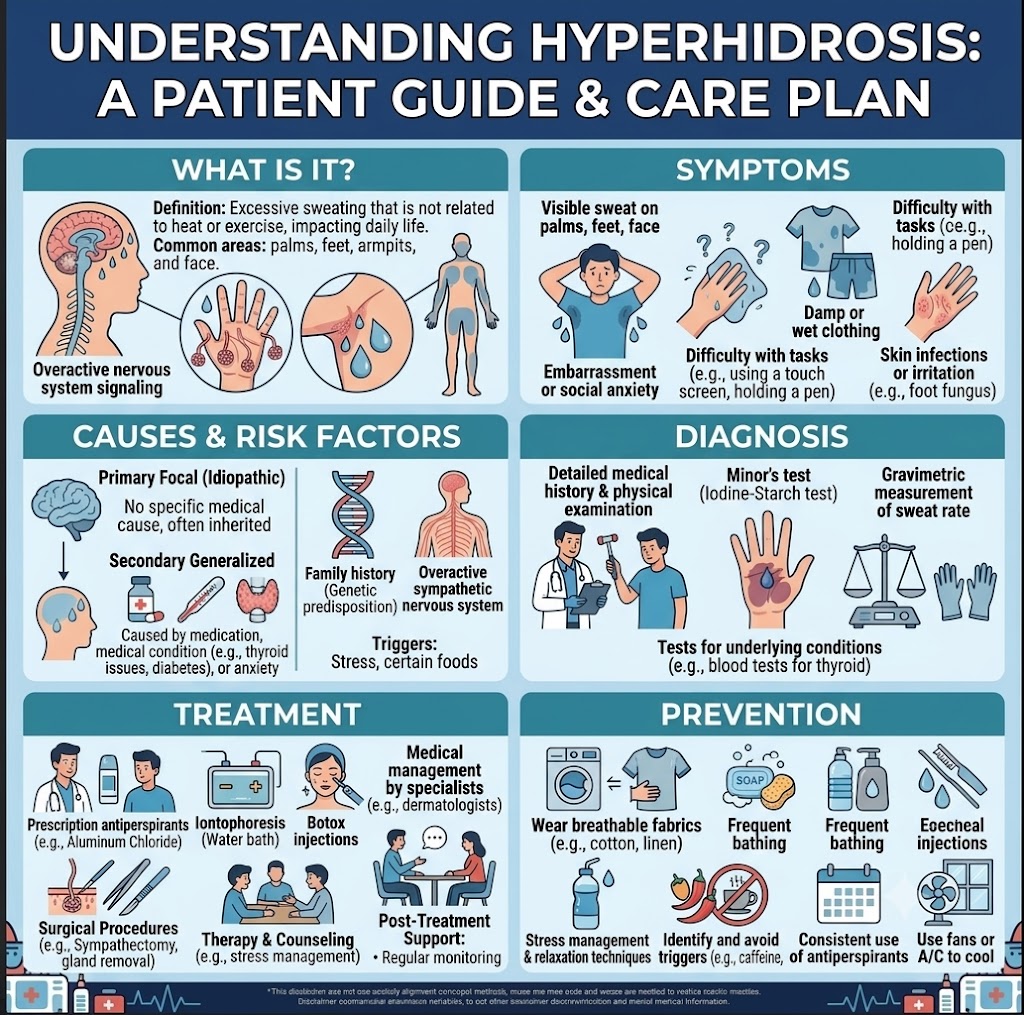
Hyperhidrosis (pronounced hi-pur-hi-DROE-sis) is a medical condition characterized by excessive sweating that isn't always linked to heat or physical activity. This heavy sweating can be so intense it soaks through clothing or drips from your hands, significantly disrupting daily life and often leading to social anxiety and embarrassment. Effective treatments are available, typically starting with strong antiperspirants and progressing to medications, specialized therapies, or, in severe cases, surgical options. Sometimes, the sweating is a symptom of another medical condition that, once treated, can resolve the hyperhidrosis.
Understanding the Condition
Hyperhidrosis: Understanding and Managing Excessive Sweating
Understanding the Condition
Hyperhidrosis (pronounced hi-pur-hi-DROE-sis) is a medical condition characterized by excessive sweating that isn't always linked to heat or physical activity. This heavy sweating can be so intense it soaks through clothing or drips from your hands, significantly disrupting daily life and often leading to social anxiety and embarrassment. Effective treatments are available, typically starting with strong antiperspirants and progressing to medications, specialized therapies, or, in severe cases, surgical options. Sometimes, the sweating is a symptom of another medical condition that, once treated, can resolve the hyperhidrosis.
Common Symptoms
Main Symptom: Heavy Sweating: The primary indicator of hyperhidrosis is sweating much more than is normal or expected. This goes beyond typical sweating from a hot environment, exercise, or feelings of anxiety or stress. The most common type, affecting areas like the hands, feet, underarms, or face, typically causes at least one episode of excessive sweating per week while you are awake. This sweating usually occurs on both sides of the body.
When to Seek Immediate Medical Attention: You should seek emergency medical care right away if heavy sweating is accompanied by dizziness, chest pain, pain in your throat, jaw, arms, or shoulders, cold skin, or a rapid pulse. These could be signs of a serious underlying condition.
Before your appointment, prepare a detailed account of your sweating patterns. Note when and where you sweat heavily, what situations or activities make it worse or better, and any other symptoms you experience. Make a list of all current medications, supplements, and vitamins you take. Also, be ready to discuss your family's medical history, as hyperhidrosis can run in families. Prepare a list of questions you have for your doctor.
Book a doctor visit near me
You will discuss your symptoms, including when they started, how frequently they occur, and how they impact your daily life. The doctor will examine the affected areas and your general health to rule out other conditions. This typically involves no special preparation beyond your detailed symptom history.
Regular Doctor Check-ups: Consistent follow-up appointments with your healthcare provider are crucial to monitor the effectiveness of your treatments, manage any potential side effects, and re-evaluate your condition if new symptoms arise or an underlying cause changes.
Consultation Guide
When to See a Healthcare Provider: Consult your healthcare provider if your sweating disrupts your daily routine, causes emotional distress or social withdrawal, you suddenly start sweating more than usual, or you experience unexplained night sweats.
Consultation Guide
Which Specialist to Meet
You should begin by consulting your primary care provider. They can help determine if there's an underlying cause for your sweating and may refer you to a specialist. For skin-related issues and most treatments, a dermatologist (skin specialist) is often the key specialist. If an underlying hormonal cause is suspected, an endocrinologist may be involved, or a neurologist if nerve-related issues are being explored.
Preparations Before Your Visit
If your doctor believes your excessive sweating might be caused by an underlying medical condition (secondary hyperhidrosis), they may order blood or urine tests. These tests can help identify conditions such as an overactive thyroid, low blood sugar, or other hormonal imbalances that could be contributing factors.
Diagnostic Procedures
Medical History and Physical Exam
Your doctor will ask detailed questions about your sweating patterns, medical background, and family history. This comprehensive discussion, combined with a physical examination, is often the main way hyperhidrosis is diagnosed.
What to Expect
Sweat Production Tests (e.g., Starch-Iodine Test)
These tests are sometimes used to confirm excessive sweating and precisely identify the areas most affected. For instance, a starch-iodine test involves applying iodine to the skin, letting it dry, and then sprinkling starch. Areas with significant sweating will turn dark blue or purple.
What to Expect
During this test, a solution containing iodine will be applied to the sweaty skin. Once dry, a starch powder is dusted over the area. You will then wait briefly as areas of excessive sweat production react with the iodine and starch, changing color to clearly show the extent of your sweating.
Blood and Urine Tests (If Secondary Hyperhidrosis Suspected)
What to Expect
A small blood sample will be taken from a vein, typically in your arm, or you may be asked to provide a urine sample. These samples are then sent to a laboratory for analysis to check for specific medical conditions or imbalances.
Treatment Options
Clinical-Strength Antiperspirants: These products contain higher concentrations of aluminum chloride, which works by temporarily plugging sweat ducts. They are often the first treatment approach for mild to moderate sweating. (Duration: Apply before bed on dry skin, daily or as needed for ongoing control.)
Medications
Topical Medications: Prescription creams or solutions applied to the skin can help reduce sweating by blocking nerve signals to the sweat glands. These are typically stronger than over-the-counter options. (Duration: Apply daily or as prescribed for ongoing management.)
Oral Medications: Certain prescription pills, such as anticholinergics, can reduce sweating throughout the body by blocking the chemical signals that activate sweat glands. Potential side effects include dry mouth or blurred vision. (Duration: Taken daily as prescribed, for continuous control of sweating.)
Iontophoresis: This therapy involves soaking the affected areas (commonly hands and feet) in water while a medical device delivers a mild electrical current, which temporarily blocks the sweat glands. (Duration: Initial treatments occur several times a week for a few weeks, followed by maintenance treatments once a week or every few weeks as needed.)
Injections to Block Nerves: A purified neurotoxin is injected into the highly sweaty areas, such as the underarms, palms, soles, or face. This temporarily blocks the nerve signals that stimulate sweat glands. (Duration: Effects typically last approximately 4-6 months, requiring repeat injections for sustained relief.)
Surgical Procedures
Sweat Gland Removal: For severe underarm sweating unresponsive to other treatments, sweat glands can be surgically removed using techniques like scraping (curettage), liposuction, or laser treatment. (Duration: A one-time procedure offering permanent results for the treated area.)
Nerve Disconnection (Sympathectomy): In very severe cases, particularly for sweating of the palms or face, a surgeon can cut or clamp the nerves that send signals to the sweat glands. This is a more invasive procedure and carries risks, including compensatory sweating (increased sweating in other parts of the body). (Duration: A one-time procedure providing permanent results for the treated area, but with the potential for developing new sweating in other body parts.)
Prevention & Long-Term Wellbeing
Home Remedies & Lifestyle Adjustments
Daily Management & Prevention
Maintain Good Hygiene: Shower or bathe daily using an antibacterial soap to help control body odor and reduce the growth of bacteria on the skin. Ensure all skin folds are thoroughly dried.
Choose Breathable Fabrics: Wear loose-fitting clothes made from natural, breathable materials like cotton, linen, or moisture-wicking synthetic fabrics. Change clothes frequently if you sweat heavily.
Use Absorbent Liners and Powders: Place absorbent pads in armpits or wear specialized socks to manage excess moisture and protect clothing. Consider using talcum or cornstarch powder in sweaty areas to absorb moisture.
Identify and Manage Triggers: Keep a journal to help identify factors that might worsen your sweating, such as certain foods, drinks (like caffeine or alcohol), stress, or specific environmental conditions. Try to minimize exposure to these triggers.
Address Foot Care: Wear socks made of materials that wick moisture away from your skin and change them often, especially if they become damp. Allow shoes to air out completely between wears, and consider using antifungal foot powders.
Emotional & Social Wellbeing
Seek Support: Talk to a trusted friend, family member, or mental health professional about the emotional impact of hyperhidrosis. Connecting with others who have similar experiences, through support groups, can also provide comfort and shared strategies.
Practice Stress Reduction Techniques: Engage in relaxation methods such as deep breathing exercises, meditation, mindfulness, or yoga. Stress and anxiety can often exacerbate sweating, so managing them can be beneficial.
Long-Term Monitoring
Tags & Topics
Notice an error or need an update?
Help us keep medical information accurate. Report incorrect info or suggest an edit.


