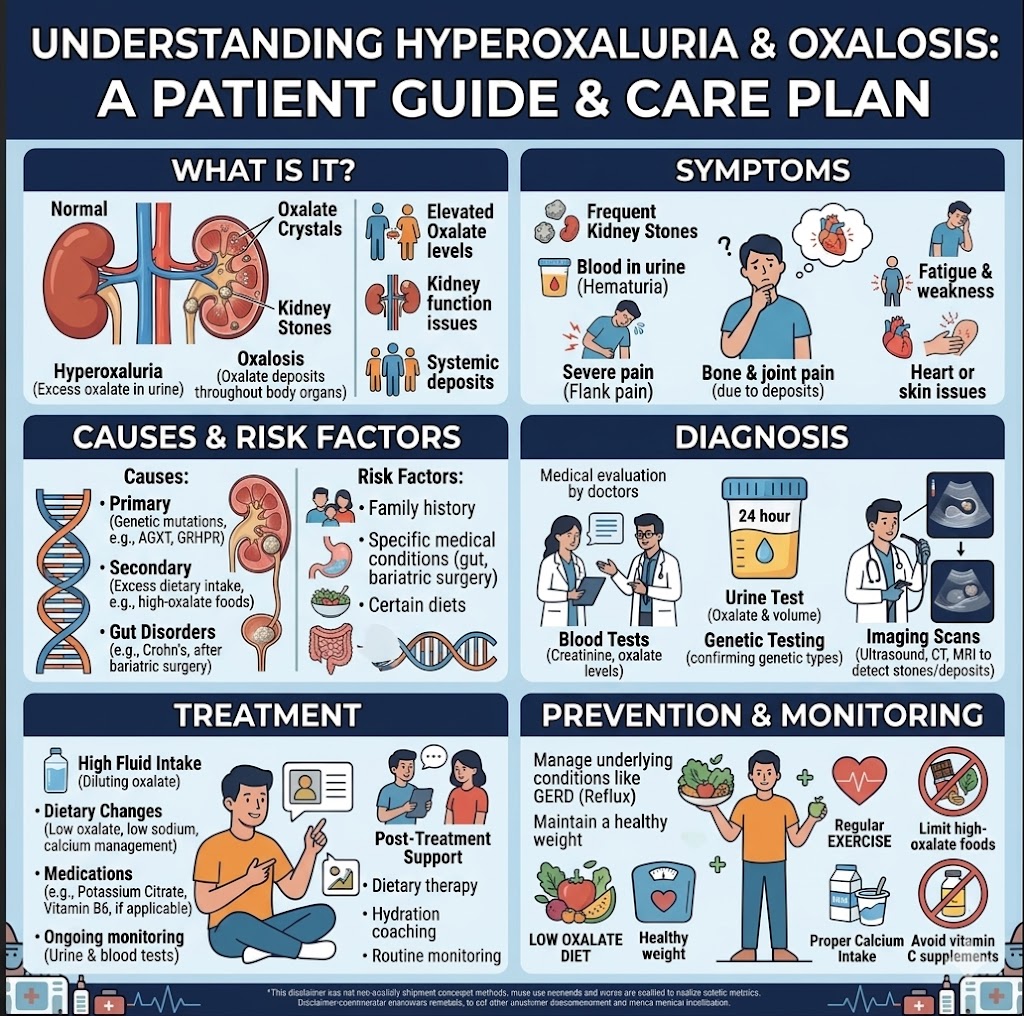
Hyperoxaluria is a condition where there's an excessive amount of oxalate, a natural chemical, in your urine. While the body produces oxalate, and it's found in some foods, too much can lead to serious health problems, primarily affecting the kidneys. If left untreated, the buildup of oxalate can cause significant kidney damage, potentially leading to kidney failure. When kidneys fail in individuals with certain types of hyperoxaluria, oxalate can accumulate in the blood and throughout the body, affecting various organs and bones—a severe condition known as oxalosis. Early detection and prompt treatment are crucial for protecting kidney health and preventing long-term complications.
Understanding the Condition
Hyperoxaluria and Oxalosis: Understanding Too Much Oxalate
Understanding the Condition
Common Symptoms
Kidney Stone Symptoms (Often the First Sign): The initial indication of hyperoxaluria is frequently the formation of kidney stones. Symptoms can include sharp pain in the back, side, lower abdomen, or groin. Urine may appear pink, red, or brown due to the presence of blood. You might experience a frequent urge to urinate, pain during urination, or difficulty urinating, passing only small amounts. Other symptoms can involve chills, fever, upset stomach, or vomiting.
Symptoms of Kidney Failure (Complication): If hyperoxaluria progresses and causes kidney failure, symptoms can include urinating less than usual or not at all, feeling generally unwell and tired, loss of appetite, upset stomach, vomiting, pale or ashen skin due to a low red blood cell count (anemia), and swelling in the hands and feet.
Consultation Guide
Which Specialist to Meet
Consultation Guide
Hyperoxaluria is a condition where there's an excessive amount of oxalate, a natural chemical, in your urine. While the body produces oxalate, and it's found in some foods, too much can lead to serious health problems, primarily affecting the kidneys. If left untreated, the buildup of oxalate can cause significant kidney damage, potentially leading to kidney failure. When kidneys fail in individuals with certain types of hyperoxaluria, oxalate can accumulate in the blood and throughout the body, affecting various organs and bones—a severe condition known as oxalosis. Early detection and prompt treatment are crucial for protecting kidney health and preventing long-term complications.
If you experience recurring kidney stones or have a family history of hyperoxaluria, you should consult with a nephrologist (a kidney specialist). Depending on the cause, you might also need to see a geneticist (for inherited forms), a gastroenterologist (for intestine-related causes), or a registered dietitian (for dietary management).
Preparations Before Your Visit
For an ultrasound, a gel is applied to your skin, and a handheld device is moved over the area to create images. It's painless. For a CT scan, you'll lie on a table that slides into a large donut-shaped machine, which takes X-ray images from different angles. You may receive a contrast dye intravenously to enhance the images, which can cause a warm sensation.
Kidney Transplant: For end-stage kidney failure caused by hyperoxaluria, a kidney transplant can restore kidney function. However, for primary hyperoxaluria, oxalate production from the liver continues, potentially damaging the new kidney. (Duration: Lifelong monitoring post-transplant)
Combined Liver and Kidney Transplant: For primary hyperoxaluria, a combined transplant of both the liver (to correct the underlying metabolic defect) and the kidney (to replace the damaged organ) is often the most effective long-term solution. (Duration: Lifelong monitoring post-transplant)
Diagnostic Procedures
Before your appointment, gather a detailed medical history, including any family history of kidney disease or stones. Make a list of all current medications, supplements, and vitamins you take. Be prepared to discuss your diet and fluid intake habits. Write down any questions you have for the doctor. Your doctor may ask you to fast before certain blood tests or to collect urine samples over a 24-hour period.
Book a doctor visit near me
24-Hour Urine Collection
This is a primary test to measure the total amount of oxalate, calcium, and other substances in your urine over a full day. High oxalate levels indicate hyperoxaluria.
What to Expect
You will be given a special container to collect all urine passed over a 24-hour period, typically starting after your first morning urination and ending at the same time the next day. You'll receive specific instructions on how to store the urine and return it to the lab. It's important to collect all urine during this period to ensure accurate results.
Blood tests can assess kidney function (e.g., creatinine, glomerular filtration rate) and may measure oxalate levels in the blood, especially if kidney function is already impaired.
What to Expect
A healthcare professional will draw a small sample of blood, usually from a vein in your arm, using a needle. You might be asked to fast for a certain period before the test.
Imaging Studies (Ultrasound, CT Scan)
These tests are used to visualize the kidneys and urinary tract to detect kidney stones, assess kidney damage, or identify any blockages.
What to Expect
If primary hyperoxaluria is suspected, genetic testing can identify specific gene changes responsible for the inherited condition.
What to Expect
This typically involves providing a blood sample or a cheek swab. The sample is then sent to a specialized lab for analysis of specific genes linked to the condition.
In some cases, a small tissue sample from the kidney may be examined under a microscope to confirm oxalate deposits and assess kidney damage, especially if oxalosis is suspected.
What to Expect
You will lie on your stomach, and the skin over your kidney will be numbed. Using ultrasound or CT guidance, a thin needle is inserted to take a tiny piece of kidney tissue. You might feel pressure or a brief sting. Afterward, you'll need to lie still for several hours to prevent bleeding.
Prompt Evaluation for Kidney Stones: Any child or teenager who develops kidney stones, or adults with recurrent stones, should be thoroughly evaluated for underlying conditions like hyperoxaluria through urine oxalate testing.
Genetic Counseling for Families: For individuals with primary hyperoxaluria, genetic counseling can help families understand the inheritance pattern and risks for future generations.
Long-Term Management and Monitoring
Regular Medical Monitoring: Undergo regular check-ups, blood tests to monitor kidney function and oxalate levels, and periodic imaging to assess kidney health and detect new stone formation or oxalate deposits in other organs.
Treatment Options
Medications and Supplements
Increased Fluid Intake: Drinking plenty of water throughout the day helps dilute oxalate in the urine and can prevent kidney stone formation. This is a foundational therapy for all types. (Duration: Lifelong)
Oxalate-Binding Supplements: Calcium carbonate or calcium citrate supplements can be taken with meals to bind oxalate in the gut, reducing its absorption into the bloodstream. Potassium citrate helps make urine less acidic and prevents oxalate crystal formation. (Duration: Long-term, as directed by physician)
Targeted Therapies for Primary Hyperoxaluria: Specific medications can help reduce oxalate production in the liver or increase its removal from the body. These may include enzyme-targeting drugs or RNA interference therapies. (Duration: Long-term, often lifelong)
Vitamin B6 (Pyridoxine): For some individuals with primary hyperoxaluria type 1, high doses of vitamin B6 can help the body break down oxalate more effectively. (Duration: Long-term, as directed by physician)
Bile Salt and Fat-Binding Agents: For enteric hyperoxaluria, these medications can help manage fat malabsorption, which in turn reduces oxalate absorption. (Duration: Long-term, as directed by physician)
Procedures and Therapies
Kidney Stone Removal Procedures: Various procedures, such as shock wave lithotripsy (using sound waves to break stones) or ureteroscopy (inserting a scope to remove stones), may be necessary to remove large or problematic kidney stones. (Duration: As needed, for acute stone episodes)
Dialysis: If kidney failure occurs, dialysis (hemodialysis or peritoneal dialysis) is required to filter waste products, including oxalate, from the blood. (Duration: Ongoing, until transplant or end-of-life care)
Surgical Procedures
Manage Underlying Conditions: For enteric hyperoxaluria, effectively managing underlying digestive disorders like Crohn's disease or complications from bariatric surgery is crucial to control oxalate absorption.
Prevention & Long-Term Wellbeing
Prevention and Early Detection
Dietary Modifications: Work with a dietitian to identify and limit high-oxalate foods (e.g., nuts, chocolate, spinach, beets, rhubarb) if you have enteric or diet-related hyperoxaluria, or if advised for primary hyperoxaluria. Ensure adequate calcium intake with meals to bind oxalate in the gut.
Consistent Hydration: Maintain a high fluid intake throughout the day to keep urine diluted and reduce the concentration of oxalate, helping prevent stone formation and crystal deposition.
Tags & Topics
Notice an error or need an update?
Help us keep medical information accurate. Report incorrect info or suggest an edit.


