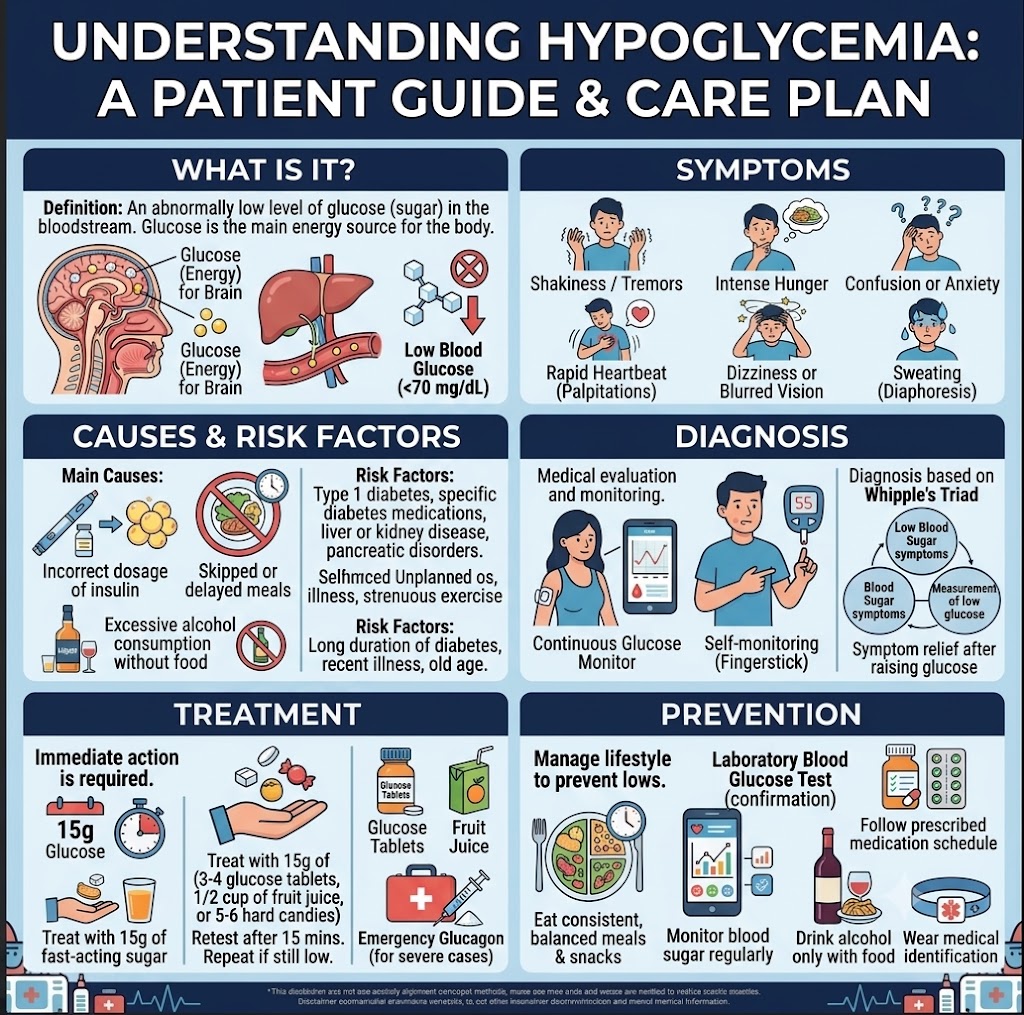
Hypoglycemia is a medical condition characterized by abnormally low levels of blood sugar (glucose). Glucose serves as your body's primary energy source, powering everything from physical movement to brain function. While most commonly associated with diabetes treatments, low blood sugar can also affect individuals without diabetes due to certain illnesses, medications, or dietary issues. Prompt action is critical to restore normal sugar levels and prevent severe complications.
Understanding the Condition
Understanding Hypoglycemia: Causes, Symptoms, and Management
Understanding the Condition
Common Symptoms
Advanced and Severe Symptoms: If blood sugar levels continue to fall, severe brain starvation occurs. This leads to confusion, unusual behavior, inability to complete simple routine tasks, loss of motor coordination, slurred speech, blurry or tunnel vision, and nightmares if the episode occurs while sleeping.
Consultation Guide
Which Specialist to Meet
You should consult with a primary care physician for initial evaluation. For specialized, long-term care or complex cases, you will be referred to an Endocrinologist (a hormone and metabolic specialist).
Preparations Before Your Visit
Before your appointment, keep a detailed 3-day log of your meals, physical activities, and blood sugar readings (if you monitor them). List all prescription medications, over-the-counter drugs, and supplements you take. Document the exact timing and description of any low blood sugar symptoms you have experienced.
Book a doctor visit near me
This clinical framework confirms true hypoglycemia by verifying three criteria: clinical signs of low blood sugar, a laboratory-confirmed low blood glucose reading taken at the time of symptoms, and the complete resolution of symptoms once blood sugar is raised.
Your doctor will evaluate your symptoms, draw a small sample of blood for lab testing during an active episode, and then administer a fast-acting carbohydrate to observe if your symptoms immediately improve.
Prescription Emergency Hormone Injections: An emergency injection of a hormone that signals the liver to rapidly release stored glucose into the bloodstream. This is used when a person is unconscious or unable to swallow. (Duration: One-time emergency rescue; typically resolves severe symptoms within 10 to 15 minutes.)
Surgical and Advanced Procedures
Consultation Guide
Early Physical Warning Signs: As blood sugar levels begin to drop, the body releases stress hormones. This can cause you to look unusually pale, experience extreme hunger or nausea, feel a rapid or irregular heartbeat, and experience feelings of anxiety or irritability.
Cognitive and Sensory Changes: A drop in glucose affects brain function, leading to difficulty concentrating, dizziness, lightheadedness, and a distinct tingling or numbness around the lips, tongue, or cheeks.
Diagnostic Procedures
Whipple's Triad Evaluation
What to Expect
Supervised 72-Hour Fasting Test
This test is used primarily for individuals who experience low blood sugar but do not have diabetes. It helps identify issues like insulin-producing tumors.
What to Expect
You will be admitted to a hospital or clinical facility where you will not eat for up to 72 hours. Medical staff will monitor you closely and draw blood samples periodically to measure glucose, insulin, and other hormone levels safely.
Mixed Meal Tolerance Test
This diagnostic test is designed to evaluate reactive hypoglycemia, which is low blood sugar that occurs within a few hours after eating.
What to Expect
You will consume a specific liquid meal containing proteins, fats, and carbohydrates. Healthcare staff will draw blood samples before the meal and at regular intervals for several hours afterward to track your glucose and insulin response.
Abdominal Imaging (CT or MRI)
If your lab tests suggest your body is producing too much insulin, imaging is used to look for a rare, benign tumor in the pancreas (an insulinoma) or other abnormalities.
What to Expect
You will lie flat on a motorized table that slides into a doughnut-shaped scanner. The scan is painless, takes between 15 to 45 minutes, and may require an intravenous injection of contrast dye to make your pancreas clearly visible.
The Rule of 15 (Fast-Acting Carbohydrates): Consuming 15 grams of fast-acting, easily digestible carbohydrates (such as fruit juice, non-diet soda, or glucose tablets) to quickly raise blood sugar, followed by a 15-minute wait and a retest of blood sugar levels. (Duration: Immediate emergency response; repeated every 15 minutes until blood sugar reaches safe levels.)
Treatment Options
Hypoglycemia is a medical condition characterized by abnormally low levels of blood sugar (glucose). Glucose serves as your body's primary energy source, powering everything from physical movement to brain function. While most commonly associated with diabetes treatments, low blood sugar can also affect individuals without diabetes due to certain illnesses, medications, or dietary issues. Prompt action is critical to restore normal sugar levels and prevent severe complications.
Immediate Treatments and Home Remedies
Medical Adjustments and Emergency Medications
Diabetes Medication Management: A physician reviews and adjusts your current diabetes therapeutic regimen, lowering doses of insulin or other glucose-lowering medications, or changing dose timings. (Duration: Ongoing; adjustments are permanent until next clinical review.)
Prevention & Long-Term Wellbeing
Surgical Tumor Resection: Surgical removal of an insulin-producing tumor (insulinoma) or abnormal insulin-producing cells in the pancreas. (Duration: A single surgical procedure, followed by a recovery period of several weeks to months.)
Daily Monitoring and Prevention
Continuous Glucose Monitoring (CGM): Use a wearable CGM device with a tiny sensor inserted under the skin. It tracks your glucose levels in real-time and alerts you with an alarm before your blood sugar drops too low.
Structured Meal Planning: Eat regular, balanced meals and snacks spaced no more than 3 to 4 hours apart. Ensure your diet includes complex carbohydrates, healthy fats, fiber, and lean proteins to stabilize glucose absorption.
Safety and Emergency Preparedness
Carry Emergency Carbohydrates: Always keep quick-acting glucose sources (such as gel packs, glucose tablets, or hard candies) with you at home, at work, and on the go.
Wear Medical Alert Identification: Wear a medical alert bracelet or carry a wallet card stating you have a history of hypoglycemia. This ensures first responders can treat you correctly in an emergency.
Tags & Topics
Notice an error or need an update?
Help us keep medical information accurate. Report incorrect info or suggest an edit.


