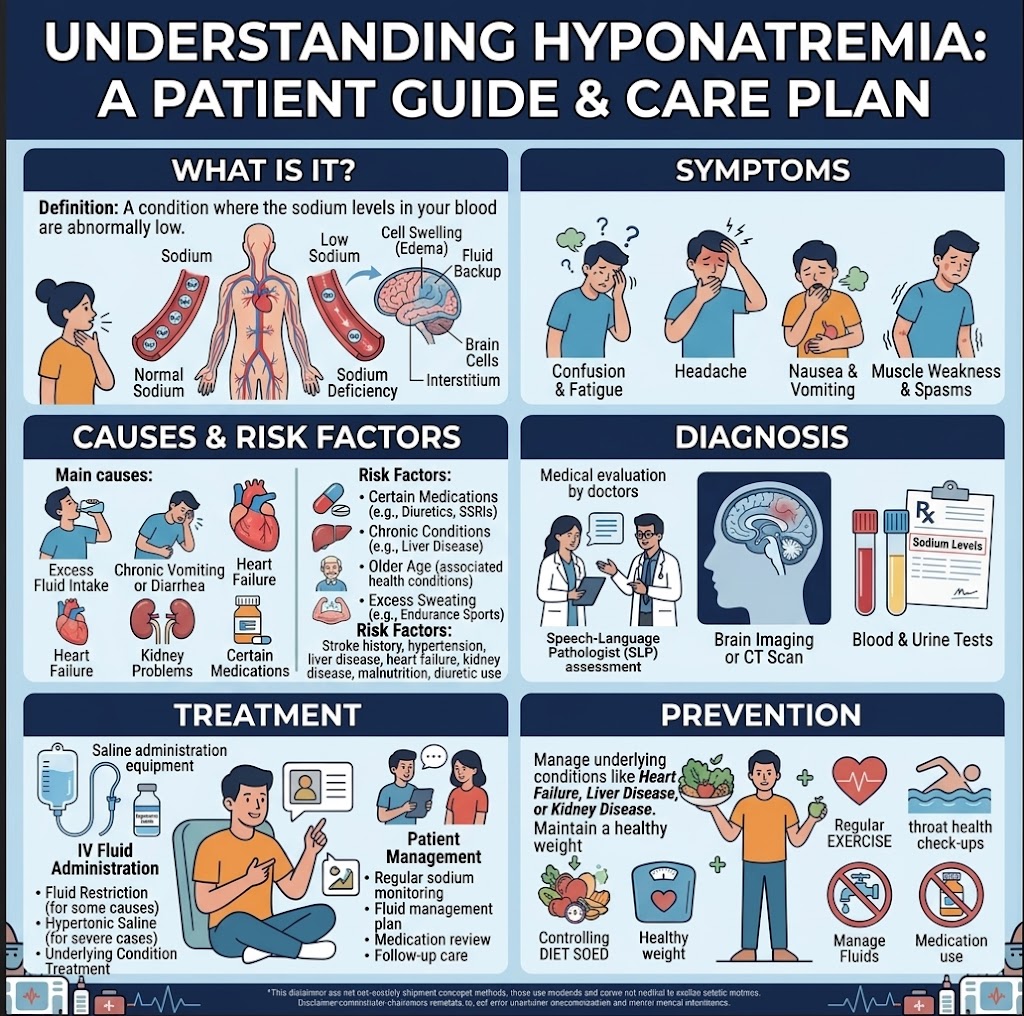
Hyponatremia is a medical condition where the level of sodium in the blood is unusually low. Sodium is an essential mineral, or electrolyte, crucial for maintaining fluid balance in and around your body's cells, supporting nerve and muscle function, and regulating blood pressure. When sodium levels drop, typically below 135 millimoles per liter (mmol/L), the body's water levels can increase, causing cells to swell. This swelling, particularly in brain cells, can lead to a range of health issues, from mild discomfort to severe, life-threatening complications like brain swelling, coma, and even death. Treatment focuses on correcting the sodium imbalance and addressing the underlying cause.
Understanding the Condition
Hyponatremia: Understanding Low Blood Sodium
Understanding the Condition
Common Symptoms
Nausea and Vomiting: Feeling sick to your stomach and throwing up.
Loss of Energy, Drowsiness, and Fatigue: Feeling unusually tired, sleepy, or lacking your usual energy.
Restlessness and Irritability: Feeling agitated, uneasy, or easily annoyed.
Muscle Weakness, Spasms, or Cramps: Muscles feeling unusually weak, twitching involuntarily, or experiencing painful contractions.
Headaches: Persistent or severe pain in the head.
Confusion: Difficulty thinking clearly, disorientation, or impaired judgment (a more serious symptom).
Seizures: Uncontrolled electrical activity in the brain leading to sudden, involuntary movements or changes in behavior (a serious symptom requiring emergency care).
Loss of Consciousness: Fainting or becoming unresponsive (a critical emergency symptom).
Consultation Guide
Which Specialist to Meet
You should initially consult your primary care doctor. Depending on the cause and severity of hyponatremia, your doctor may refer you to a specialist such as an endocrinologist (for hormone-related issues), a nephrologist (for kidney problems), or a cardiologist (for heart conditions). For severe symptoms, emergency medical attention is crucial.
Preparations Before Your Visit
Before your visit, make a list of all your symptoms, including when they started and how often they occur. Bring a complete list of all medications, supplements, and herbal remedies you are currently taking, including dosages. Be prepared to discuss your medical history, recent illnesses, dietary habits, and fluid intake, especially if you engage in intense physical activities. It can also be helpful to write down any questions you have for your doctor.
Book a doctor visit near me
Understand Your Medications: If you take 'water pills' (diuretics), antidepressants, or certain pain medications, discuss the risk of low blood sodium with your doctor. Be aware of the symptoms and when to seek help.
Hydrate Appropriately During Activity: During intense or long-duration physical activities like marathons, drink fluids only as much as you lose through sweating. Thirst is generally a reliable guide. Over-hydrating can be dangerous.
Consider Electrolyte-Containing Beverages: For demanding endurance activities, consult your doctor about replacing plain water with sports drinks that contain electrolytes, which can help maintain sodium balance.
Drink Water in Moderation: While essential, avoid excessive water intake. Pay attention to your body's signals; drink when you're thirsty. Urine that is pale yellow typically indicates adequate hydration without overdoing it.
Symptom Awareness: Be vigilant for any recurring symptoms of low blood sodium, such as nausea, headaches, or fatigue, and report them to your doctor promptly.
Consultation Guide
Hyponatremia is a medical condition where the level of sodium in the blood is unusually low. Sodium is an essential mineral, or electrolyte, crucial for maintaining fluid balance in and around your body's cells, supporting nerve and muscle function, and regulating blood pressure. When sodium levels drop, typically below 135 millimoles per liter (mmol/L), the body's water levels can increase, causing cells to swell. This swelling, particularly in brain cells, can lead to a range of health issues, from mild discomfort to severe, life-threatening complications like brain swelling, coma, and even death. Treatment focuses on correcting the sodium imbalance and addressing the underlying cause.
A urinalysis is a test of your urine. It helps assess your kidney function and fluid balance, which are crucial in determining the cause of hyponatremia. The test checks the appearance, concentration, and content of your urine to look for signs of infection, kidney issues, or other underlying conditions that might affect sodium levels.
Fluid Restriction: For some mild cases, especially if caused by drinking too much water, simply reducing your fluid intake may be sufficient. Your doctor will advise on the appropriate amount of fluids. (Duration: Ongoing, as advised by your doctor, often until sodium levels stabilize.)
Medications to Increase Sodium: Depending on the cause, certain medications can help the body retain more sodium or excrete excess water. These are specific prescription drugs that work by different mechanisms. (Duration: Variable, depending on the underlying cause and how quickly sodium levels normalize, often for a short period in acute cases or longer for chronic conditions.)
Medications to Block Anti-Diuretic Hormone (ADH): For cases where the body is producing too much ADH, certain medications can block its effects, helping the kidneys excrete more water and raise sodium levels. (Duration: As prescribed by your doctor, often until the cause of excess ADH is managed.)
Diagnostic Procedures
A blood test is the primary method to measure the exact amount of sodium in your blood. It helps confirm hyponatremia and determine its severity. Normal blood sodium levels are typically between 135 and 145 mmol/L.
What to Expect
A healthcare professional will draw a small sample of blood, usually from a vein in your arm. They will clean the skin area, apply a tourniquet to make the vein more prominent, and then insert a small needle. You might feel a brief pinch or sting. The blood is collected into a tube and sent to a lab for analysis. The entire process typically takes only a few minutes.
What to Expect
You will be given a sterile cup and instructed to provide a urine sample. You may be asked to perform a 'clean-catch' method, which involves cleaning the genital area before urinating and collecting a mid-stream sample to prevent contamination. Once collected, the sample is sent to a lab for examination. This is a non-invasive procedure, and you simply need to provide the sample.
Regular Medical Check-ups: If you have chronic conditions or take medications that put you at risk, regular doctor visits and blood tests to monitor sodium levels are important.
Treatment Options
Dietary Sodium Adjustment: In specific situations, your doctor might recommend adjusting your salt intake. This is not a universal treatment and must be done under medical guidance. (Duration: As directed by your healthcare professional.)
Medications
Treating Underlying Conditions: Medications will be prescribed to manage any underlying health issues contributing to hyponatremia, such as heart failure, kidney disease, or hormonal imbalances (e.g., adrenal insufficiency, low thyroid hormone). (Duration: Long-term, as necessary for the management of the chronic condition.)
Intravenous (IV) Fluid Administration: For more severe or rapidly developing hyponatremia, solutions containing sodium may be administered directly into your bloodstream through an IV. This is done carefully to avoid rapid sodium correction, which can be dangerous. (Duration: Typically a few hours to several days, depending on the severity and response to treatment.)
Manage Associated Health Conditions: Seek regular treatment and follow your doctor's advice for conditions that increase your risk of low blood sodium, such as heart disease, kidney disease, liver disease, or hormonal imbalances.
Prevention & Long-Term Wellbeing
Lifestyle and Fluid Management
Prevention
Dietary Consultation: Work with your healthcare team or a dietitian to ensure your diet supports proper fluid and electrolyte balance, especially if you have an ongoing health condition.
Tags & Topics
Notice an error or need an update?
Help us keep medical information accurate. Report incorrect info or suggest an edit.


