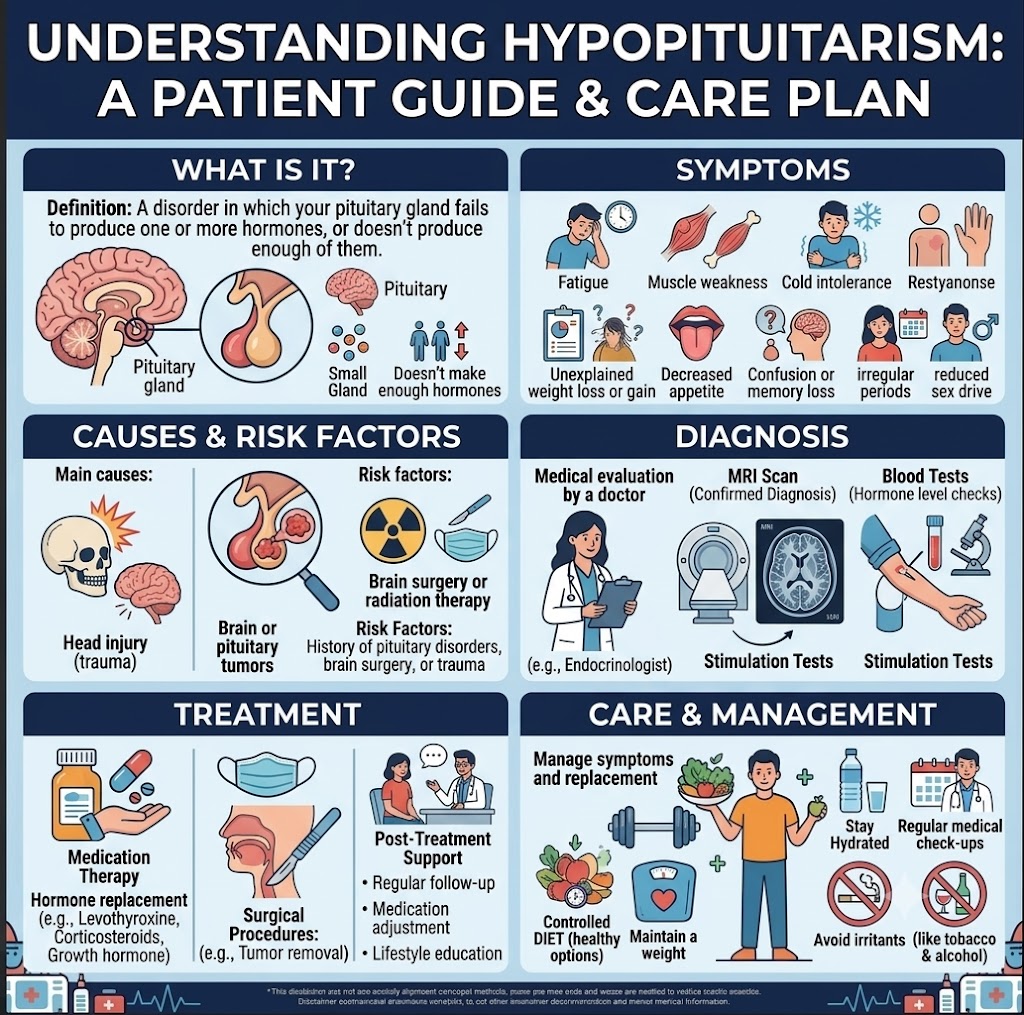
Hypopituitarism is an uncommon condition where the pituitary gland, a small, bean-shaped gland at the base of your brain, doesn't produce enough of one or more crucial hormones. This gland is a key part of your body's endocrine system, which regulates nearly every body function. When pituitary hormones are deficient, it can significantly impact various processes, including growth, blood pressure, and the ability to reproduce. Symptoms vary depending on which hormones are missing and how low their levels are. People with hypopituitarism often require lifelong hormone replacement therapy to manage their symptoms and maintain overall health.
Understanding the Condition
Hypopituitarism: Understanding a Rare Hormone Deficiency
Understanding the Condition
Hypopituitarism is an uncommon condition where the pituitary gland, a small, bean-shaped gland at the base of your brain, doesn't produce enough of one or more crucial hormones. This gland is a key part of your body's endocrine system, which regulates nearly every body function. When pituitary hormones are deficient, it can significantly impact various processes, including growth, blood pressure, and the ability to reproduce. Symptoms vary depending on which hormones are missing and how low their levels are. People with hypopituitarism often require lifelong hormone replacement therapy to manage their symptoms and maintain overall health.
Common Symptoms
Growth Hormone (GH) Deficiency: In children, insufficient growth hormone leads to slowed growth and short stature. In adults, symptoms are often subtle but can include muscle weakness, changes in body fat distribution, reduced interest in activities, and social withdrawal.
Other Hormone Deficiencies: Depending on which other hormones are affected, symptoms can include fatigue, weight changes, difficulty tolerating cold, low blood pressure, dizziness, and problems with fluid balance. Symptoms typically develop slowly over months or years, but can sometimes appear suddenly.
Consultation Guide
Which Specialist to Meet
You should consult an endocrinologist, a doctor specializing in hormone disorders. For children, a pediatric endocrinologist is recommended. If a pituitary tumor is involved, a neurosurgeon or radiation oncologist may also be part of your care team.
Preparations Before Your Visit
Before your visit, make a detailed list of all your symptoms, including when they started and how they affect your daily life. Gather your complete medical history, including any past illnesses, surgeries, or medications. Prepare a list of questions you want to ask your doctor. This comprehensive information will help your specialist accurately diagnose and plan your treatment.
Book a doctor visit near me
Hormone Replacement Therapy: This is the primary treatment, involving daily pills, injections, or other forms of medication to replace the specific hormones your pituitary gland isn't making enough of. For example, thyroid hormone, cortisol, sex hormones, or growth hormone. (Duration: Typically lifelong, requiring consistent adherence to maintain hormone balance and control symptoms.)
Consultation Guide
Gonadotropin (Sex Hormone) Deficiency: A lack of hormones affecting the reproductive system (gonadotropins) can prevent ovaries from producing enough eggs and estrogen in women, and testicles from making enough sperm and testosterone in men. This can result in decreased sex drive, persistent tiredness, and difficulty or inability to have children (infertility). In children, it may cause delayed or absent puberty.
A healthcare professional will draw a small sample of blood, usually from a vein in your arm. This is a quick procedure that typically causes only minor discomfort, like a brief pinch or sting. You might need to fast for a certain period before some hormone tests.
Diagnostic Procedures
These tests measure the levels of various hormones produced by your pituitary gland and other glands it controls (like thyroid, adrenal, and sex hormones). Low levels can indicate a pituitary problem.
What to Expect
Dynamic or Stimulation Tests
These specialized blood tests assess how well your pituitary gland responds to certain medications or substances designed to stimulate or suppress hormone release. They help determine if the gland is producing hormones as it should.
What to Expect
You will receive an injection or oral dose of a specific substance. Blood samples will then be drawn at timed intervals over several hours to observe how your hormone levels change in response. You may need to remain at the clinic for the duration of the test.
Magnetic Resonance Imaging (MRI) of the Brain
An MRI scan uses powerful magnets and radio waves to create detailed images of your brain and pituitary gland. This helps identify any structural issues, such as tumors, inflammation, or damage to the pituitary.
What to Expect
You will lie on a movable table that slides into a large, tube-shaped machine. The procedure is painless, but the machine can be noisy. You will need to remain very still for the duration of the scan, which typically lasts 30-60 minutes. Sometimes, a contrast dye may be injected to enhance image clarity.
Regular Medical Monitoring: Schedule routine check-ups with your endocrinologist and undergo recommended blood tests to ensure your hormone levels remain balanced and to monitor for any changes or complications.
Emergency Preparedness: Understand the signs of hormone imbalance or adrenal crisis and discuss an emergency plan with your doctor. Carry identification indicating your condition, especially if you take cortisol replacement.
Treatment Options
Medications
Pituitary Tumor Removal: If a pituitary tumor is causing hypopituitarism, surgery may be performed to remove it. The most common approach is transsphenoidal surgery, through the nose and sphenoid sinus. (Duration: Typically a one-time procedure, though follow-up treatments or additional surgery may be needed in some cases. Recovery varies but generally takes several weeks.)
Radiation Therapy: Used when pituitary tumors cannot be fully removed by surgery or if they recur. It uses high-energy beams to destroy tumor cells. (Duration: Often administered in daily sessions over several weeks, depending on the type and size of the tumor.)
Consistent Medication Adherence: Take all prescribed hormone replacement medications exactly as directed by your doctor. Do not stop or adjust doses without medical advice, as this can lead to serious health issues.
Prevention & Long-Term Wellbeing
Long-Term Management
Lifestyle and Support
Healthy Lifestyle Choices: Maintain a balanced diet, engage in regular physical activity, and get adequate sleep. These habits support overall health and can help manage energy levels and well-being.
Stress Management: Find healthy ways to cope with stress, such as mindfulness, meditation, or hobbies, as stress can sometimes affect hormone balance.
Seek Support: Connect with support groups or mental health professionals. Living with a chronic condition can be challenging, and support can help you cope with its emotional and psychological impacts.
Tags & Topics
Notice an error or need an update?
Help us keep medical information accurate. Report incorrect info or suggest an edit.


