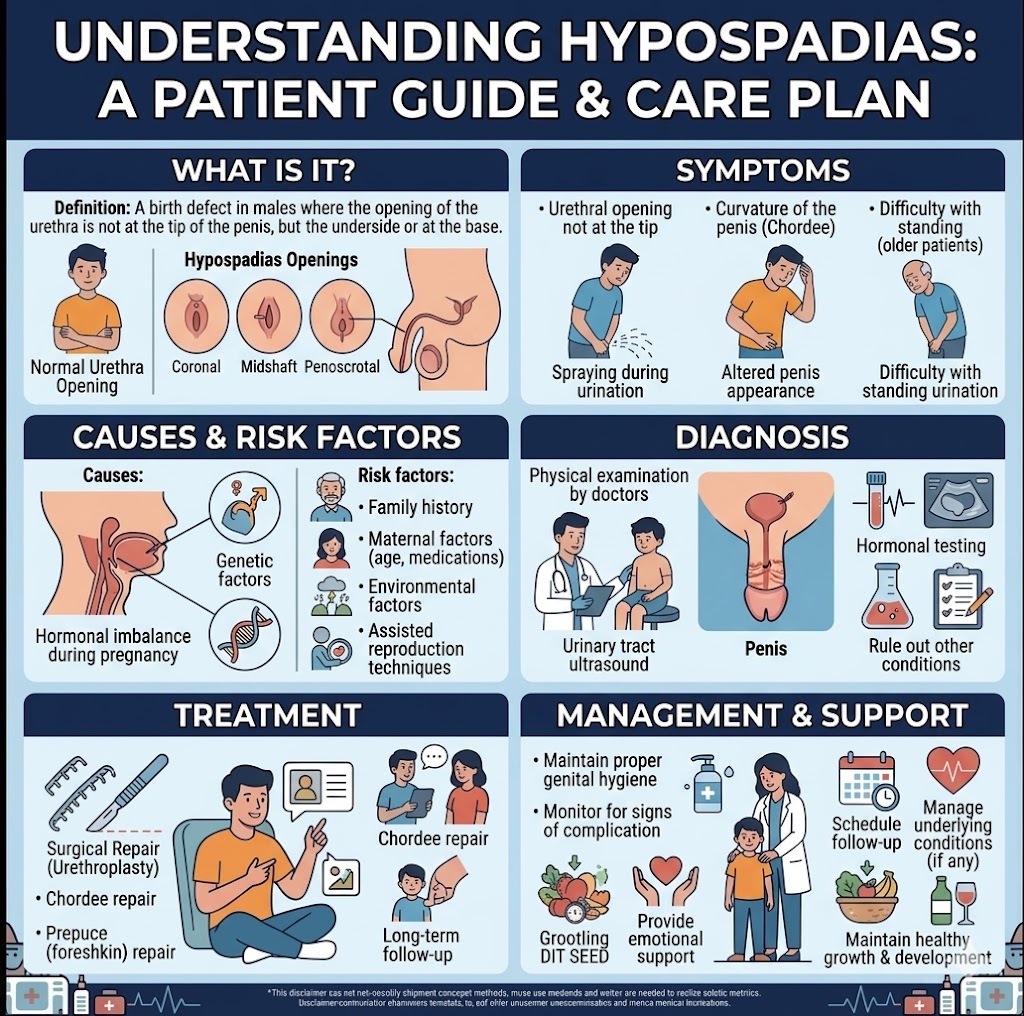
Hypospadias (pronounced hi-poe-SPAY-dee-us) is a common birth condition in boys where the opening for urine (called the urethra) is located on the underside of the penis, rather than at its tip. This happens during fetal development in the womb. The urethra is the tube that carries urine from the bladder out of the body. While it may sound concerning, hypospadias is a treatable condition that doesn't usually cause significant problems in caring for a baby. Surgical treatment can typically create a penis that looks and functions normally, allowing for proper urine flow and, later in life, unimpeded sperm release for reproduction.
Understanding the Condition
Hypospadias: Understanding a Common Birth Condition
Understanding the Condition
Common Symptoms
Unusual Urethral Opening Location: The opening for urine is located somewhere along the underside of the penis instead of at its tip. This can range from an opening near the head of the penis, in the middle, at the base, or, rarely, within or under the scrotum.
Downward Curve of the Penis (Chordee): The penis may have a noticeable downward curve, especially apparent during an erection. This condition is known as chordee.
Hooded Penis Appearance: The foreskin may not fully cover the head of the penis, giving it a 'hooded' look, as only the top half is covered.
Unusual Urine Stream: The urine stream may spray in an unusual direction or be difficult to aim.
Consultation Guide
Which Specialist to Meet
Before your appointment, make a note of any specific observations you've made regarding your child's symptoms, including when you first noticed them. Prepare a list of questions you wish to ask the doctor. Be ready to share any relevant family medical history, particularly if there have been other cases of hypospadias or birth conditions. Bringing any available previous medical records or growth charts can also assist the doctor in their assessment.
Book a doctor visit near me
Consultation Guide
Hypospadias (pronounced hi-poe-SPAY-dee-us) is a common birth condition in boys where the opening for urine (called the urethra) is located on the underside of the penis, rather than at its tip. This happens during fetal development in the womb. The urethra is the tube that carries urine from the bladder out of the body. While it may sound concerning, hypospadias is a treatable condition that doesn't usually cause significant problems in caring for a baby. Surgical treatment can typically create a penis that looks and functions normally, allowing for proper urine flow and, later in life, unimpeded sperm release for reproduction.
Diagnostic Procedures
If you observe any unusual appearance of your child's penis or have concerns about their urination, your primary care pediatrician or family doctor is the appropriate first point of contact. They can assess the situation and, if necessary, refer you to a pediatric urologist. A pediatric urologist is a medical doctor who specializes in the urinary and genital systems in children and is skilled in diagnosing and treating conditions like hypospadias.
Preparations Before Your Visit
Hypospadias is primarily diagnosed through a comprehensive physical examination of the newborn's penis, typically conducted shortly after birth. The doctor will carefully inspect the location of the urethral opening, check for any associated downward curvature of the penis (chordee), and observe the appearance of the foreskin. In some instances, if the condition is very mild, it might be more subtle and could be identified later during a routine check-up.
What to Expect
During the examination, your baby will be undressed, and the doctor will gently handle and visually inspect the penis and surrounding area. This is a quick and non-invasive procedure. Your baby might briefly cry due to being undressed or handled, but the examination itself is not painful. The doctor will discuss their findings with you immediately and outline the recommended next steps, including any need for specialist consultation.
Early Diagnosis and Timely Treatment: The most crucial step for ensuring long-term wellbeing is the early diagnosis and prompt surgical correction of hypospadias. Identifying the condition soon after birth allows for surgery to be scheduled at an optimal age, typically before a child begins toilet training. This approach helps prevent potential issues related to abnormal urine flow, minimizes emotional distress about appearance, and supports healthy development of future sexual function and fertility.
Genetic Counseling: If there is a family history of hypospadias or if parents have concerns about recurrence in future pregnancies, seeking genetic counseling can be beneficial. Genetic counselors can help families understand the potential risks involved, explore any underlying genetic factors, and provide information regarding reproductive planning options.
Long-Term Monitoring & Support
Regular Follow-Up Care: After surgical repair, consistent follow-up appointments with a pediatric urologist are essential. These visits enable the doctor to monitor the healing process, detect any potential complications such as strictures (narrowing) of the new urethra or fistulas (small unintended openings), and evaluate the long-term cosmetic and functional outcomes. These check-ups may continue for several years to ensure proper development and function as the child grows into adolescence.
Treatment Options
Surgical Procedures
Hypospadias Repair (Urethroplasty): The definitive treatment for hypospadias is surgery, generally performed when the child is between 6 and 18 months of age. The surgical procedure aims to reposition the urethral opening to the tip of the penis, correct any downward curvature (chordee), and reshape the foreskin, often performing a circumcision. The complexity of the surgery depends on the severity and location of the urethral opening; milder cases might require a single operation, while more complex situations could involve multiple stages. The surgeon meticulously uses existing tissues from the penis to create a new, properly positioned urinary channel. A temporary thin tube (catheter) might be placed after surgery to help drain urine while the new pathway heals. (Duration: A single surgical procedure typically lasts between 1 to 3 hours. Home recovery period generally takes a few weeks, with complete healing extending over several months. Regular follow-up appointments are crucial for monitoring healing and long-term functionality for several months to years.)
Pain Management and Wound Care: Following surgery, your child will receive medication to manage pain and discomfort. It is vital to maintain cleanliness and dryness of the surgical site to prevent infection, strictly adhering to the instructions provided by the surgical team. Specific dressings may be used, and you will be guided on how to change them and care for the wound. Limiting your child's physical activity as advised by the doctor is important to ensure optimal healing. (Duration: Pain medication may be required for several days up to a week. Wound care will continue until the area is fully healed, usually within 2 to 4 weeks.)
No Specific Home Remedies or Medications (for correction)
N/A: There are no known home remedies, exercises, or medications that can correct the anatomical defect of hypospadias. Surgical intervention remains the only effective treatment to reposition the urethral opening and address any associated issues. Medications are used supportively for pain relief and to prevent infection following surgery. (Duration: Not applicable.)
Addressing Psychological and Emotional Aspects: Children and adolescents who have undergone hypospadias repair may benefit from emotional support. While surgery aims for a normal appearance, some individuals might still develop self-consciousness or have questions as they mature. Open communication with parents and medical professionals, along with potential psychological counseling, can help address any body image concerns or anxieties, fostering positive self-esteem and healthy psychosocial development.
Fertility and Sexual Function Monitoring: In cases of successfully treated hypospadias, future fertility and sexual function are generally not compromised. However, for more severe forms of the condition or if complications arise, specialists may monitor these aspects as the child approaches adolescence and adulthood. This proactive approach ensures that any potential issues related to sperm release or sexual activity can be identified and managed effectively.
Prevention & Long-Term Wellbeing
Early Intervention & Management
Tags & Topics
Notice an error or need an update?
Help us keep medical information accurate. Report incorrect info or suggest an edit.


