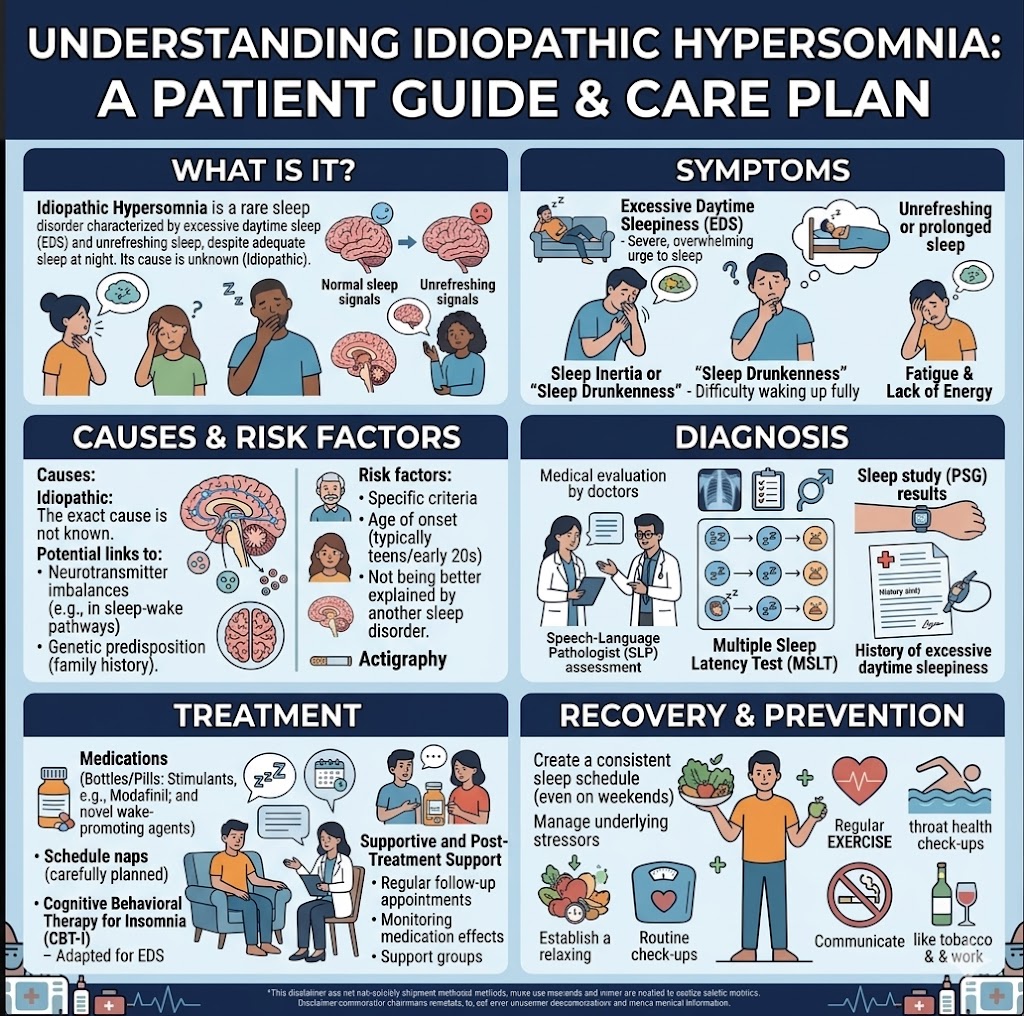
Idiopathic hypersomnia (IH) is a rare, lifelong neurological sleep disorder causing severe, constant daytime sleepiness despite adequate nighttime rest. Individuals with IH struggle profoundly to wake up, often experiencing confusion, disorientation, and slow movements (sleep inertia). Naps typically offer no refreshment. The cause is unknown, and the overwhelming urge to sleep can dangerously impact daily activities. Diagnosis involves extensive testing to exclude other conditions, with treatment focused on symptom management.
Understanding the Condition
Idiopathic Hypersomnia: Understanding Persistent Daytime Sleepiness
Understanding the Condition
Idiopathic hypersomnia (IH) is a rare, lifelong neurological sleep disorder causing severe, constant daytime sleepiness despite adequate nighttime rest. Individuals with IH struggle profoundly to wake up, often experiencing confusion, disorientation, and slow movements (sleep inertia). Naps typically offer no refreshment. The cause is unknown, and the overwhelming urge to sleep can dangerously impact daily activities. Diagnosis involves extensive testing to exclude other conditions, with treatment focused on symptom management.
Common Symptoms
Persistent Daytime Sleepiness: An overwhelming, constant urge to sleep throughout the day, making it difficult to stay alert, even after ample nighttime sleep.
Excessive Nighttime Sleep: Regularly sleeping over 11 hours per night, yet still feeling unrefreshed upon waking.
Severe Waking Difficulty (Sleep Inertia): Extreme trouble waking, often needing multiple alarms, followed by confusion, disorientation, slow thinking, and poor coordination for an extended period.
Unrefreshing Naps: Naps, often long, that fail to relieve sleepiness or provide any sense of refreshment.
Cognitive Impairment: Difficulties with memory, concentration, and attention during the day.
Post-Waking Anxiety: Feeling anxious or irritable immediately after waking up.
Consultation Guide
Which Specialist to Meet
Consult a sleep specialist, typically a neurologist or pulmonologist with sleep medicine training. Your primary care doctor can provide an initial referral.
Preparations Before Your Visit
Keep a detailed sleep diary for 1-2 weeks, noting bedtimes, wake times, sleep quality, naps, and daytime alertness. List all medications, existing health conditions, and specific questions for the doctor. Be prepared to thoroughly describe your symptoms.
Book a doctor visit near me
A standard blood draw from your arm to check for underlying health problems that could mimic IH symptoms.
Wakefulness-Promoting Agents: Medications designed to enhance alertness and reduce daytime sleepiness by modulating specific brain chemicals. (Duration: Long-term, taken daily as prescribed for ongoing symptom control.)
Central Nervous System Stimulants: Drugs that increase brain activity to boost alertness and combat profound fatigue. (Duration: Long-term, used daily or as needed to maintain wakefulness.)
Adjunctive Medications: Other medications, such as certain antidepressants, may be used off-label to help manage specific IH symptoms like sleep inertia, based on individual needs. (Duration: Variable, often long-term depending on symptom response.)
Routine Specialist Follow-ups: Regularly meet with your sleep specialist to monitor symptoms, adjust treatment, and discuss any changes in your condition.
Adhere to Treatment Plan: Consistently follow prescribed medications and lifestyle recommendations for optimal symptom control and quality of life.
Identify & Manage Triggers: Recognize factors (e.g., stress, sleep deprivation) that worsen your sleepiness and take steps to mitigate their impact.
Seek Support Networks: Connect with support groups or online communities for individuals with IH for shared experiences, coping strategies, and emotional support.
Explore Accommodations: Discuss potential adjustments with employers or educational institutions, such as flexible hours or rest areas, to better manage your condition.
Prioritize Safety: Avoid high-risk activities like driving or operating machinery when experiencing severe sleepiness; plan alternatives to ensure your safety.
Address Mental Health: Seek therapy or counseling to address anxiety, depression, or frustration commonly associated with managing a chronic condition.
Diagnostic Procedures
A home-based log of your sleep patterns and daily habits over 1-2 weeks.
What to Expect
You will record bedtimes, wake times, nap details, and daytime sleepiness levels daily to provide insights into your routine.
Polysomnogram (PSG) – Overnight Sleep Study
An overnight test in a sleep lab to monitor brain waves, breathing, heart rate, and muscle activity during sleep.
What to Expect
Sensors are painlessly attached to your body to record physiological data while you sleep in a comfortable lab setting, helping to rule out other sleep disorders.
Multiple Sleep Latency Test (MSLT)
A daytime nap test, typically following a PSG, measuring how quickly you fall asleep during scheduled nap opportunities.
What to Expect
You'll have 4-5 opportunities to nap for 20 minutes each, spaced two hours apart, while sensors record how quickly you fall asleep.
A wrist-worn device that tracks your sleep-wake cycles and activity levels at home over an extended period.
What to Expect
You wear a watch-like device for 1-2 weeks during your normal daily activities to provide data on your sleep schedule in your natural environment.
Laboratory tests to rule out other medical conditions causing fatigue (e.g., thyroid issues, anemia).
What to Expect
Treatment Options
Medications
Prevention & Long-Term Wellbeing
Lifestyle and Behavioral Strategies
Consistent Sleep Schedule: Maintain the same bedtime and wake time daily, even on weekends, to regulate your body's internal clock. (Duration: Ongoing, as a core daily habit.)
Optimal Sleep Environment: Ensure your bedroom is dark, quiet, cool, and comfortable to maximize sleep quality. (Duration: Ongoing practice.)
Avoid Disruptive Substances: Limit or avoid caffeine, alcohol, and nicotine, especially before bedtime, as they can interfere with sleep. (Duration: Ongoing, as a daily practice.)
Strategic Nap Planning: While unrefreshing, short, carefully timed naps might help temporarily manage overwhelming sleepiness, though they shouldn't replace nighttime sleep. (Duration: As needed, but planned to avoid worsening nighttime sleep.)
Regular Exercise: Engage in moderate physical activity regularly to improve sleep and energy, but avoid intense workouts close to bedtime. (Duration: Ongoing, as part of a healthy lifestyle.)
Long-Term Management
Healthy Lifestyle Choices: Maintain a balanced diet and stay hydrated to support overall physical health and energy.
Tags & Topics
Notice an error or need an update?
Help us keep medical information accurate. Report incorrect info or suggest an edit.


