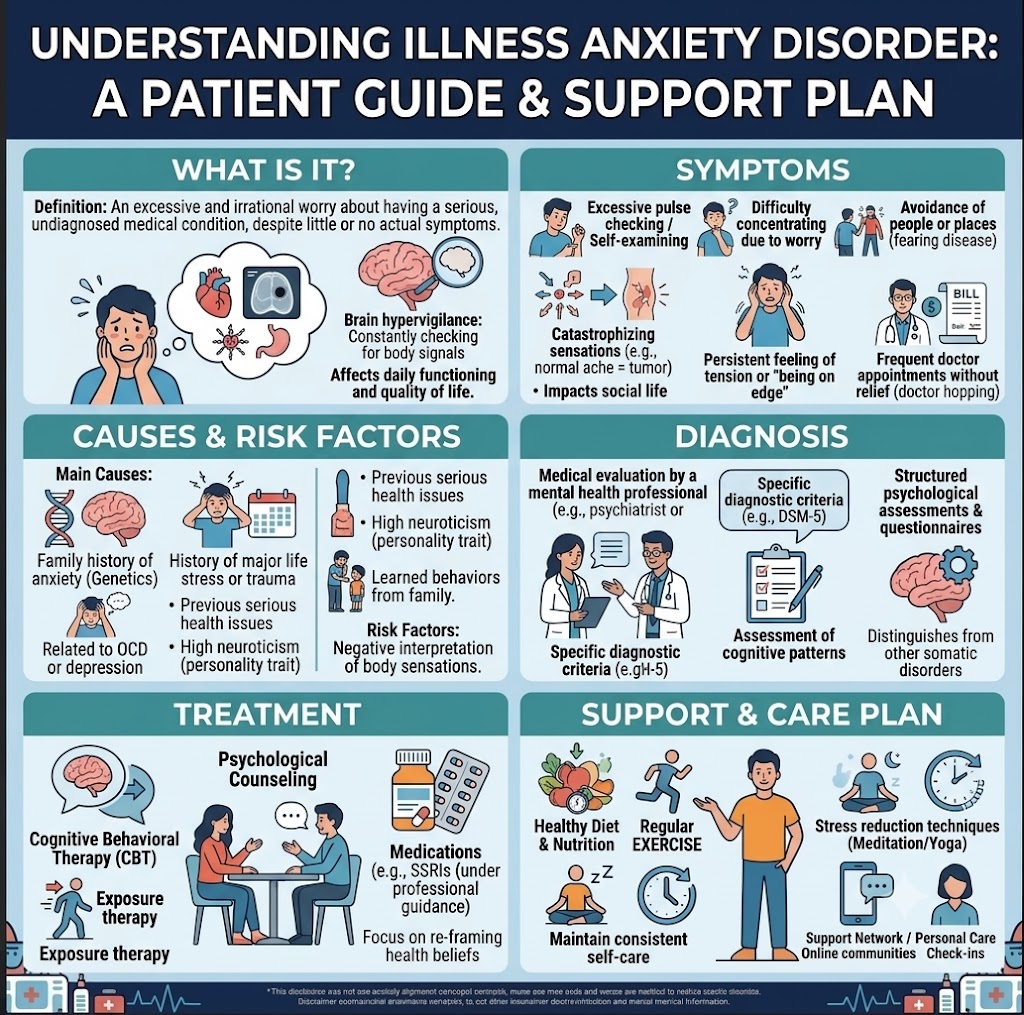
Illness Anxiety Disorder (IAD), sometimes called health anxiety or formerly hypochondriasis, is a condition marked by excessive worry about being or becoming seriously ill. Individuals with IAD may have no physical symptoms, or they might misinterpret normal body sensations or minor symptoms as signs of a severe illness, even after medical evaluations show no serious condition. This intense anxiety, rather than the physical symptoms themselves, causes significant distress that can disrupt daily life. For instance, a person might fear a muscle twitch indicates a severe neurological disease. IAD is a long-term condition that can vary in intensity, potentially worsening with age or stress. However, psychological counseling and sometimes medication can effectively ease these worries. It's important to distinguish IAD from Somatic Symptom Disorder, where the focus is on the disabling nature of physical symptoms like pain, without the specific fear that these symptoms represent a particular severe illness.
Understanding the Condition
Illness Anxiety Disorder: Understanding and Managing Health Worries
Understanding the Condition
Illness Anxiety Disorder (IAD), sometimes called health anxiety or formerly hypochondriasis, is a condition marked by excessive worry about being or becoming seriously ill. Individuals with IAD may have no physical symptoms, or they might misinterpret normal body sensations or minor symptoms as signs of a severe illness, even after medical evaluations show no serious condition. This intense anxiety, rather than the physical symptoms themselves, causes significant distress that can disrupt daily life. For instance, a person might fear a muscle twitch indicates a severe neurological disease. IAD is a long-term condition that can vary in intensity, potentially worsening with age or stress. However, psychological counseling and sometimes medication can effectively ease these worries. It's important to distinguish IAD from Somatic Symptom Disorder, where the focus is on the disabling nature of physical symptoms like pain, without the specific fear that these symptoms represent a particular severe illness.
Common Symptoms
Constant Worry: Being preoccupied with the idea of having or developing a serious disease, even from normal body sensations like a gurgling stomach or minor signs like a small rash.
Exaggerated Concern: Believing that minor symptoms or sensations indicate a grave illness.
Easily Alarmed: Becoming overly anxious about your health status with little provocation.
Online Research: Frequently searching the internet for information about symptoms or potential diseases.
Consultation Guide
Which Specialist to Meet
Make a list of all your symptoms, including any physical sensations you're worried about and any emotional distress you're experiencing. Note any recent major life stresses or changes that might be contributing to your anxiety. Prepare a list of all medications, vitamins, and supplements you are currently taking, including dosages. Consider bringing a trusted family member or friend to your appointment. They can offer support, help you remember details, and provide additional insights. Write down questions you want to ask your doctor or mental health professional. Be open and honest about your worries, even if they feel irrational or embarrassing. This will help your doctor understand your condition better.
Book a doctor visit near me
A complete blood count is a common blood test that provides information about your overall health. It helps identify a wide range of conditions, such as anemia (low red blood cell count), infections, and certain blood cancers. While not directly diagnosing illness anxiety disorder, a CBC is often performed to rule out physical health conditions that might be causing your symptoms or anxieties. The test measures several components of your blood, including red blood cells (which carry oxygen), white blood cells (which fight infection), and platelets (which help blood clot).
Antidepressants: Specific antidepressant medications, such as selective serotonin reuptake inhibitors (SSRIs), can help reduce anxiety symptoms associated with illness anxiety disorder. (Duration: Usually taken daily for several months to a year or more, adjusted under medical supervision.)
Anti-Anxiety Medications: May be prescribed for short-term management of severe anxiety, though generally not for long-term use due to potential for dependence. (Duration: Short periods, typically weeks, for acute symptom relief.)
Limit Online Health Searches: Excessive internet research on symptoms can worsen health anxiety. Set strict limits on how much time you spend searching. (Duration: Consistent self-regulation.)
Engage in Hobbies & Social Life: Redirect focus by pursuing enjoyable activities and connecting with others. (Duration: Regular engagement.)
Early Professional Help: Seek medical or mental health advice promptly for signs of excessive anxiety, especially health-related worries. Early intervention prevents symptom worsening.
Stress Awareness & Management: Understand your stressors and their physical/mental impact. Regularly practice stress management techniques like mindfulness or deep breathing.
Adhere to Treatment: Strictly follow your prescribed treatment plan (therapy, medication) to prevent symptom relapses or worsening.
Maintain Mental Health Support: Continue recommended follow-ups with your mental health professional for ongoing support.
Practice Coping Strategies: Consistently apply coping skills learned in therapy to manage thoughts, sensations, and anxiety.
Open Communication: Share openly with family and friends; their understanding and support are vital.
Monitor for Relapse: Be aware of triggers or early signs of recurring symptoms and contact your healthcare provider if needed.
Consultation Guide
Your first step should be to consult your primary care doctor. They can conduct an initial evaluation to rule out any underlying physical health conditions. If a physical cause isn't found, your doctor can refer you to a mental health professional, such as a psychiatrist, psychologist, or a licensed counselor. These specialists are trained to diagnose and treat mental health conditions like illness anxiety disorder.
Preparations Before Your Visit
Diagnostic Procedures
Lack of Reassurance: Feeling little or no comfort from doctor visits, negative test results, or medical explanations.
Family History Anxiety: Excessive worry about a specific condition or your risk of developing one, especially if it runs in your family.
Daily Life Impact: Experiencing such severe distress about potential illnesses that it interferes with your ability to function at work, school, or in social settings.
Body Checking: Repeatedly examining your body for signs of illness or disease.
Healthcare Patterns: Frequently scheduling medical appointments for reassurance, or, conversely, avoiding medical care entirely out of fear of receiving a serious diagnosis.
Avoidance Behaviors: Staying away from people, places, or activities due to fears about health risks.
Constant Health Talk: Regularly discussing your health and possible illnesses with others.
Complete Blood Count (CBC)
What to Expect
A healthcare professional will draw a small sample of blood, usually from a vein in your arm. They will typically clean the skin with an antiseptic wipe, then insert a small needle. You might feel a brief sting or prick as the needle goes in. Once enough blood is collected, the needle is removed, and a small bandage or cotton ball is applied to stop any bleeding. The entire process usually takes only a few minutes. The blood sample is then sent to a laboratory for analysis. There are generally no special preparations needed for a CBC, though your doctor might ask you to fast if other blood tests are being done at the same time.
Treatment Options
Therapies
Psychotherapy (Talk Therapy): Involves working with a mental health professional, often using Cognitive Behavioral Therapy (CBT). CBT helps identify and change unhelpful thought patterns and behaviors related to health anxiety, teaching coping skills. (Duration: Typically weeks to months, often weekly sessions. Some may benefit from ongoing maintenance.)
Medications
Prevention & Long-Term Wellbeing
Lifestyle and Home Remedies
Stress Management: Practice relaxation techniques such as deep breathing, meditation, or yoga to lower overall anxiety. (Duration: Ongoing, daily practice.)
Regular Physical Activity: Moderate exercise most days can improve mood and reduce stress. (Duration: Consistent practice.)
Healthy Sleep: Aim for 7-9 hours of quality sleep nightly to support mental and physical well-being. (Duration: Ongoing.)
Prevention
Balanced Lifestyle: Prioritize consistent exercise, healthy eating, sufficient sleep, and fulfilling activities for overall mental resilience.
Tags & Topics
Notice an error or need an update?
Help us keep medical information accurate. Report incorrect info or suggest an edit.


