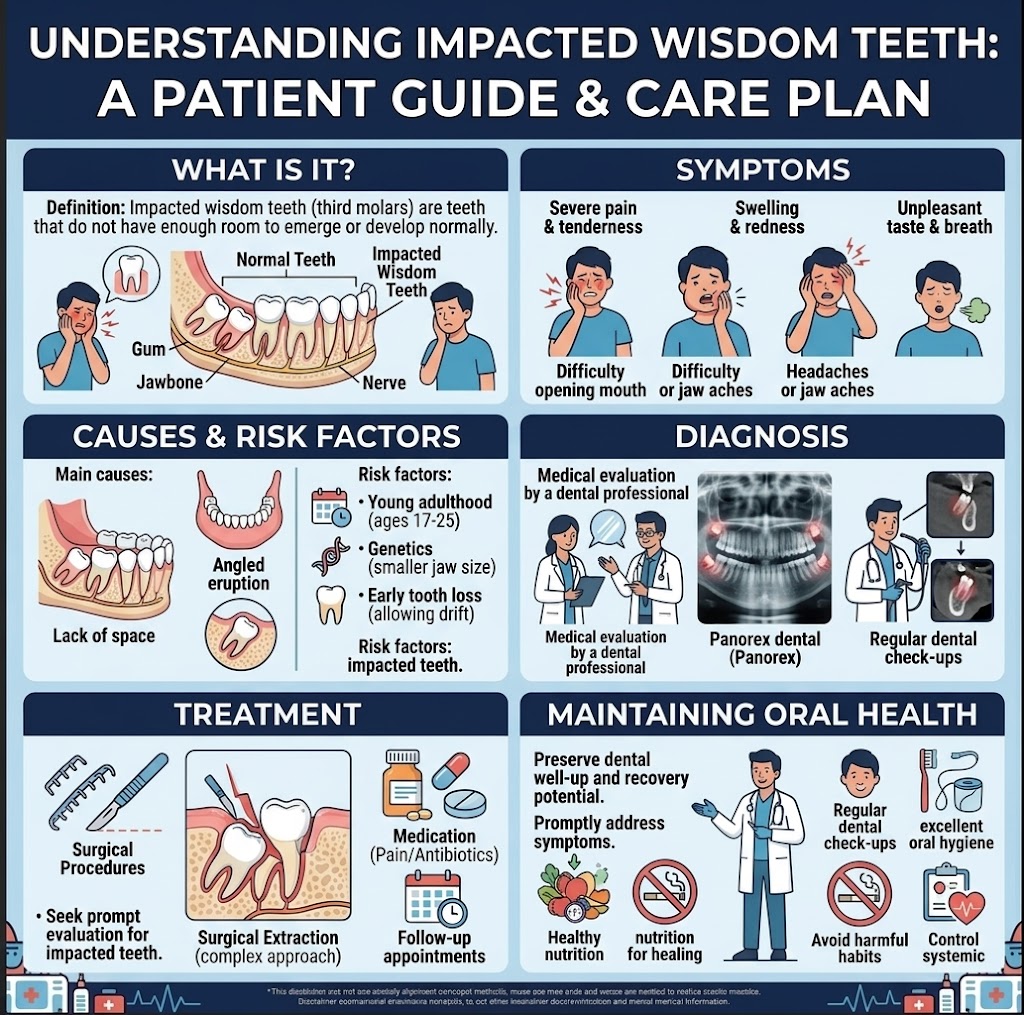
Wisdom teeth are the last adult teeth to come in, usually at the very back of your mouth. Most people have four. When they are 'impacted,' it means they don't have enough room to fully grow in or develop properly. Impacted wisdom teeth can cause pain, damage nearby teeth, and lead to other dental problems like infections. Sometimes, they cause no issues at all. However, because they are often difficult to clean, impacted wisdom teeth are more likely to develop cavities and gum disease compared to other teeth. If they cause problems, removal is usually recommended. Sometimes, dentists suggest removing them even without symptoms to prevent future issues.
Understanding the Condition
Impacted Wisdom Teeth
Understanding the Condition
Wisdom teeth are the last adult teeth to come in, usually at the very back of your mouth. Most people have four. When they are 'impacted,' it means they don't have enough room to fully grow in or develop properly. Impacted wisdom teeth can cause pain, damage nearby teeth, and lead to other dental problems like infections. Sometimes, they cause no issues at all. However, because they are often difficult to clean, impacted wisdom teeth are more likely to develop cavities and gum disease compared to other teeth. If they cause problems, removal is usually recommended. Sometimes, dentists suggest removing them even without symptoms to prevent future issues.
Common Symptoms
Red or Swollen Gums: The gums around the back of your mouth may become inflamed.
Tender or Bleeding Gums: Gums that are sensitive to touch or bleed easily.
Swelling Around the Jaw: Noticeable swelling in the side of your face or jaw area.
Bad Breath: Persistent bad breath that doesn't go away.
An Unpleasant Taste in Your Mouth: A lingering foul taste, often due to infection.
Difficulty Opening Your Mouth: Stiffness or pain that makes it hard to open your mouth wide.
Consultation Guide
Which Specialist to Meet
Before your appointment, be ready to discuss any pain, discomfort, or other symptoms you've noticed. Bring a list of all current medications, including over-the-counter drugs and supplements, and inform them of any allergies or medical conditions you have. Prepare any questions you might have about your condition or treatment options.
Book a doctor visit near me
Routine Dental X-rays: Periodically updated dental X-rays can reveal the position and condition of wisdom teeth even before they cause symptoms. This imaging helps your dentist assess if they are likely to become impacted or cause problems.
Long-Term Monitoring & Oral Hygiene
Maintain Excellent Oral Hygiene: If your wisdom teeth are partially emerged or have not been removed, it's crucial to maintain meticulous oral hygiene, especially in the back of your mouth, to prevent food and bacteria from getting trapped and causing decay or gum disease.
Watch for Symptoms: If your impacted wisdom teeth are being monitored but not removed, stay vigilant for any signs of pain, swelling, bad breath, or difficulty opening your mouth, and report them to your dentist promptly.
Diagnostic Procedures
Dental X-ray (e.g., Panoramic X-ray)
A dental X-ray is a common, quick, and painless imaging test that helps your dentist see the teeth and bones of your jaw. For wisdom teeth, a panoramic X-ray is often used. This type of X-ray captures a single image of your entire mouth, showing all your teeth, including those still under the gums, and the surrounding jawbone. It helps your dentist assess the position, angle, and development of your wisdom teeth, as well as their proximity to other teeth and important nerves.
What to Expect
During a dental X-ray, you will typically sit or stand in front of an X-ray machine. You might be asked to bite down gently on a small plastic device to help position your head correctly. You will wear a lead apron to protect your body from radiation. The X-ray machine will then move around your head, taking images. This process is very quick, usually lasting only a few minutes. It is completely painless, and you just need to remain still for a few seconds while the images are captured.
Treatment Options
Your first visit should be to a general dentist. If your wisdom teeth need to be removed or if the case is complex, your dentist may refer you to an oral and maxillofacial surgeon, who specializes in surgery of the mouth, face, and jaw.
Preparations Before Your Visit
Home Remedies & Pain Management
Warm Saltwater Rinses: Gently rinsing your mouth with warm salt water can help reduce inflammation and clean the area around partially emerged wisdom teeth, providing temporary relief for minor irritation or swelling. (Duration: As needed, typically several times a day for a few days.)
Over-the-Counter Pain Relievers: Non-prescription pain medications can help manage discomfort and reduce inflammation associated with an impacted wisdom tooth. (Duration: As needed for pain relief, usually short-term.)
Prevention & Long-Term Wellbeing
Wisdom Tooth Extraction: This is a common surgical procedure to remove one or more impacted wisdom teeth. The procedure typically involves numbing the area with a local anesthetic, though sedation or general anesthesia may be used for more complex cases or patient comfort. The surgeon may make a small incision in the gum to access the tooth and may need to remove some bone covering the tooth. Often, the tooth is divided into smaller pieces for easier removal. After the tooth is removed, the area is cleaned, and stitches may be used to close the gum. (Duration: The procedure itself usually takes about 20 to 60 minutes per tooth. Recovery typically involves a few days of discomfort and swelling, with full healing taking 1 to 2 weeks.)
Prevention
Regular Dental Check-ups: Attending regular dental appointments every six months for cleanings and check-ups allows your dentist to monitor the development and emergence of your wisdom teeth. Early detection of impaction can help prevent future complications.
Tags & Topics
Notice an error or need an update?
Help us keep medical information accurate. Report incorrect info or suggest an edit.


