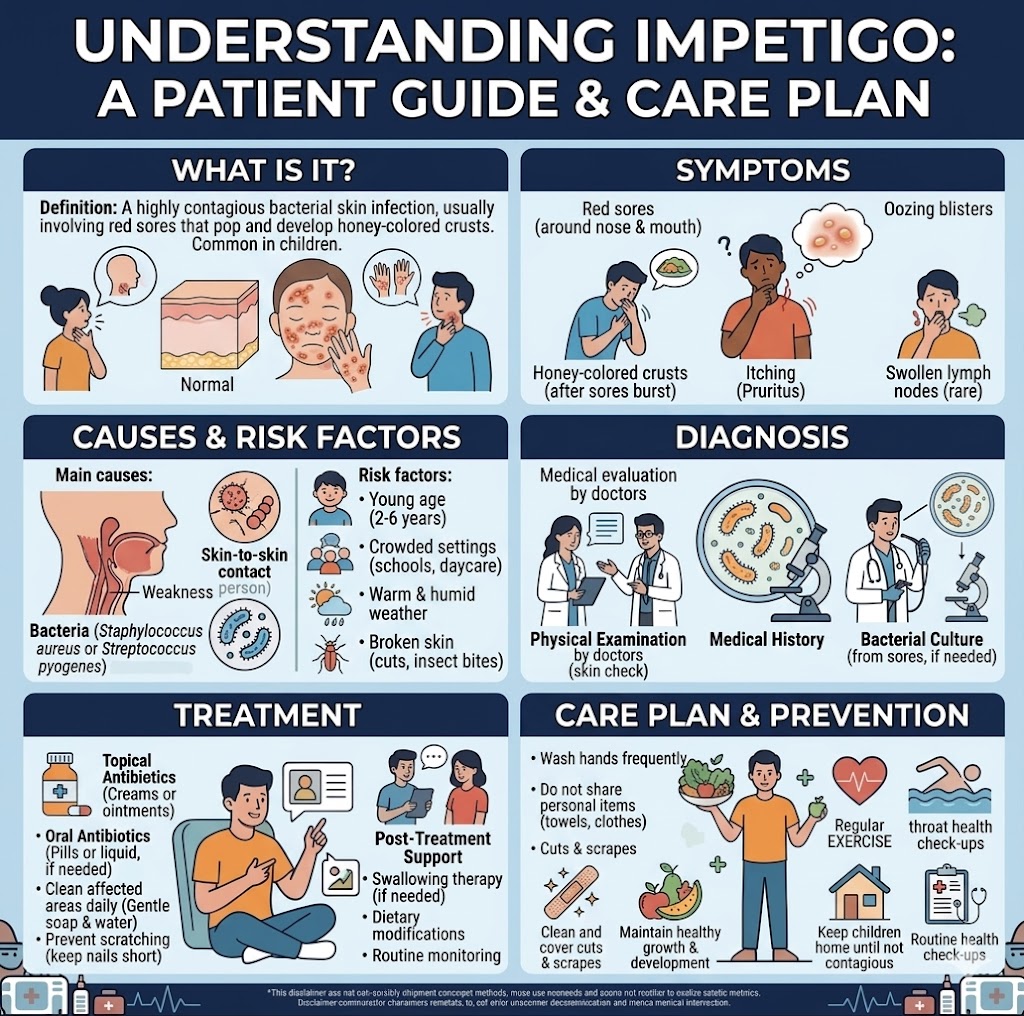
Impetigo (im-puh-TIE-go) is a common, highly contagious bacterial skin infection, mainly affecting infants and young children. It typically presents as reddish sores that soon develop distinctive honey-colored crusts, often found around the nose, mouth, hands, and feet. Prompt treatment is crucial to prevent spread.
Understanding the Condition
Impetigo: A Highly Contagious Skin Infection
Understanding the Condition
Common Symptoms
Common Impetigo Sores: This most common form begins as reddish sores, often clustered around the nose and mouth, and on the hands and feet. These sores quickly rupture, releasing a clear or yellowish fluid, and then form distinct honey-colored crusts. The affected areas can be mildly itchy or sore, and the infection can spread to other body parts through touch, clothing, or shared items.
Complete Full Course of Treatment: Finish the entire prescribed course of antibiotics, even if symptoms improve, to ensure all bacteria are eliminated and prevent recurrence or antibiotic resistance.
Consultation Guide
Bullous Impetigo: A less common type, bullous impetigo causes larger, fluid-filled blisters that appear on the trunk, arms, and legs. These blisters can last longer before breaking and crusting over, primarily affecting infants and toddlers.
Ecthyma: This is a more severe form of impetigo that can cause painful, fluid- or pus-filled sores that penetrate deeper into the skin, forming deep ulcers with thick crusts. This severe form may leave scars after healing.
Consultation Guide
Which Specialist to Meet
The provider will gently swab a sore to collect a sample of the fluid or pus, which is then sent to a lab for analysis. This brief process may cause mild, momentary discomfort.
Diagnostic Procedures
If impetigo is suspected, consult a healthcare professional. A family doctor, child's pediatrician, or skin specialist (dermatologist) can provide diagnosis and treatment.
Preparations Before Your Visit
Impetigo is usually diagnosed by a healthcare provider visually examining the characteristic sores. The distinct appearance of reddish sores evolving into honey-colored crusts is often sufficient.
What to Expect
During the examination, the doctor will visually inspect the skin lesions on the affected areas. This is typically a quick, painless process.
If impetigo is severe, widespread, unresponsive to initial treatment, or diagnosis is uncertain, a bacterial culture may be performed to identify the specific bacteria and guide antibiotic choice.
What to Expect
Treatment Options
Impetigo (im-puh-TIE-go) is a common, highly contagious bacterial skin infection, mainly affecting infants and young children. It typically presents as reddish sores that soon develop distinctive honey-colored crusts, often found around the nose, mouth, hands, and feet. Prompt treatment is crucial to prevent spread.
Before your visit, detail the sores' onset and progression, any associated itching or pain, and recent exposure to similar lesions. List current medications and your child's medical history.
Book a doctor visit near me
Medications
Topical Antibiotic Ointments or Creams: For mild cases, an antibiotic ointment or cream is applied directly to the sores to kill bacteria and prevent spread. (Duration: Typically applied 2-3 times daily for 5 to 7 days.)
Oral Antibiotics: For widespread or severe impetigo, or if topical treatment is ineffective, oral antibiotics may be prescribed. These work systemically to eliminate bacteria. (Duration: Usually taken for 7 to 10 days, or as directed by the healthcare provider.)
Home Remedies & Supportive Care
Gentle Cleaning: Wash affected areas with mild soap and warm water several times daily to remove crusts and aid healing. Pat dry. (Duration: Continue until sores are healed.)
Covering Sores: Cover sores with gauze or a bandage to prevent scratching and reduce spreading infection to others or other body parts. (Duration: Keep covered until sores are healed or crusted over.)
Keeping Nails Trimmed: Keeping fingernails short helps prevent scratching that might spread infection or lead to secondary skin damage. (Duration: Maintain throughout the infection period.)
Limit Contact During Infection: Individuals should stay home from school, daycare, or work until no longer contagious, typically 24 hours after starting antibiotic treatment.
Monitor for Recurrence: Be vigilant for new sores or signs of infection, especially in individuals prone to impetigo. Early detection allows prompt treatment.
Address Underlying Skin Conditions: Conditions like eczema or insect bites that break the skin barrier can increase susceptibility. Managing these reduces future risk.
Prevention & Long-Term Wellbeing
Prevention
Practice Good Hygiene: Regularly wash hands with soap and water for 20 seconds, especially after touching affected skin. Encourage frequent bathing.
Avoid Sharing Personal Items: Do not share towels, washcloths, clothing, or other personal items, especially if someone in the household has impetigo.
Clean Cuts and Scrapes Promptly: Thoroughly clean any cuts, scrapes, or insect bites with soap and water, and cover them to prevent bacterial entry.
Keep Infected Areas Covered: If impetigo is present, keep sores covered with clean bandages to prevent direct contact and limit bacterial spread.
Tags & Topics
Notice an error or need an update?
Help us keep medical information accurate. Report incorrect info or suggest an edit.


