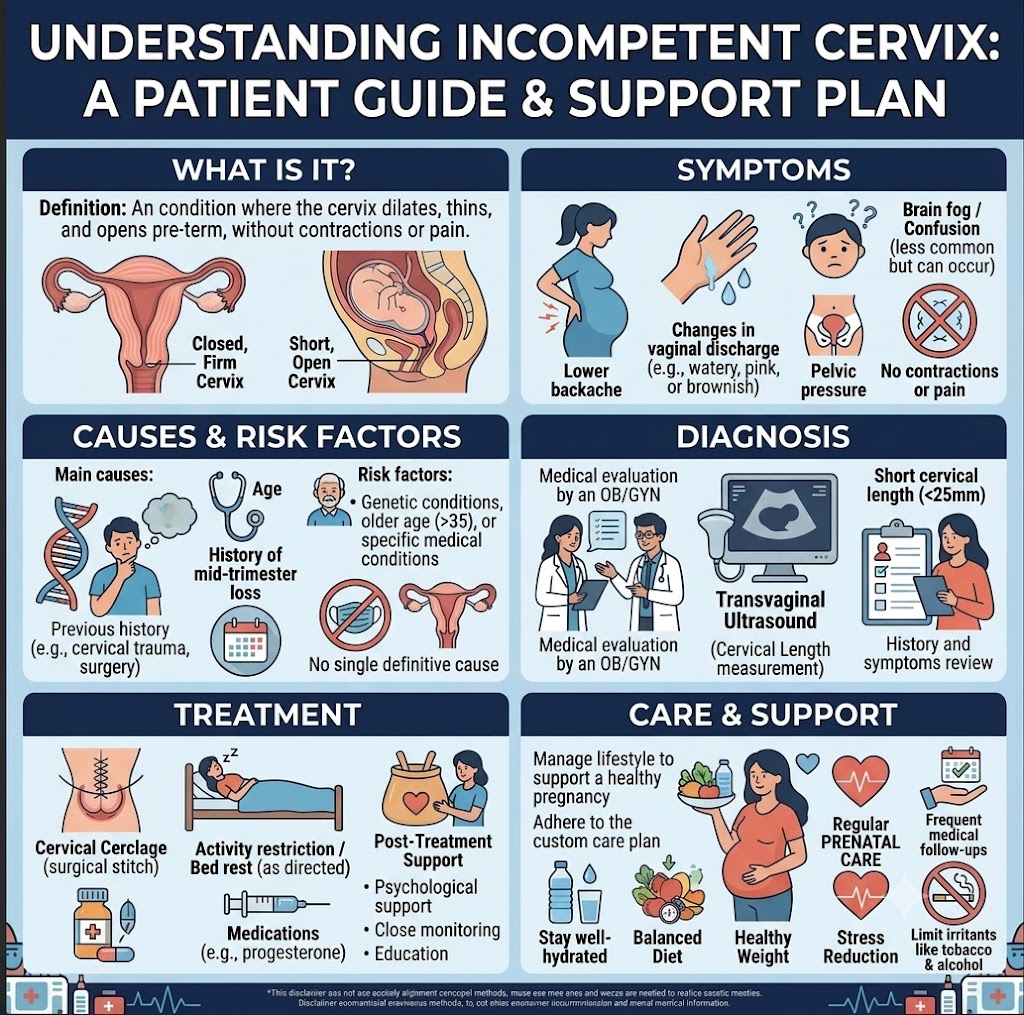
Cervical insufficiency, also known as an incompetent cervix, is a condition where the cervix (the lower part of the uterus that connects to the vagina) weakens and opens too early during pregnancy. Normally, the cervix is firm and closed until late pregnancy, gradually softening, shortening, and opening as labor approaches. With cervical insufficiency, this opening process begins prematurely, often leading to a premature birth or the loss of a healthy pregnancy.This condition can be challenging to diagnose. It may occur without a known cause, but risk factors include previous cervical trauma from procedures like surgery for abnormal Pap tests or a dilation and curettage (D&C), or rarely, a cervical tear during a prior delivery. Some women are born with conditions affecting their uterus or the connective tissues (collagen) that make up the cervix, which can also contribute. If your cervix shows signs of opening early, or if you have a history of cervical insufficiency, treatment options are available to help manage the pregnancy.
Understanding the Condition
Cervical Insufficiency (Incompetent Cervix)
Understanding the Condition
Common Symptoms
No Early Signs: During the early stages of pregnancy, cervical insufficiency often presents with no noticeable signs or symptoms.
Before your visit, be prepared to discuss your complete medical history, including any previous pregnancies, miscarriages, or cervical procedures. Note down any symptoms you've experienced, even if they seem minor. Prepare a list of questions you have for your doctor.
Book a doctor visit near me
Regular Prenatal Care: Attend all scheduled prenatal appointments. Regular check-ups are crucial for your healthcare team to monitor your health and your baby's development, and to address any concerns promptly. Always communicate any symptoms, no matter how minor they seem.
Consultation Guide
Cervical insufficiency, also known as an incompetent cervix, is a condition where the cervix (the lower part of the uterus that connects to the vagina) weakens and opens too early during pregnancy. Normally, the cervix is firm and closed until late pregnancy, gradually softening, shortening, and opening as labor approaches. With cervical insufficiency, this opening process begins prematurely, often leading to a premature birth or the loss of a healthy pregnancy.This condition can be challenging to diagnose. It may occur without a known cause, but risk factors include previous cervical trauma from procedures like surgery for abnormal Pap tests or a dilation and curettage (D&C), or rarely, a cervical tear during a prior delivery. Some women are born with conditions affecting their uterus or the connective tissues (collagen) that make up the cervix, which can also contribute. If your cervix shows signs of opening early, or if you have a history of cervical insufficiency, treatment options are available to help manage the pregnancy.
The doctor will visually inspect your external genital area, then use a speculum (a medical instrument) to gently open the vagina for a clear view of the cervix. They may also insert gloved fingers into the vagina and press on your abdomen to feel the size and shape of your uterus and ovaries. A Pap test, which screens for cervical cancer, is often performed at the same time. The exam typically lasts only a few minutes and may cause some mild pressure or discomfort.
Ultrasound (Sonography)
A safe procedure that uses sound waves to create images of structures inside your body. It's a key tool for monitoring pregnancy and checking the cervix.
Diagnostic Procedures
Mild Discomfort or Spotting: Some women may experience mild discomfort or light spotting, typically before 24 weeks of pregnancy, which can precede a diagnosis.
Pelvic Pressure: A feeling of pressure or heaviness in the pelvic area.
New Backache: Developing a new or unusual backache.
Mild Stomach Cramps: Experiencing light cramping in the stomach area.
Change in Vaginal Discharge: A noticeable alteration in the amount, color, or consistency of vaginal discharge.
Light Vaginal Bleeding: Any new or unusual light bleeding from the vagina.
Consultation Guide
Which Specialist to Meet
You should consult with an obstetrician, a doctor specializing in pregnancy and childbirth. For more complex cases or high-risk pregnancies, a maternal-fetal medicine specialist may be recommended.
Preparations Before Your Visit
A check of your reproductive organs, including the vulva, vagina, cervix, uterus, and ovaries. This exam helps assess the health and condition of these organs.
What to Expect
What to Expect
For a cervical assessment, a transvaginal ultrasound is often performed. You will lie on an exam table, and a small, lubricated wand-like device will be gently inserted into the vagina. This device emits sound waves to create detailed images of your cervix on a monitor, allowing the doctor to measure its length and observe for any signs of opening. The procedure is generally painless, though you might feel some mild pressure. Most ultrasounds require no special preparation, but follow any specific instructions given by your healthcare provider.
A diagnostic test performed during pregnancy, typically between weeks 14 and 20. It involves taking a small sample of the amniotic fluid (the fluid surrounding the baby) for testing.
What to Expect
An ultrasound will be used to guide the procedure and show the baby's position in the uterus. After cleaning the abdomen, a thin needle is carefully inserted through the abdominal wall and into the uterus to withdraw a small amount of amniotic fluid. This fluid contains fetal cells that can be analyzed for genetic conditions or to assess fetal lung maturity. You might feel a brief sting when the needle is inserted and some pressure during the fluid collection. The entire procedure usually takes a few minutes, followed by monitoring.
Treatment Options
Surgical Procedures
Cervical Cerclage: A surgical procedure where strong stitches are placed around the cervix to keep it closed and prevent it from opening too early. This helps to support the pregnancy and reduce the risk of premature birth. (Duration: The stitches are typically placed between 12 and 14 weeks of pregnancy and are usually removed during the last month of pregnancy (around 36-37 weeks), allowing for a vaginal delivery. In some cases, if placed later in pregnancy due to cervical changes, it might be removed sooner or left in place if a C-section is planned.)
Medications and Monitoring
Progesterone Supplementation: Certain hormonal medications, such as progesterone, may be prescribed. Progesterone can help strengthen the cervix and relax the uterus, potentially reducing the risk of premature labor in some cases of cervical insufficiency or a short cervix. (Duration: Usually taken daily, either orally or vaginally, starting in the second trimester and continuing until late in the third trimester, as advised by your doctor.)
Close Monitoring with Ultrasound: Regular ultrasound exams allow your healthcare team to closely monitor the length of your cervix and watch for any signs of changes, such as shortening or opening. (Duration: Typically involves frequent ultrasound appointments, often every one to two weeks, especially during the second trimester, based on your individual risk and doctor's recommendations.)
Avoid Risky Substances: Completely abstain from smoking, alcohol, and illegal drugs. Always consult your doctor before taking any medications or supplements, including over-the-counter products, to ensure they are safe during pregnancy.
Planning Future Pregnancies: If you've experienced cervical insufficiency in a previous pregnancy, you are at a higher risk for premature birth or pregnancy loss in subsequent pregnancies. Discuss these risks with your doctor before trying to conceive again to understand potential preventative measures and to develop a plan for a healthy pregnancy.
Prevention & Long-Term Wellbeing
Prevention and Long-Term Wellbeing
Healthy Diet and Supplements: Focus on a balanced diet rich in essential nutrients. During pregnancy, increased intake of folic acid, calcium, and iron is vital. Consider taking a daily prenatal vitamin, which can be started even before conception and continued throughout pregnancy, to ensure you meet nutritional needs.
Maintain Healthy Weight Gain: Aim for a healthy amount of weight gain during pregnancy, as recommended by your doctor, to support your baby's health. For most women at a healthy weight before pregnancy, this is typically 25 to 35 pounds (11 to 16 kilograms).
Tags & Topics
Notice an error or need an update?
Help us keep medical information accurate. Report incorrect info or suggest an edit.


