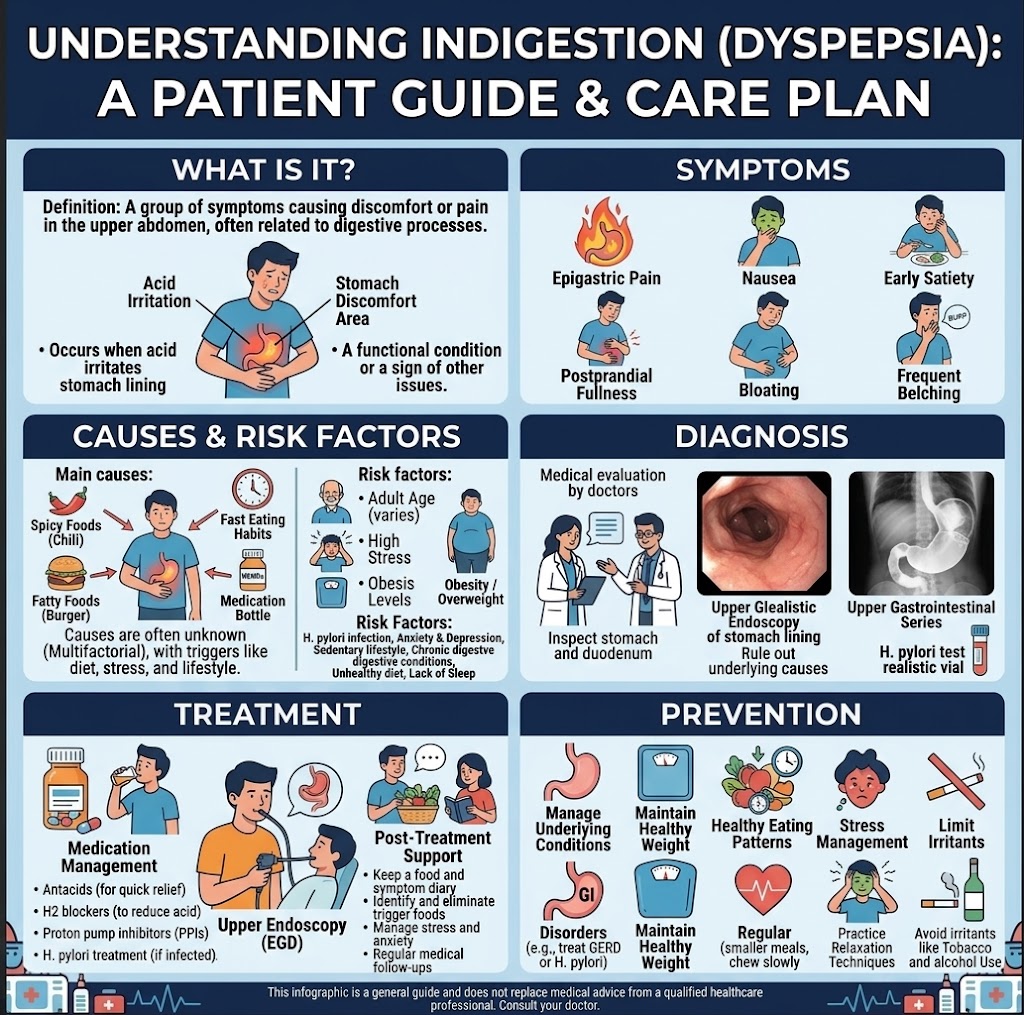
Indigestion, also known as dyspepsia or upset stomach, is a common condition causing discomfort or pain in the upper belly area. It can manifest as a burning sensation, feeling full too quickly during meals, or feeling uncomfortably full long after eating. While often harmless and temporary, frequent or persistent indigestion can significantly impact daily life. It can sometimes signal an underlying digestive issue, but often, no clear cause is found. Effective management typically involves lifestyle adjustments, mental health support, and medications.
Understanding the Condition
Indigestion: Understanding and Managing Upset Stomach
Understanding the Condition
Common Symptoms
Early Fullness: Feeling full very quickly during a meal, making it hard to finish a normal amount of food.
Lasting Fullness: An uncomfortable feeling of fullness that lingers much longer than expected after you've eaten.
Upper Belly Pain: Mild to severe discomfort or pain in the area between your breastbone and belly button.
Burning Sensation: A feeling of burning in the upper part of your belly.
Bloating: A sensation of swelling or tightness in the upper belly area.
Nausea or Vomiting: Feeling sick to your stomach or actually throwing up.
Burping or Food Regurgitation: Frequent burping or bringing up small amounts of food.
Heartburn: Sometimes accompanied by a burning pain in the center of your chest, which can spread to your neck or back, usually after eating.
Consultation Guide
Which Specialist to Meet
For persistent indigestion symptoms, start by consulting your primary care doctor. They can often diagnose and suggest initial treatments or refer you to a digestive system specialist (gastroenterologist) if further investigation is needed.
Preparations Before Your Visit
Before your visit, make a list of your symptoms, including when they occur, how long they last, and what makes them better or worse. Note down any medications, supplements, or herbal remedies you are taking, as well as your typical diet and lifestyle habits. Be prepared to discuss your stress levels or any recent life changes. Write down any questions you have for your doctor.
Book a doctor visit near me
Prokinetics: These medications help improve the movement of food through your digestive system, which can alleviate symptoms of fullness and bloating. (Duration: As prescribed by doctor)
Acupuncture: A traditional Chinese medicine technique involving the insertion of very thin needles into specific points on the body. It is believed to balance energy flow or stimulate the body's natural pain relievers and can help manage discomfort. (Duration: Multiple sessions initially, potentially ongoing for maintenance)
Cognitive Behavioral Therapy (CBT): A type of talk therapy that helps you identify and change negative thought patterns and behaviors contributing to your symptoms or how you cope with them. It is particularly effective for managing stress, anxiety, or trauma that can worsen indigestion. (Duration: Structured sessions, typically 5-20 weeks, sometimes ongoing)
Hypnosis (Hypnotherapy): A state of focused attention and relaxation guided by a healthcare provider, making you more open to suggestions for changing behaviors or coping with pain and anxiety. It can help gain control over behaviors or stress related to indigestion. (Duration: Few sessions or ongoing, as needed)
Quit Smoking: Smoking or using other tobacco products can irritate the digestive lining and worsen indigestion symptoms.
Persistent Symptoms: Consult your doctor if indigestion symptoms last for more than two weeks or become more severe.
Warning Signs: Seek immediate medical attention if you experience severe abdominal pain, unexplained weight loss, difficulty swallowing, black or tarry stools, or persistent vomiting, as these could indicate a more serious underlying condition.
Consultation Guide
Indigestion, also known as dyspepsia or upset stomach, is a common condition causing discomfort or pain in the upper belly area. It can manifest as a burning sensation, feeling full too quickly during meals, or feeling uncomfortably full long after eating. While often harmless and temporary, frequent or persistent indigestion can significantly impact daily life. It can sometimes signal an underlying digestive issue, but often, no clear cause is found. Effective management typically involves lifestyle adjustments, mental health support, and medications.
You will lie still on a motorized table that slides into a large, doughnut-shaped scanner. You might hear whirring or clicking noises. Sometimes, a contrast dye is given orally or injected into a vein to make certain areas show up more clearly. This may cause a warm sensation. The procedure is generally painless and takes about 10-30 minutes.
Upper Endoscopy (Esophagogastroduodenoscopy)
Antibiotics: If H. pylori bacteria are found to be a cause of indigestion or ulcers, a course of specific antibiotics may be prescribed to eliminate the bacteria. (Duration: Typically 1-2 weeks as prescribed)
Hydration: Drink plenty of water throughout the day, but avoid excessive liquids during meals which can cause bloating.
Regular Exercise: Physical activity can aid digestion and reduce stress, both beneficial for preventing indigestion.
When to Seek Medical Care
Diagnostic Procedures
CT Scan (Computerized Tomography)
A CT scan uses special X-ray equipment and computer processing to create detailed, cross-sectional images (like 'slices') of bones, blood vessels, and soft tissues inside your body. It provides much more detail than standard X-rays and can help identify underlying conditions in the abdominal organs that might be causing indigestion, such as inflammation, tumors, or other structural issues.
What to Expect
An upper endoscopy is a procedure where a long, flexible tube with a tiny camera (endoscope) is gently guided down your throat into your esophagus, stomach, and the first part of your small intestine (duodenum). This allows your doctor to visually inspect the lining of these organs for ulcers, inflammation, abnormalities, or other sources of indigestion that might not be visible on other scans. Small tissue samples (biopsies) can also be taken during the procedure.
What to Expect
An X-ray is a quick and painless imaging test that uses a small amount of radiation to create pictures of the structures inside your body, especially bones and dense tissues. For indigestion, X-rays of the abdomen can sometimes help identify more obvious issues like blockages, foreign objects, or gas patterns, though they provide less detail of soft tissues compared to a CT scan.
What to Expect
You will be asked to stand or lie on an examination table, and the X-ray technician will position you correctly. You will need to remain still for a few seconds while the image is taken. You might be asked to hold your breath briefly. The process is very quick and painless.
Treatment Options
Manage Medications: If certain antibiotics or pain relievers contribute to indigestion, discuss alternatives or protective strategies with your doctor. (Duration: As advised by doctor)
Medications
Antacids: Over-the-counter medications that can provide quick relief by neutralizing stomach acid. (Duration: As needed)
Acid Reducers: Medications that decrease the amount of acid your stomach produces, available both over-the-counter and by prescription. These include options that block histamine receptors or block acid pumps in stomach cells. (Duration: Short-term use or as prescribed by doctor)
Prevention & Long-Term Wellbeing
You will typically receive a sedative to help you relax and a numbing spray for your throat. You'll lie on your side, and a mouth guard will be placed to protect your teeth. The endoscope is then carefully inserted. You might feel some pressure or mild discomfort, but generally no pain. The procedure itself usually takes 15-30 minutes, followed by a recovery period until the sedative wears off.
Home Remedies & Lifestyle Changes
Mindful Eating Habits: Eat smaller, more frequent meals, and chew your food slowly and thoroughly. Avoid overeating. (Duration: Ongoing)
Identify & Avoid Trigger Foods: Limit fatty, greasy, or spicy foods, as well as acidic foods like tomatoes and oranges. Reduce intake of caffeine, alcohol, and carbonated beverages. (Duration: Ongoing)
Avoid Late-Night Meals: Don't eat too close to bedtime, ideally allowing a few hours between your last meal and sleep. (Duration: Ongoing)
Prevention
Stress Management: Practice relaxation techniques such as deep breathing, meditation, or yoga. Anxiety, depression, or trauma can contribute to or worsen indigestion.
Maintain a Healthy Weight: Carrying extra weight, especially around the belly, can put pressure on the digestive system and contribute to indigestion.
Tags & Topics
Notice an error or need an update?
Help us keep medical information accurate. Report incorrect info or suggest an edit.


