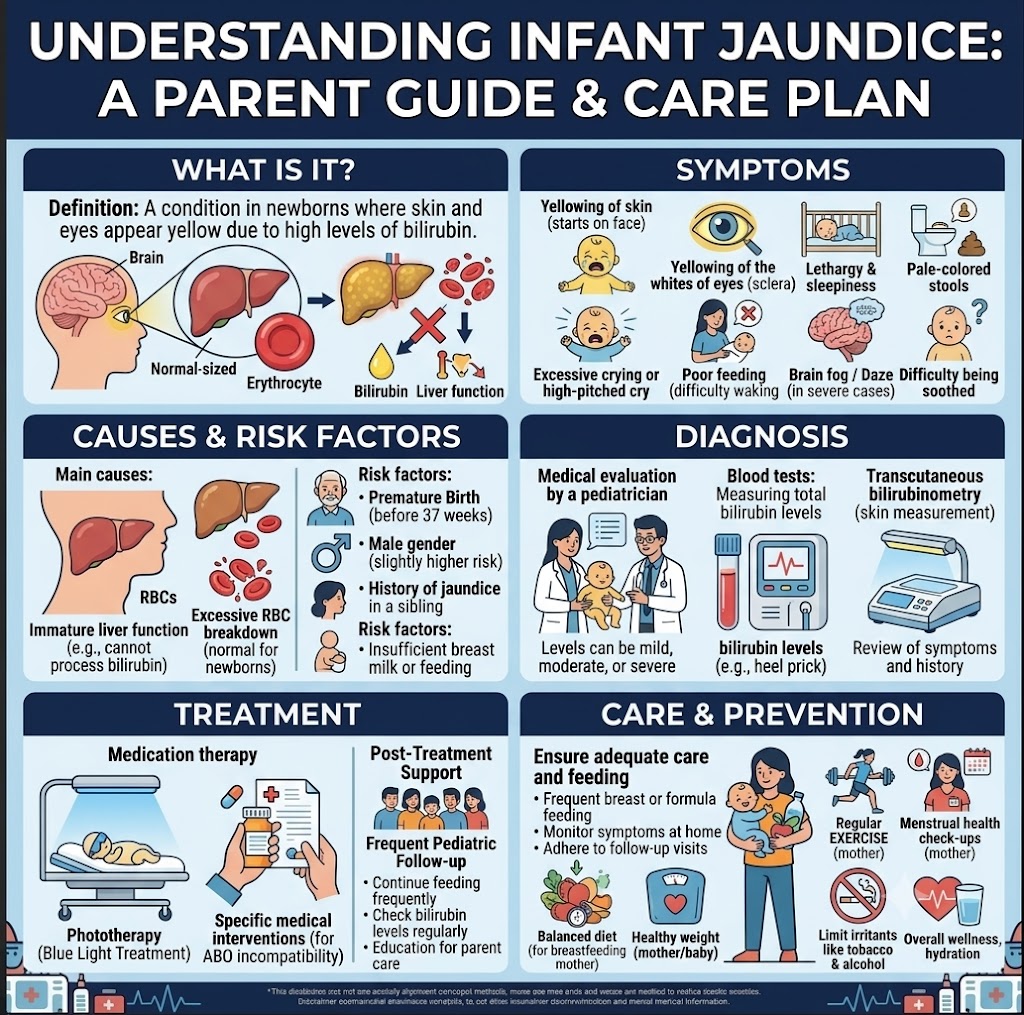
Infant jaundice is a common condition where a newborn baby's skin and eyes turn yellow. This happens due to a buildup of a yellow pigment called bilirubin in the baby's blood. While often harmless, particularly in babies born after 35 weeks of pregnancy, it signals that the baby's liver may not be mature enough to process bilirubin efficiently. In rare cases, very high bilirubin levels can be serious, necessitating prompt medical attention.
Understanding the Condition
Infant Jaundice: Understanding Yellow Skin in Newborns
Understanding the Condition
Infant jaundice is a common condition where a newborn baby's skin and eyes turn yellow. This happens due to a buildup of a yellow pigment called bilirubin in the baby's blood. While often harmless, particularly in babies born after 35 weeks of pregnancy, it signals that the baby's liver may not be mature enough to process bilirubin efficiently. In rare cases, very high bilirubin levels can be serious, necessitating prompt medical attention.
Common Symptoms
Yellow Skin and Eyes: The primary sign of infant jaundice is a yellow tint to the baby's skin and the whites of their eyes. This yellowing typically appears within a few days after birth, often starting on the face and then spreading to the chest, abdomen, and legs. To check, gently press on your baby's forehead or nose; if the pressed area looks yellow, it's a likely sign of jaundice. If not, the skin color should momentarily lighten to its usual shade.
Poor Feeding or Lethargy: In more severe cases, a baby with high bilirubin might appear unusually sleepy, have difficulty waking for feedings, or not feed well. They may also seem unusually fussy or limp.
Dark Urine or Pale Stools: While less common, dark urine (concentrated or deep yellow) or pale/chalky stools can indicate problems with bilirubin processing or elimination, suggesting a more serious underlying issue.
High-Pitched Cry: An unusual, high-pitched cry can be a sign of severe jaundice affecting the brain, requiring immediate medical evaluation.
Consultation Guide
Which Specialist to Meet
If you suspect your baby has jaundice, or if it appears to worsen, you should consult with your pediatrician. For severe or complicated cases, a neonatologist (a specialist in newborn care) or a pediatric gastroenterologist (a specialist in children's liver and digestive issues) may be involved.
Preparations Before Your Visit
Consultation Guide
If there is a concern about blood group incompatibility between the mother and baby (e.g., Rh incompatibility), these tests are performed to identify potential causes of increased red blood cell destruction.
Treatment of Specific Diseases: If jaundice is caused by an underlying health problem (such as an infection, liver disease, or enzyme deficiency), the primary condition will be treated. This might involve medications or other specific interventions. (Duration: Varies widely depending on the underlying cause, from days to ongoing management.)
Diagnostic Procedures
A healthcare professional will examine your baby's skin and eyes to assess the extent of the yellowing. They will also check for other signs of illness or underlying conditions.
What to Expect
The doctor will look at your baby's skin, often in good lighting. They may press gently on the skin to see if the yellow tint remains. This is a quick and painless part of the check-up.
Transcutaneous Bilirubin (TcB) Test
This is a non-invasive screening test that uses a device placed on your baby's skin to measure bilirubin levels. It's often used in hospitals as a quick first check.
What to Expect
A small, handheld device will be gently pressed against your baby's skin, usually on the forehead or chest. The device emits light and measures the reflection to estimate bilirubin levels. It's painless and takes only a few seconds.
This blood test measures the exact amount of bilirubin circulating in your baby's bloodstream. It's the most accurate way to confirm jaundice and determine its severity.
What to Expect
A small sample of blood will be taken, usually from a heel prick on your baby. A healthcare professional will gently clean the heel, make a tiny prick, and collect a few drops of blood into a small tube. Your baby might cry for a moment during the prick, but it's a very quick procedure. The sample is then sent to a lab for analysis.
Complete Blood Count (CBC)
This test measures various components of the blood, including red blood cells, white blood cells, and platelets. It can help identify if excessive red blood cell breakdown or other blood disorders are contributing to jaundice.
What to Expect
This test is usually done from the same blood sample obtained for the bilirubin test, typically through a heel prick. No additional procedure is needed.
Blood Type and Rh Incompatibility Test
What to Expect
A small blood sample will be taken from your baby, usually via a heel prick, and sometimes a sample from the mother is also needed. The procedure is similar to the bilirubin blood test.
In rare cases, if jaundice is severe or prolonged, additional blood tests may be done to assess how well your baby's liver is functioning and to rule out underlying liver diseases.
What to Expect
These are additional blood tests that may be performed using the same or a separate small blood sample, usually from a heel prick, if deemed necessary by the doctor.
Treatment Options
Before your visit, observe your baby's skin color carefully, noting when the yellowing started and how far it has spread. Keep track of your baby's feeding patterns (how often, how much) and wet and dirty diaper count. Be prepared to share your baby's birth history, including gestational age and any complications during delivery. Bring a list of any medications you or your baby are taking. You might also find it helpful to write down any questions you have.
Book a doctor visit near me
Frequent Feedings: Ensuring your baby feeds frequently (8-12 times a day for breastfed babies) helps to stimulate bowel movements, which aids in eliminating bilirubin from the body. Adequate hydration also helps. (Duration: Throughout the period of jaundice, typically a few days to weeks.)
Phototherapy (Light Therapy): This is the most common medical treatment. Your baby is placed under special lights (often blue spectrum light) that help change bilirubin into a form that can be more easily excreted in urine and stool. The baby wears only a diaper and eye protection. (Duration: Usually 1-2 days, but can be longer depending on bilirubin levels and response to treatment. May be done in the hospital or with a home phototherapy blanket.)
Intravenous Immunoglobulin (IVIG): If jaundice is due to blood group incompatibility between mother and baby, IVIG may be given intravenously. This protein can reduce the number of antibodies that are destroying the baby's red blood cells, thereby decreasing bilirubin levels. (Duration: Typically administered over a few hours to a day, sometimes repeated.)
Surgical Procedures
Exchange Transfusion: In very rare and severe cases where bilirubin levels are dangerously high and other treatments haven't worked, a baby may need an exchange transfusion. This procedure involves repeatedly withdrawing small amounts of the baby's blood and replacing it with donor blood, effectively removing high bilirubin and antibodies. (Duration: Typically takes several hours and is performed in a neonatal intensive care unit.)
Addressing Underlying Conditions
Prevention & Long-Term Wellbeing
Prevention
Adequate Feeding: Ensure your newborn receives sufficient nutrition by feeding them regularly (breast milk or formula). Frequent feeding helps the body process and eliminate bilirubin effectively.
Early Monitoring: All newborns should be screened for jaundice before hospital discharge and again within a few days of birth. This allows for early detection and intervention.
Long-Term Monitoring
Follow-up Appointments: After discharge, attend all recommended follow-up appointments with your pediatrician to monitor jaundice levels and ensure appropriate resolution. This is especially crucial for babies who had significant jaundice.
Parental Education: Learn to recognize the signs of worsening jaundice, such as increasing yellowing of the skin, poor feeding, excessive sleepiness, or unusual fussiness. Knowing when to seek medical help promptly is vital for your baby's safety.
Support for Breastfeeding: If you are breastfeeding, seek lactation support to ensure your baby is latching well and receiving enough milk, as insufficient feeding can contribute to jaundice.
Tags & Topics
Notice an error or need an update?
Help us keep medical information accurate. Report incorrect info or suggest an edit.


