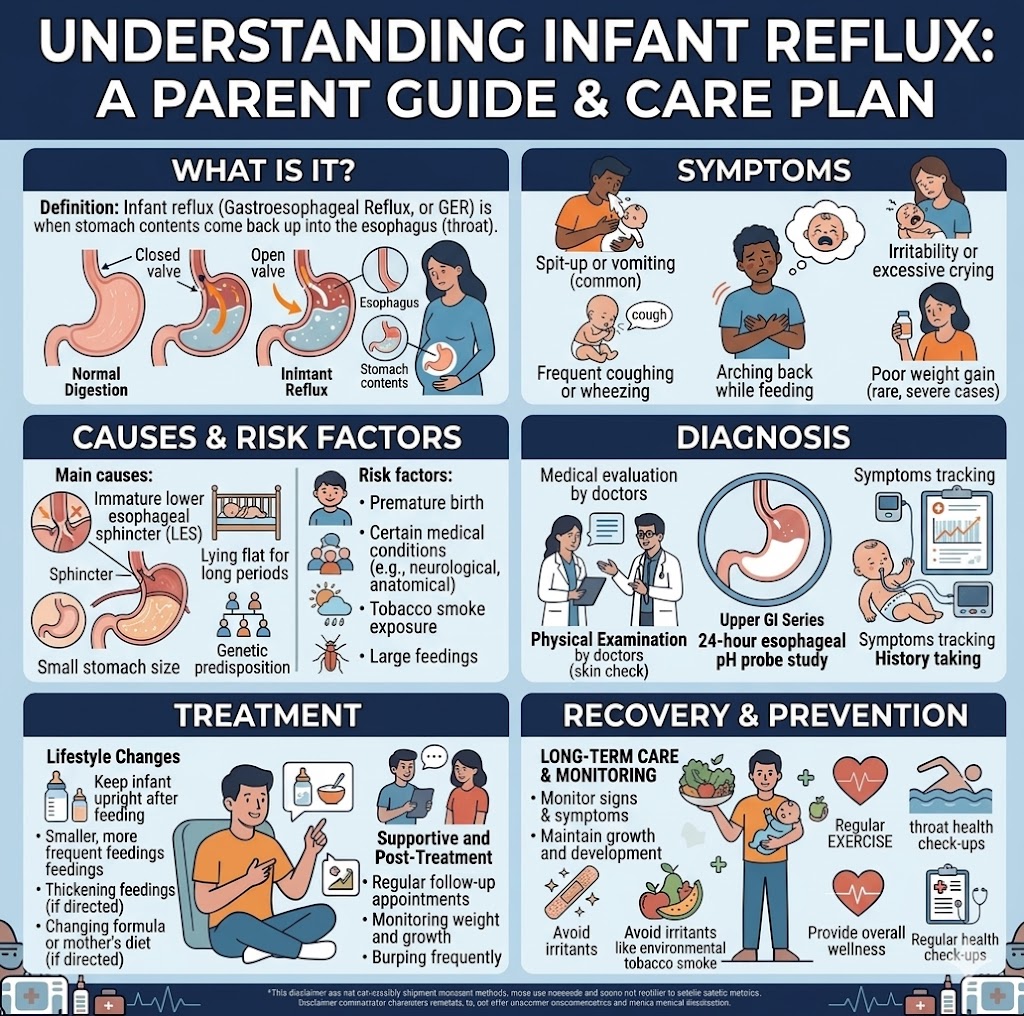
Infant reflux is a common condition where a baby frequently spits up milk or food. This occurs when stomach contents flow back up into the feeding tube (esophagus), the tube connecting the mouth to the stomach. It's very common because the muscle ring at the bottom of their feeding tube, called the lower esophageal sphincter, isn't fully developed yet. This muscle usually acts like a valve, keeping food in the stomach, but in infants, it can relax too often, allowing contents to rise.Most cases are normal and cause no problems if the baby is otherwise happy and growing well. It often improves as babies get older, typically resolving by 18 months. Factors like spending most of their time lying flat and consuming only liquids also contribute.While usually harmless, in rare cases, reflux can signal a more serious underlying issue. These might include a severe form of reflux called Gastroesophageal Reflux Disease (GERD), food allergies (often to cow's milk protein), blockages in the digestive system like pyloric stenosis, or less common conditions such as eosinophilic esophagitis or Sandifer syndrome. Babies born prematurely, those with lung conditions like cystic fibrosis, or nervous system conditions like cerebral palsy, or those who have had esophagus surgery, may be more prone to reflux.
Understanding the Condition
Infant Reflux: Understanding and Managing Spit-Up in Babies
Understanding the Condition
Common Symptoms
Spitting Up: Babies frequently bring up liquid or food from their stomach, which is generally common.
Forceful Vomiting (Projectile Vomiting): Stomach contents shoot out of the mouth with significant force.
Unusual Spit-Up Color: Spit-up that is green or yellow.
Blood in Spit-Up: Spit-up containing blood or looking like coffee grounds.
Feeding Difficulties: Refusing to feed or eat, or showing signs of discomfort during or after feeding.
Blood in Stool: Presence of blood in the baby's bowel movements.
Breathing Issues or Persistent Cough: Difficulty breathing or a cough that doesn't go away.
Late Onset of Spit-Up: New onset of frequent spitting up in babies aged 6 months or older.
Irritability After Eating: Being unusually fussy or uncomfortable after meals.
Low Energy: Appearing unusually tired or lethargic.
Poor Weight Gain or Growth Issues: Not gaining weight as expected, or growth falling behind that of other children of the same age and sex. This is a significant concern that warrants medical attention.
Consultation Guide
Which Specialist to Meet
You should first consult your primary care physician or pediatrician. If symptoms are severe, persistent, or suggest an underlying condition, they may refer you to a pediatric gastroenterologist (a specialist in children's digestive diseases).
Preparations Before Your Visit
Before your visit, it's helpful to observe and note your baby's symptoms, including when they occur (e.g., after feeding, at night), how often, and their intensity. Keep a record of feeding patterns, amount of spit-up, any signs of discomfort, and your baby's weight gain. Be prepared to discuss your baby's full medical history and diet.
Book a doctor visit near me
Smaller, Frequent Feeds: Offer less milk or formula more often to prevent an overly full stomach. (Duration: Ongoing, as long as symptoms persist.)
Upright Post-Feeding Position: Keep your baby upright for 20-30 minutes after each feed to aid digestion via gravity. (Duration: Until reflux resolves, typically by 12-18 months.)
Frequent Burping: Burp your baby often during and after feeds to release trapped air, reducing stomach distention. (Duration: With every feed, until symptoms lessen.)
Optimized Feeding: Ensure appropriate bottle nipple flow or a good breastfeeding latch to minimize air swallowing. (Duration: Ongoing, adjusting as needed.)
Observe Symptom Changes: Continuously monitor for any changes in the frequency, intensity, or nature of reflux symptoms. Report any new or worsening symptoms, especially those indicating discomfort or complications, to your doctor.
Consultation Guide
Infant reflux is a common condition where a baby frequently spits up milk or food. This occurs when stomach contents flow back up into the feeding tube (esophagus), the tube connecting the mouth to the stomach. It's very common because the muscle ring at the bottom of their feeding tube, called the lower esophageal sphincter, isn't fully developed yet. This muscle usually acts like a valve, keeping food in the stomach, but in infants, it can relax too often, allowing contents to rise.Most cases are normal and cause no problems if the baby is otherwise happy and growing well. It often improves as babies get older, typically resolving by 18 months. Factors like spending most of their time lying flat and consuming only liquids also contribute.While usually harmless, in rare cases, reflux can signal a more serious underlying issue. These might include a severe form of reflux called Gastroesophageal Reflux Disease (GERD), food allergies (often to cow's milk protein), blockages in the digestive system like pyloric stenosis, or less common conditions such as eosinophilic esophagitis or Sandifer syndrome. Babies born prematurely, those with lung conditions like cystic fibrosis, or nervous system conditions like cerebral palsy, or those who have had esophagus surgery, may be more prone to reflux.
Diagnostic Procedures
Uses harmless sound waves to create live images of internal body structures like organs and tissues. It helps visualize soft tissues and check for blockages or abnormalities without radiation.
What to Expect
A gel is applied to the skin over the area, and a handheld device (transducer) is gently moved. Images appear on a screen. It's painless, quick (15-30 minutes), and may require your baby to stay still.
Upper Endoscopy (EGD)
A thin, flexible tube with a camera (endoscope) is inserted down the throat to visually examine the esophagus, stomach, and upper small intestine. It helps detect irritation, inflammation, or other abnormalities, and allows for tissue samples (biopsies).
What to Expect
Your baby will receive sedation for comfort. The endoscope is gently guided into the digestive tract. The procedure typically takes 15-30 minutes. Afterward, your baby recovers from sedation and may have a mild sore throat.
A quick, painless imaging test using a small amount of radiation to create pictures of internal body structures, especially bones. It can help detect swallowed objects or digestive tract blockages. A contrast medium may be used for better detail.
What to Expect
Your baby is positioned on an X-ray table; you might help hold them still. Protective shielding is used. If contrast is given, additional images follow. The process is quick, usually minutes.
A simple urine test to check appearance, concentration, and content. It helps detect infections (like UTIs), kidney problems, or metabolic conditions that might mimic or complicate reflux.
What to Expect
A urine sample is collected using a special bag attached to the genital area or, rarely, a catheter. The sample is then analyzed in a lab, with results usually available within hours to a day.
Treatment Options
Medications
Acid-Reducing Medications: For severe reflux or GERD causing significant discomfort, medications to lower stomach acid may be prescribed to help heal the esophagus. (Duration: Short-term (weeks to months), strictly monitored by a doctor.)
Pro-motility Agents: Rarely, medications to speed stomach emptying may be considered for infants, used cautiously due to side effects. (Duration: Short-term, highly individualized, and under strict medical supervision.)
Surgical Procedures
Fundoplication: In severe GERD not responding to other treatments, surgery to wrap part of the stomach around the lower esophagus can strengthen the anti-reflux valve. (Duration: Permanent, typically for life-threatening complications.)
Pyloromyotomy: For pyloric stenosis (a thickened stomach outlet), surgery is performed to cut the muscle, allowing food to pass freely. (Duration: One-time procedure, resolving the blockage.)
Follow-up Medical Appointments: Attend all scheduled follow-up appointments with your pediatrician or specialist to assess the effectiveness of treatments and make any necessary adjustments to your baby's care plan.
Prevention & Long-Term Wellbeing
Home Remedies and Lifestyle Adjustments
Maternal Diet Adjustments (for Breastfeeding): If a food allergy is suspected, a breastfeeding mother may eliminate specific foods (e.g., cow's milk protein) from her diet. (Duration: Trial period (2-4 weeks) to assess improvement, then continued avoidance if effective.)
Specialized Formulas: For formula-fed babies, a doctor might suggest a thickened or hypoallergenic formula. (Duration: As long as effective and under medical guidance.)
Prevention
Proper Feeding Posture: Ensure your baby is fed in a semi-upright position rather than lying flat to help prevent reflux.
Avoid Overfeeding: Pay attention to your baby's hunger cues and avoid pushing them to finish a bottle if they seem full, as overfilling the stomach can trigger reflux.
Manage Allergenic Foods: If food sensitivities (e.g., cow's milk protein) are identified as a trigger, work with your doctor to manage your baby's or your (if breastfeeding) diet accordingly.
Long-Term Monitoring
Monitor Growth and Development: Regularly track your baby's weight and growth with your pediatrician to ensure they are meeting developmental milestones and not being affected by reflux.
Tags & Topics
Notice an error or need an update?
Help us keep medical information accurate. Report incorrect info or suggest an edit.


