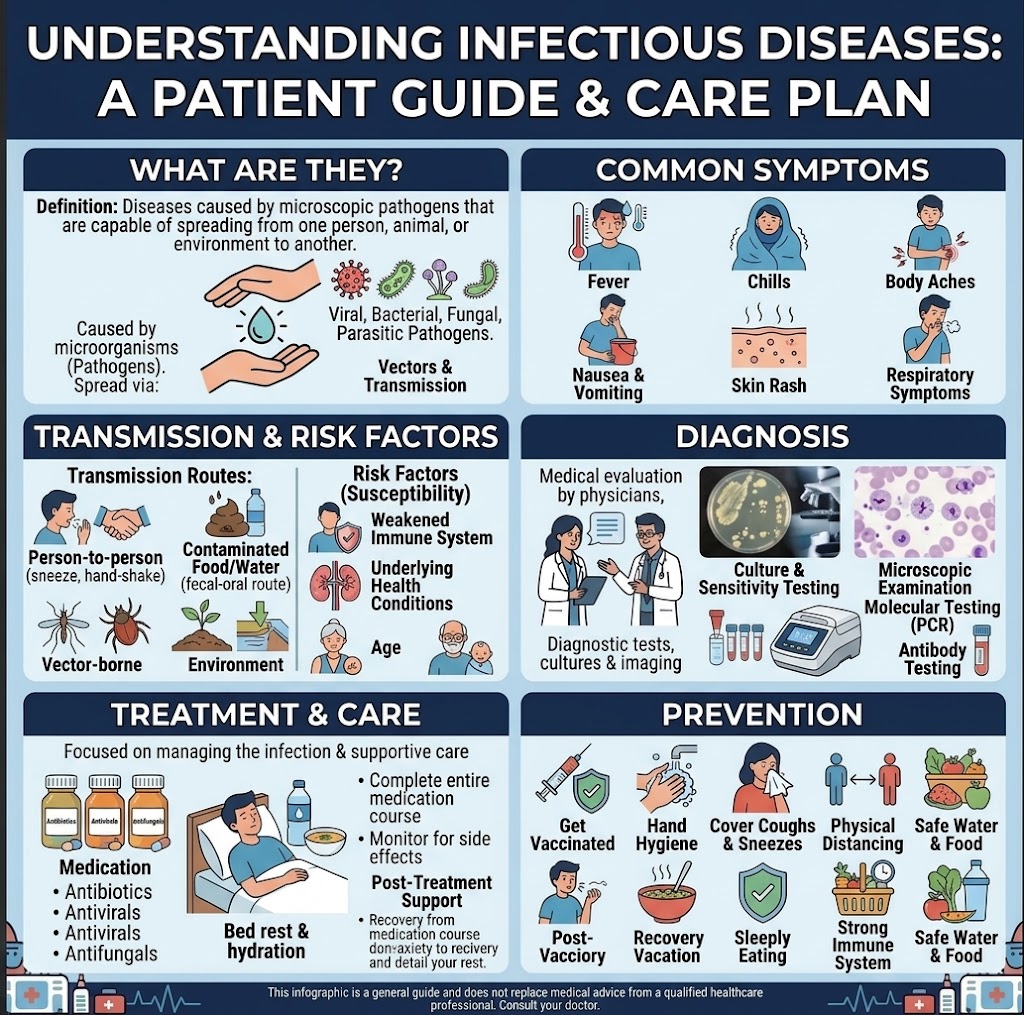
Infectious diseases are illnesses caused by tiny living organisms that enter and multiply within the body. These microscopic invaders, often called germs, include bacteria, viruses, fungi, and parasites. While many such organisms naturally live on and inside us without causing harm – some even being beneficial – specific types or conditions can trigger disease. These illnesses can spread in various ways: directly from person-to-person through contact, coughing, or sneezing; indirectly via insects or other animals; or by consuming contaminated food or water. Exposure to germs on environmental surfaces can also lead to infection. Symptoms can range from mild, like a fever or tiredness, to severe and life-threatening, sometimes requiring hospital care.
Understanding the Condition
Infectious Diseases: Understanding Causes, Symptoms, and Prevention
Understanding the Condition
Infectious diseases are illnesses caused by tiny living organisms that enter and multiply within the body. These microscopic invaders, often called germs, include bacteria, viruses, fungi, and parasites. While many such organisms naturally live on and inside us without causing harm – some even being beneficial – specific types or conditions can trigger disease. These illnesses can spread in various ways: directly from person-to-person through contact, coughing, or sneezing; indirectly via insects or other animals; or by consuming contaminated food or water. Exposure to germs on environmental surfaces can also lead to infection. Symptoms can range from mild, like a fever or tiredness, to severe and life-threatening, sometimes requiring hospital care.
Common Symptoms
Fever: Elevated body temperature.
Tiredness (Fatigue): Persistent lack of energy.
Muscle Aches: Pain or soreness in muscles.
Cough: A sudden expulsion of air from the lungs, often accompanied by throat irritation.
Diarrhea: Loose, watery stools.
Vomiting: Forcefully expelling stomach contents through the mouth.
Rash: Changes in skin color or texture.
Headaches: Pain or discomfort in the head or face.
Sore Throat: Pain or irritation in the throat, often worsened by swallowing.
Consultation Guide
Which Specialist to Meet
You should first consult your general practitioner or family doctor. For severe, unusual, or persistent infections, or if you have a compromised immune system, your doctor may refer you to an infectious disease specialist.
Preparations Before Your Visit
Before your visit, it's helpful to: list all your symptoms, including when they started and how severe they are; mention any recent travel; inform your doctor about any known exposure to sick individuals or animals; provide a list of all medications, supplements, and vitamins you are currently taking; and be ready to discuss your medical history, including vaccinations and underlying health conditions.
Book a doctor visit near me
A healthcare professional will assess your symptoms, check vital signs, and physically examine affected areas for signs like rash, swelling, or redness.
Rest and Hydration: For mild infections, strategies include plenty of rest, staying hydrated with fluids, and using over-the-counter medications to relieve fever, pain, or discomfort. (Duration: Typically a few days to a week, until symptoms resolve.)
Diagnostic Procedures
What to Expect
This is a quick, generally non-invasive check, involving visual inspection, listening with a stethoscope, and gentle touching.
Blood samples are analyzed for infection indicators, such as white blood cell count changes, or to directly identify germs or antibodies against specific infections.
What to Expect
Blood is drawn from a vein, typically in your arm, with a small needle. You might feel a brief pinch. The process usually takes a few minutes.
Urine and Stool Tests
Samples of urine or stool are examined in a lab to detect bacteria, viruses, or parasites, commonly for urinary or gastrointestinal infections.
What to Expect
You will be given a sterile container and instructions to collect the sample privately, either at home or at the clinic. It's a non-invasive collection.
Swabs and Tissue Cultures
A sterile swab collects samples from the throat, nose, skin, or wounds. These are then cultured in a lab to grow and identify the specific germ. Small tissue biopsies may also be taken for examination.
What to Expect
Swabs are quick, possibly causing a brief tickle or gag. Biopsies are more invasive, usually involving local anesthesia to numb the area before a tiny tissue sample is removed.
Imaging Tests (X-rays, CT Scans, MRI)
Used to visualize internal organs and detect complications like inflammation or abscesses, particularly in the lungs or bones.
What to Expect
You'll lie still on a table while images are taken. X-rays are very fast. CT scans involve lying in a scanner. MRI scans are longer, can be noisy, and may require ear protection. Some tests might use an injected or oral contrast dye.
Treatment Options
Home Remedies and Supportive Care
Medications
Targeted Medications: Specific medicines target different types of germs: Antibacterial medications are prescribed for bacterial infections; Antiviral medications are used for certain viral infections; Antifungal medications treat fungal infections; and Antiparasitic medications are effective against parasitic infections. It's crucial to complete the full course even if you feel better. (Duration: Varies from a few days to several weeks or even months for chronic infections, as directed by a doctor.)
Hospital Care and Procedures
Intensive Care and Intervention: For severe or life-threatening infections, hospitalization may be necessary. This can involve intravenous (IV) fluids, oxygen therapy, or close monitoring. In some cases, procedures such as draining an abscess or surgical intervention might be required to remove infected tissue or foreign objects. (Duration: Days to weeks, depending on the severity of the infection and response to treatment.)
Vaccination: Vaccines train your immune system to fight specific infections before they occur. They use weakened or inactive germ parts, or mimetic components, teaching your body to recognize and defend. Vaccination significantly lowers the risk of severe illness, complications, and death, even preventing certain infection-linked cancers. Prevention is always superior to treatment.
Excellent Hand Hygiene: Wash hands frequently and thoroughly with soap and water for at least 20 seconds, especially after coughing, sneezing, restroom use, before eating, and after touching potentially contaminated surfaces or animals. Use alcohol-based hand sanitizer (at least 60% alcohol) when soap and water are unavailable.
Food Safety Practices: Prevent foodborne illnesses by properly handling, cooking, and storing food. This includes washing produce, cooking meats to safe temperatures, avoiding cross-contamination, and promptly refrigerating perishables.
Avoid Contact with Sick Individuals: Maintain distance from ill people. If you are sick, stay home to prevent spreading germs. Cover coughs and sneezes with a tissue or your elbow.
Responsible Use of Medications: Take prescribed infection medications exactly as directed, completing the full course even if you feel better. Do not share medications or save leftovers. This practice helps prevent 'superbugs' – germs resistant to standard treatments, making infections harder and more costly to manage.
Prevention & Long-Term Wellbeing
Prevention and Long-Term Wellbeing
Insect and Animal Bite Prevention: Use repellents, wear protective clothing, and remove standing water to prevent insect bites. Be cautious around wild animals and ensure pets are vaccinated.
Tags & Topics
Notice an error or need an update?
Help us keep medical information accurate. Report incorrect info or suggest an edit.


