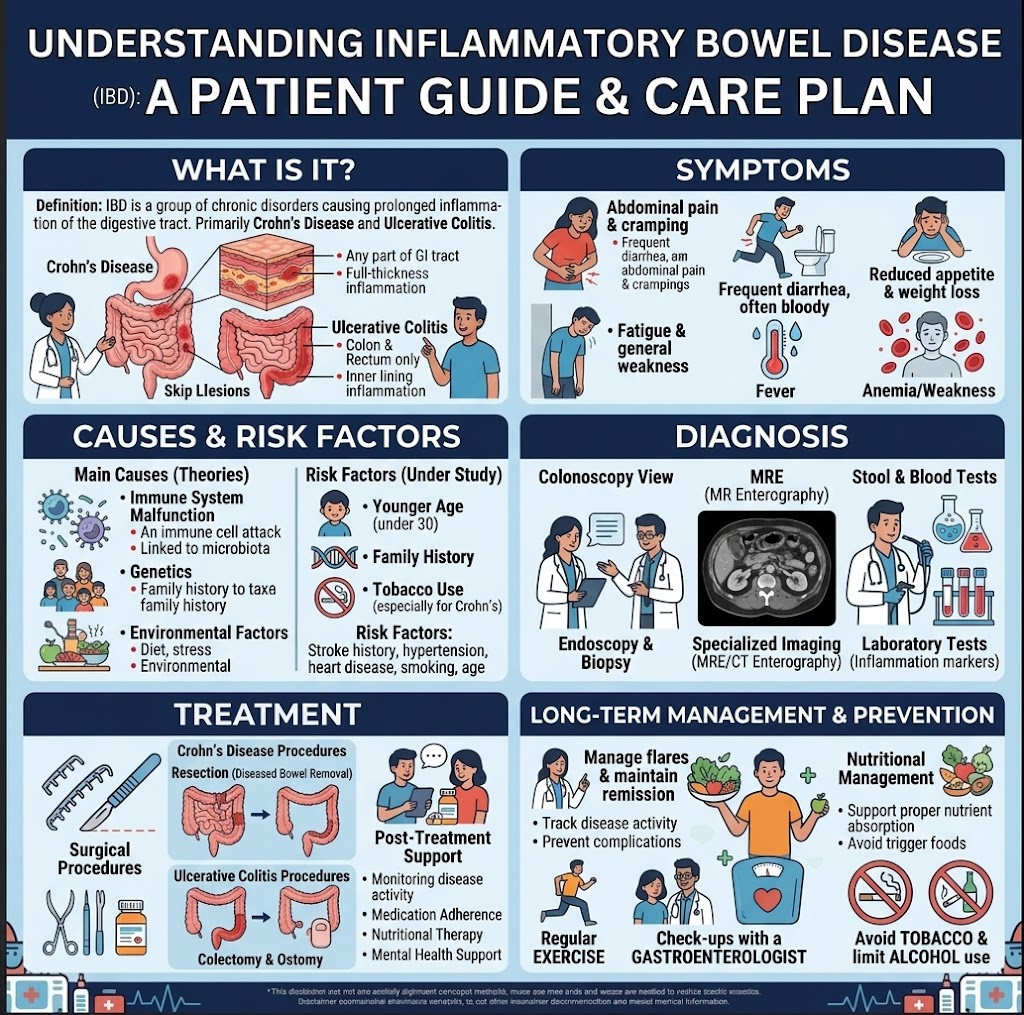
Inflammatory bowel disease (IBD) is a broad term for conditions that cause ongoing swelling and irritation in your digestive system. The two main types are Ulcerative Colitis and Crohn's Disease. Ulcerative Colitis affects only the large intestine, causing inflammation and sores (ulcers). Crohn's Disease can affect any part of the digestive tract, often going deeper into the bowel wall. IBD is a chronic condition, meaning it's long-term, with periods of active symptoms (flare-ups) and periods of remission (when symptoms lessen or disappear). While some people experience mild illness, IBD can be disabling and lead to serious health complications.
Understanding the Condition
Inflammatory Bowel Disease (IBD): A Guide for Understanding and Managing Digestive Inflammation
Understanding the Condition
Inflammatory bowel disease (IBD) is a broad term for conditions that cause ongoing swelling and irritation in your digestive system. The two main types are Ulcerative Colitis and Crohn's Disease. Ulcerative Colitis affects only the large intestine, causing inflammation and sores (ulcers). Crohn's Disease can affect any part of the digestive tract, often going deeper into the bowel wall. IBD is a chronic condition, meaning it's long-term, with periods of active symptoms (flare-ups) and periods of remission (when symptoms lessen or disappear). While some people experience mild illness, IBD can be disabling and lead to serious health complications.
Common Symptoms
Belly Pain and Cramping: Discomfort or sharp pains in the abdomen.
Diarrhea: Frequent, loose, or watery bowel movements.
Blood in the Stool / Rectal Bleeding: Visible blood, either bright red or mixed with stool, which may indicate bleeding in the digestive tract. An increased amount of mucus in stool, especially with blood, pain, or changes in bowel habits, warrants medical attention.
Extreme Tiredness (Fatigue): Persistent and overwhelming exhaustion not relieved by rest.
Weight Loss: Losing weight without trying, often due to poor appetite or nutrient malabsorption.
Loss of Appetite: Reduced desire to eat, contributing to weight loss and nutritional deficiencies.
Consultation Guide
Which Specialist to Meet
If you experience lasting changes in your bowel habits or any IBD symptoms, you should see a primary care provider. They may refer you to a gastroenterologist (a doctor specializing in digestive diseases). Depending on your symptoms or complications, you might also see a surgeon, dietitian, rheumatologist, or ophthalmologist.
Preparations Before Your Visit
Before your visit, keep a detailed diary of your symptoms, including when they occur, what you've eaten, and any pain levels. List all medications, supplements, and vitamins you take. Prepare a list of questions for your doctor. Be ready to discuss your family medical history and any recent travel or illnesses.
Book a doctor visit near me
Diet Management: Identifying and avoiding specific foods that trigger your symptoms can help manage flares. A balanced, nutritious diet is essential. (Duration: Ongoing)
Stress Reduction Techniques: Practices like meditation, yoga, mindfulness, or regular light exercise can help manage stress, which may aggravate IBD symptoms. (Duration: Ongoing)
Hydration: Drinking plenty of fluids is crucial, especially during periods of diarrhea, to prevent dehydration. (Duration: Ongoing)
Adequate Rest: Ensuring sufficient sleep can help manage fatigue, a common symptom of IBD. (Duration: Ongoing)
Avoid Nonsteroidal Anti-inflammatory Medicines (NSAIDs): NSAIDs (like ibuprofen) can increase the risk of developing IBD or worsen symptoms in those who already have it. Discuss safer pain relief options with your doctor.
Practice Good Hand Hygiene: Regular hand washing helps reduce the risk of gastrointestinal infections that could potentially trigger or worsen IBD symptoms.
Symptom Tracking: Keeping a detailed diary of your symptoms, dietary intake, and stress levels can help you and your doctor identify triggers and monitor disease activity.
Consultation Guide
Quit Smoking: Cigarette smoking is the most significant controllable risk factor for Crohn's disease and worsens IBD overall. Quitting dramatically improves digestive and general health.
Diagnostic Procedures
An exam to look for changes like swollen, irritated tissues, polyps, or cancer in the large intestine (colon) and rectum.
What to Expect
An exam to view the rectum and the lower part of the large intestine (sigmoid and descending colon).
What to Expect
This requires less extensive bowel preparation than a colonoscopy, often just an enema. Sedation may not be used. A shorter, flexible tube with a light and camera is inserted into your anus and guided through the rectum and lower colon. You may feel pressure or cramping. The procedure is typically shorter, lasting 10-20 minutes.
CT Scan (Computed Tomography Scan)
An imaging test that uses X-rays and computer processing to create detailed cross-sectional images (slices) of bones, blood vessels, and soft tissues inside the body.
What to Expect
You will lie on a table that slides into a large, donut-shaped machine. You may be asked to hold your breath briefly. Sometimes, a contrast dye (given orally or intravenously) is used to improve image detail. The machine may make humming or clicking sounds. The scan usually takes a few minutes.
A quick, painless imaging test that uses radiation to capture pictures of structures inside the body, especially bones. It can also show issues in the digestive tract, particularly when a contrast medium is used.
What to Expect
You will be positioned between an X-ray machine and a detector plate. You may need to hold still or hold your breath for a few seconds while the image is taken. The process is very fast.
A specific type of X-ray exam where a contrast liquid called barium is introduced into the rectum to coat the lining of the large intestine, making it visible on X-ray images.
What to Expect
Alkaline Phosphatase (ALP) Blood Test
A blood test that measures the level of alkaline phosphatase, an enzyme primarily found in the liver and bones, but also in the intestines and kidneys. It's often part of a broader 'liver panel' to check liver and bone health.
What to Expect
A healthcare professional will draw a blood sample from a vein, usually in your arm. This is a standard blood test and typically requires no special preparation unless other blood tests are ordered that require fasting.
A procedure where a thin needle is used to remove a small sample of cells or tissue from a suspicious area for laboratory testing.
What to Expect
Local anesthetic will be applied to numb the area. The doctor will insert a thin needle, often guided by imaging like ultrasound or CT, to reach the target tissue. A small sample is collected. You might feel some pressure. A small dressing will be applied to the site afterward.
Colectomy (Colon Resection): Surgical removal of part or all of the colon (large intestine) to treat severe disease, blockages, or cancer. (Duration: One-time procedure; recovery takes weeks to months. May involve creating an ostomy.)
Ileostomy: A surgical procedure to create an opening (stoma) in the abdomen from the small intestine (ileum) to divert waste into an external pouch. This bypasses the colon and rectum. (Duration: May be temporary (weeks to months or years) to allow bowel healing, or permanent.)
Colostomy: A surgical procedure to create an opening (stoma) in the abdomen from the large intestine (colon) to divert waste into an external pouch. (Duration: May be temporary (weeks to months) to allow bowel healing, or permanent.)
Bowel Resection: Removal of a diseased or damaged segment of the intestine, often performed for Crohn's disease complications like strictures or fistulas. (Duration: One-time procedure; may be repeated if disease recurs. Recovery takes weeks to months.)
Strictureplasty: A surgical procedure to widen a narrowed section of the intestine (stricture) without removing the bowel segment, preserving bowel length. (Duration: One-time procedure; recovery takes weeks.)
Home Enteral Nutrition (HEN): Tube feeding that delivers liquid nutrition directly to the stomach or small intestine for individuals who cannot consume enough nutrients by mouth. (Duration: Short-term (weeks to months) or long-term, depending on nutritional needs.)
Colon Cancer Screening: Due to an increased risk of colon cancer with IBD, regular colonoscopies are recommended, typically starting 8-10 years after diagnosis. Follow your doctor's specific screening schedule.
Treatment Options
Medications
Anti-inflammatory Drugs: Medications that reduce inflammation in the lining of the digestive tract. (Duration: Short-term for flares, or long-term for maintenance)
Immune System Suppressors: Medications that reduce the activity of the immune system to decrease inflammation and prevent flare-ups. (Duration: Long-term maintenance)
Biologic Therapies: Advanced medications that target specific proteins in the immune system to reduce inflammation. (Duration: Long-term maintenance)
Antibiotics: Used to treat infections, abscesses, or bacterial overgrowth within the digestive system. (Duration: Short-term, as needed)
Anti-diarrheal Medications: Help to control severe diarrhea and improve stool consistency. (Duration: Short-term, as needed)
Pain Relievers: Certain medications can help manage abdominal pain. It's important to discuss options with your doctor, as some common pain relievers can worsen IBD. (Duration: Short-term, as needed)
Vitamin and Mineral Supplements: Used to correct deficiencies (like iron or Vitamin B12) that can result from malabsorption due to IBD. (Duration: Ongoing, as needed)
Surgical Procedures
Colostomy Reversal: Surgery to close a temporary colostomy and reconnect the bowel, allowing stool to pass through the rectum again. (Duration: One-time procedure; recovery takes weeks.)
Minimally Invasive Surgery: Surgical techniques (like laparoscopy or robotic surgery) using smaller incisions, often resulting in less pain, shorter hospital stays, and fewer complications compared to traditional open surgery. (Duration: One-time procedure; recovery is typically shorter than open surgery.)
Therapies
Regular Medical Check-ups: Consistent follow-up appointments with your gastroenterologist are vital for managing your condition, adjusting treatments, and monitoring for complications.
Bone Density Screening: Regular checks for bone thinning (osteoporosis) are important, especially if you have used corticosteroids for treatment.
Medication Adherence: Taking your prescribed medications consistently as directed is crucial for maintaining remission and preventing painful or debilitating flare-ups.
Mental Health Support: Chronic illness can impact mental well-being. Seeking support through counseling, therapy, or patient support groups can help manage stress, anxiety, and depression.
Vaccination: Stay up-to-date on recommended vaccinations, especially if you are taking immune-suppressing medications, to protect against infections.
Prevention & Long-Term Wellbeing
You will follow a special diet and take laxatives the day before to clear your bowels. You'll receive sedation or anesthesia. A long, flexible tube with a camera is inserted into your rectum and guided through your colon. Air is gently inflated for a clearer view. The procedure takes 30-60 minutes. You may feel some cramping or gas afterward and will need time to recover from sedation.
Flexible Sigmoidoscopy
Similar to a colonoscopy, you will need to clear your bowels beforehand with a special diet and laxatives. Barium liquid is gently pumped into your rectum through a small tube. You may feel fullness or cramping. X-ray images are then taken as the barium coats the bowel walls. You will then expel the barium.
Lifestyle and Home Remedies
Drainage of Abscesses and Fistula Repair: Surgical procedures to drain infected pockets of pus (abscesses) and to close or manage abnormal connections (fistulas) between organs or to the skin. (Duration: One-time procedure per issue; complex cases may require multiple procedures. Recovery takes weeks.)
Prevention and Risk Reduction
Maintain a Healthy Lifestyle: A balanced diet, regular physical activity, and adequate sleep support overall health and immune function, which can be beneficial for managing IBD.
Long-Term Monitoring and Support
Nutritional Assessment: Work with a dietitian to identify and address any vitamin and mineral deficiencies, ensuring you receive adequate nutrition despite digestive challenges.
Tags & Topics
Notice an error or need an update?
Help us keep medical information accurate. Report incorrect info or suggest an edit.


