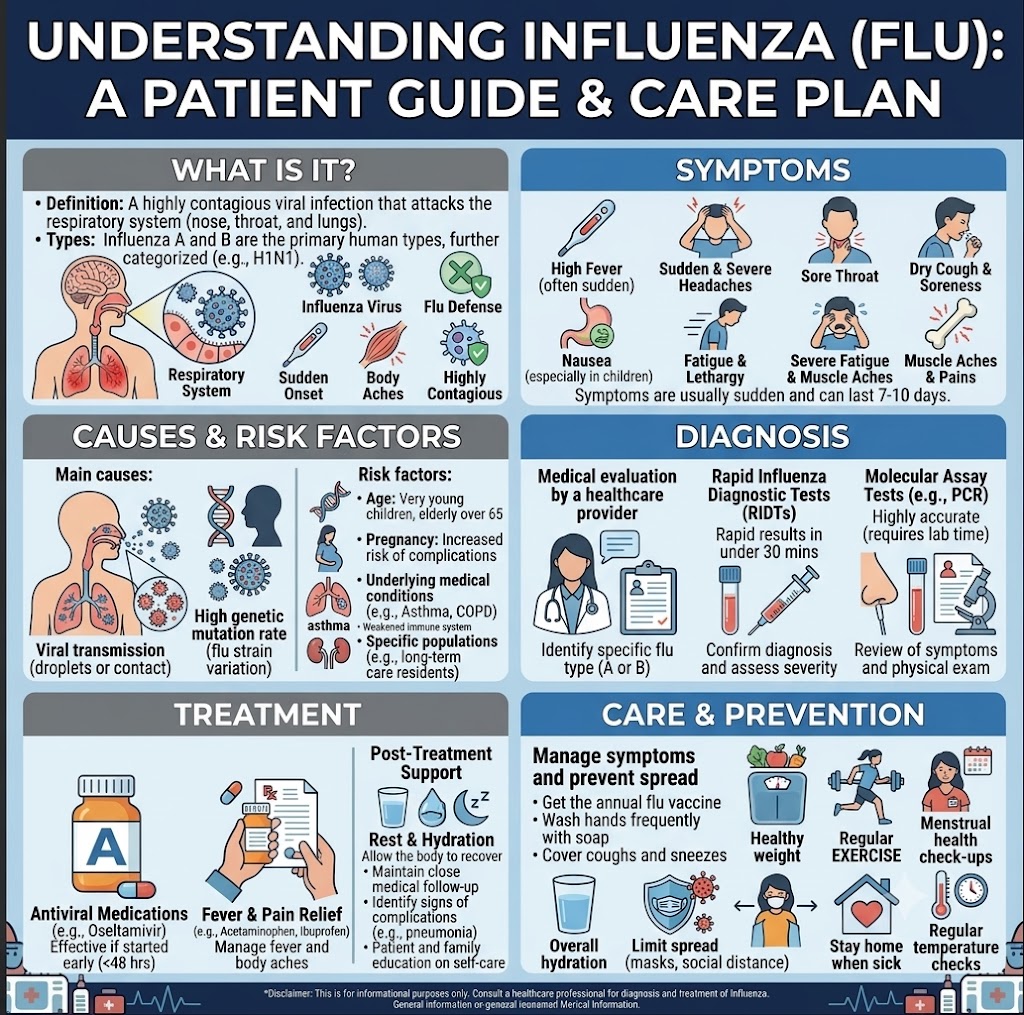
Influenza, commonly known as the flu, is a contagious illness that primarily infects the nose, throat, and lungs, which are parts of your respiratory system. It is caused by specific influenza viruses and is different from 'stomach flu' viruses. While most people recover from the flu on their own, it can sometimes lead to serious complications and, in severe cases, be life-threatening. Annual vaccination is the most effective way to protect yourself and significantly lower the risk of severe illness and complications from the seasonal flu.
Understanding the Condition
Common Symptoms
General Flu Symptoms: The flu typically appears suddenly, often within 2-3 days after exposure to the virus, and makes you feel much worse than a common cold. Common symptoms include fever (though not always), headache, body and muscle aches, extreme tiredness, chills, and sweats. A sore throat, runny nose, or stuffy nose are also common.
Child-Specific Symptoms: Children may exhibit general fussiness or irritability. They are also more likely than adults to experience ear pain, upset stomach, vomiting, or diarrhea with the flu.
Less Common Symptoms: Some individuals may experience eye pain, watery eyes, or increased sensitivity to light.
Consultation Guide
Which Specialist to Meet
For initial symptoms and concerns, you should consult a primary care physician (such as a family doctor or internal medicine specialist). If severe complications arise, you may be referred to specialists like a pulmonologist (lung expert), cardiologist (heart expert), or an infectious disease specialist.
Preparations Before Your Visit
Before your visit, be prepared to describe your symptoms accurately, including when they started, how severe they are, and any existing medical conditions or medications you are taking. Inform your doctor if you have been in contact with anyone sick or if you belong to a high-risk group for flu complications.
Book a doctor visit near me
Often, healthcare professionals can diagnose the flu based on your symptoms and a physical examination, especially during peak flu season.
Your doctor will ask about your symptoms, medical history, and may perform a physical check-up. This is often sufficient for diagnosis, particularly if symptoms are classic flu-like.
Home Care and Symptom Relief
Rest and Hydration: Getting plenty of rest helps your body fight the infection. Drinking clear fluids like water, broth, or juice prevents dehydration. (Duration: Until symptoms resolve, typically 1-2 weeks.)
Over-the-Counter Pain Relievers: Non-prescription medications can help ease fever, headaches, and muscle aches. Follow dosage instructions carefully. Children and teenagers should avoid aspirin with viral infections. (Duration: As needed for symptom relief.)
Congestion Relief: Using a humidifier can help soothe a sore throat and cough. Saline nasal sprays or rinses can help relieve stuffy noses. (Duration: As needed for symptom relief.)
Prescription Antivirals: If started within 48 hours of symptom onset, these medications can shorten the duration of the flu, reduce symptom severity, and help prevent serious complications. They are often recommended for high-risk individuals or those with severe illness. (Duration: Usually taken for 5 days, as prescribed by your doctor.)
Advanced Medical Procedures
Stay Home When Ill: If you have flu symptoms, stay home from work, school, and public places for at least 24 hours after your fever is gone (without fever-reducing medication). This prevents spreading the virus.
Cover Coughs and Sneezes: Cover your mouth and nose with a tissue when coughing or sneezing. If no tissue, use your elbow. Dispose of used tissues immediately.
Long-Term Monitoring and Management
Consultation Guide
Influenza, commonly known as the flu, is a contagious illness that primarily infects the nose, throat, and lungs, which are parts of your respiratory system. It is caused by specific influenza viruses and is different from 'stomach flu' viruses. While most people recover from the flu on their own, it can sometimes lead to serious complications and, in severe cases, be life-threatening. Annual vaccination is the most effective way to protect yourself and significantly lower the risk of severe illness and complications from the seasonal flu.
Diagnostic Procedures
What to Expect
Rapid Influenza Diagnostic Test (RIDT)
This quick test detects parts of the flu virus (antigens) from a sample collected from your nose or throat.
What to Expect
A healthcare professional will gently collect a sample using a sterile swab from inside your nose or the back of your throat. The test results are typically available within 15-30 minutes.
Reverse Transcription Polymerase Chain Reaction (RT-PCR) Test
This is a more sensitive and accurate laboratory test that identifies genetic material of the influenza virus from a nasal or throat swab.
What to Expect
Similar to the rapid test, a sample will be collected with a nasal or throat swab. This sample is then sent to a specialized laboratory for analysis, and results may take several hours to a day or more to become available.
Treatment Options
Antiviral Medications
Prevention & Long-Term Wellbeing
Influenza (Flu): Understanding, Prevention, and Care
- Understanding the Condition
Extracorporeal Membrane Oxygenation (ECMO): For severe, life-threatening lung or heart failure due to flu complications, ECMO is a support technique where blood is pumped outside the body through a heart-lung machine. This machine removes carbon dioxide and adds oxygen, allowing the patient's own heart and lungs to rest and heal. It provides vital temporary support, not a cure. (Duration: Short-term support, varying based on the patient's condition and recovery progress, under continuous medical supervision.)
Prevention
Annual Flu Vaccination: The most important preventive measure is an annual flu vaccine, designed to protect against common strains each season. It significantly lowers the risk of getting the flu, developing severe illness, needing hospitalization, and dying from complications. High-dose or adjuvanted vaccines are recommended for people aged 65 and older to boost their immune response. Immunity develops about two weeks after vaccination, making early season vaccination (September or October in North America) ideal.
Practice Good Hand Hygiene: Wash hands frequently and thoroughly with soap and water for at least 20 seconds, especially after coughing, sneezing, or touching public surfaces. If unavailable, use an alcohol-based hand sanitizer (at least 60% alcohol).
Clean and Disinfect Surfaces: Regularly clean and disinfect frequently touched surfaces at home and work, as flu viruses can survive on them.
Avoid Touching Your Face: Avoid touching your eyes, nose, and mouth, as this is a common way for viruses to enter your body.
Social Distancing: Avoid close contact with people who are sick. Maintain physical distance, especially during peak flu season or when illness is widespread.
Proactive Medical Consultation for High-Risk Individuals: High-risk individuals (e.g., young children, older adults, pregnant people, those with chronic conditions or weakened immune systems) should discuss flu prevention and early management strategies with their doctor annually. This can prevent severe complications.
Managing Chronic Conditions: Effectively manage any existing chronic health conditions (like asthma, diabetes, or heart disease) as these can increase the risk of severe flu complications. Regular medical follow-ups are important.
Tags & Topics
Notice an error or need an update?
Help us keep medical information accurate. Report incorrect info or suggest an edit.


