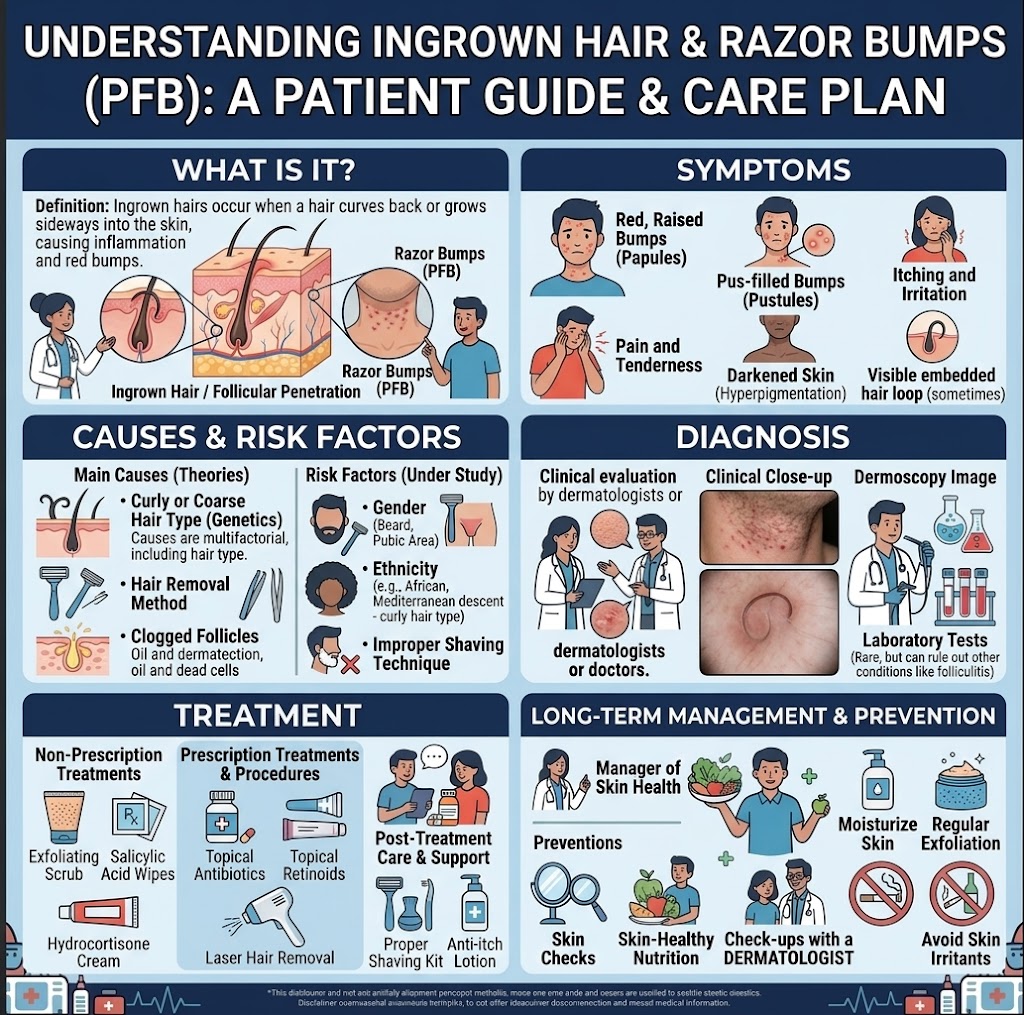
An ingrown hair occurs when a hair, often after being removed by shaving, tweezing, or waxing, grows back and curves into the skin instead of growing outward. This common condition can lead to small, red, and sometimes painful bumps on the skin. While anyone can experience ingrown hairs, individuals with tightly curled hair, particularly people of African descent, are more susceptible. This is because their natural hair structure encourages the hair to curve and re-enter the skin after being cut. Most ingrown hairs resolve on their own without specific treatment, but understanding effective prevention strategies is crucial for avoiding discomfort and potential complications.
Understanding the Condition
Common Symptoms
Tiny Bumps: Small, raised, often red bumps appearing in areas where hair has been removed.
Pus-filled Spots: Bumps that may develop a white or yellow tip, resembling blisters or small pimples containing pus.
Dark Spots: Patches of skin that become darker than the surrounding area, known as hyperpigmentation, appearing at the site of the ingrown hair.
Burning or Stinging Sensation: A feeling of irritation, discomfort, or mild pain in the affected region.
Looped Hair: A visible hair that has grown into a loop, with its tip clearly curving back and penetrating the skin.
Pain or Tenderness: The bumps can be sensitive or painful when touched.
Consultation Guide
Which Specialist to Meet
For persistent, painful, or frequently recurring ingrown hairs, it's advisable to consult a dermatologist, a medical doctor specializing in skin conditions. A general practitioner can also provide initial assessment and guidance, referring you to a specialist if necessary.
Preparations Before Your Visit
Before your appointment, prepare a brief summary of your symptoms, including when they started, how often they occur, and any home remedies or over-the-counter products you've tried. Be ready to discuss your typical hair removal methods and frequency. This information will help your doctor accurately diagnose your condition and recommend the most appropriate treatment plan.
Book a doctor visit near me
Consultation Guide
An ingrown hair occurs when a hair, often after being removed by shaving, tweezing, or waxing, grows back and curves into the skin instead of growing outward. This common condition can lead to small, red, and sometimes painful bumps on the skin. While anyone can experience ingrown hairs, individuals with tightly curled hair, particularly people of African descent, are more susceptible. This is because their natural hair structure encourages the hair to curve and re-enter the skin after being cut. Most ingrown hairs resolve on their own without specific treatment, but understanding effective prevention strategies is crucial for avoiding discomfort and potential complications.
Diagnostic Procedures
Clinical Skin Examination
The diagnosis of an ingrown hair is primarily made by a healthcare professional through a visual inspection of the affected skin area. They will look for characteristic signs such as inflamed bumps, pus-filled lesions, or visible hairs that have curled back into the skin.
What to Expect
During the examination, your doctor will carefully inspect the areas where you typically remove hair, such as your face, neck, or legs. They may gently touch the bumps to check for tenderness, warmth, or inflammation. This examination is quick, non-invasive, and generally painless, unless the affected area is already very sensitive or infected.
Exploring Alternative Hair Removal Methods: Chemical hair removers (depilatories) can be an alternative, but always perform a patch test on a small area of skin first to check for any irritation or allergic reactions. Laser hair removal offers a more permanent reduction in hair growth, making it a highly effective solution for frequent ingrown hairs.
Long-Term Monitoring and Management
Regular Skin Checks: Periodically inspect areas prone to ingrown hairs for any early signs of recurrence. Detecting them early can help prevent them from worsening and lead to quicker resolution.
Treatment Options
Medications
Topical Creams: Your doctor may prescribe or recommend creams to reduce inflammation, redness, and irritation. If there's an infection, an antibiotic cream might be prescribed. Other creams can help reduce skin discoloration (hyperpigmentation) or gently loosen dead skin cells. (Duration: Varies from a few days for acute inflammation to several weeks or months for persistent discoloration, as directed by your doctor.)
Manual Extraction: If an ingrown hair is clearly visible but remains trapped under the skin, a healthcare provider can use a sterile needle or a small scalpel to gently free the hair, lifting it out of the skin without plucking it entirely. (Duration: A single, quick procedure performed during a clinic visit.)
Laser Hair Removal: This treatment uses focused light energy to target and destroy hair follicles, preventing future hair growth. It is a more long-term solution particularly effective for individuals experiencing recurrent or severe ingrown hairs. (Duration: Typically requires multiple sessions (e.g., 4-6) spaced several weeks apart, with potential for occasional maintenance sessions over years.)
Therapies
Chemical Peels: Mild chemical peels, often containing ingredients like alpha hydroxy acids, can help exfoliate the skin's surface. This process can prevent dead skin cells from trapping hairs, reduce inflammation, and improve skin discoloration. (Duration: Typically applied in a series of sessions over several weeks, with ongoing use as needed for maintenance.)
Addressing Complications Promptly: If you observe persistent dark spots (post-inflammatory hyperpigmentation), raised scars (keloids), or signs of infection (such as increased pain, warmth, significant redness, or pus), consult your doctor immediately. These complications may require specific medical treatments.
Prevention & Long-Term Wellbeing
Ingrown Hair: Understanding, Prevention, and Care
- Understanding the Condition
Home Care and Lifestyle Adjustments
Gentle Exfoliation and Warm Compresses: For mild ingrown hairs, applying a warm, damp cloth to the affected area for 10-15 minutes several times a day can help soften the skin and encourage the trapped hair to emerge. Gently massaging the area with a soft brush or washcloth in circular motions can also aid in releasing the hair. (Duration: Can be done daily until the ingrown hair resolves, typically within a few days to a week.)
Prevention
Adjusting Hair Removal Techniques: Consider avoiding hair removal altogether in problematic areas if possible. If not, avoid very close shaves. When using an electric razor or clippers, keep the blades slightly elevated from the skin. Always shave or trim in the direction of hair growth, not against it.
Proper Skin Preparation Before Hair Removal: Before hair removal, wash your skin with warm water and a mild cleanser to soften the hair and open pores. Apply a lubricating shaving cream or gel a few minutes beforehand, or use a warm, damp cloth to further soften the hair and prepare the skin.
Optimized Shaving Practices: Use a sharp, single-blade razor to minimize cutting hair too short or creating sharp edges that can easily pierce the skin. Do not pull your skin taut while shaving. Rinse the razor blade after each stroke to ensure it remains clean and effective.
Post-Hair Removal Care: After hair removal, rinse your skin with cool water and apply a cool, wet cloth for approximately five minutes to soothe the skin. Follow with a gentle, soothing after-shave product or a lotion containing mild exfoliating ingredients (such as alpha hydroxy acids) to help prevent dead skin cell buildup.
Tags & Topics
Notice an error or need an update?
Help us keep medical information accurate. Report incorrect info or suggest an edit.


