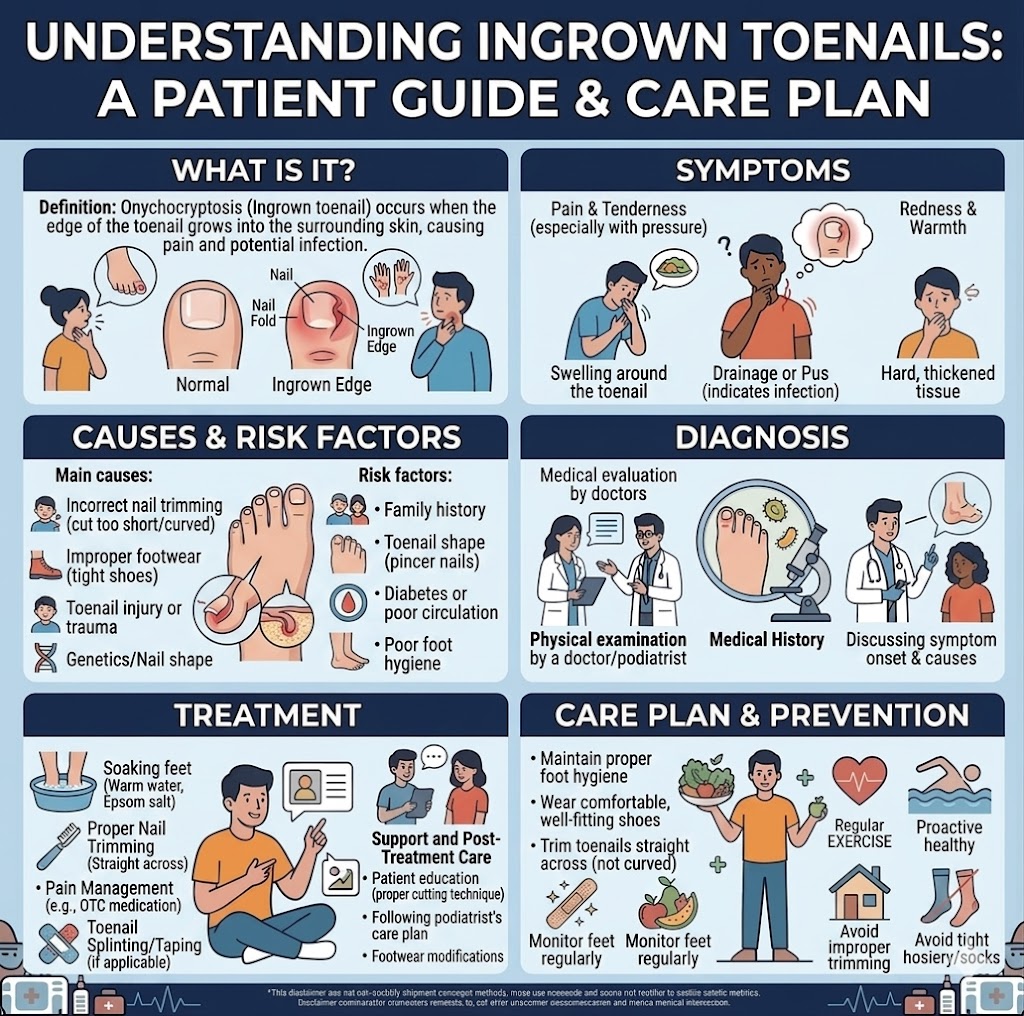
An ingrown toenail occurs when the edge or corner of a toenail grows into the soft skin surrounding it. This common condition typically affects the big toe, leading to noticeable pain, redness, swelling, and sometimes an infection. While many ingrown toenails can be managed with simple home care, it's crucial to seek medical attention if the pain is severe, spreading, or if you have underlying health conditions like diabetes or poor circulation, as these can increase the risk of serious complications.
Understanding the Condition
Understanding Ingrown Toenails
Understanding the Condition
An ingrown toenail occurs when the edge or corner of a toenail grows into the soft skin surrounding it. This common condition typically affects the big toe, leading to noticeable pain, redness, swelling, and sometimes an infection. While many ingrown toenails can be managed with simple home care, it's crucial to seek medical attention if the pain is severe, spreading, or if you have underlying health conditions like diabetes or poor circulation, as these can increase the risk of serious complications.
Common Symptoms
Pain and Tenderness: Discomfort or sensitivity along the side of the affected toenail.
Redness: Visible reddening of the skin around the ingrown nail.
Swelling: Puffiness or inflammation of the skin adjacent to the nail.
Infection Signs: Pus, drainage, increased pain, or warmth indicating a bacterial infection of the surrounding tissue.
Consultation Guide
Which Specialist to Meet
You should consult your family doctor or a podiatrist (a foot specialist). If you have diabetes, nerve damage, or poor blood circulation in your feet, it's especially important to see a podiatrist promptly, even for minor ingrown toenails.
Preparations Before Your Visit
Before your visit, make a list of your symptoms, including when they started and how severe they are. Note any home remedies you've tried and if you have any medical conditions, especially diabetes or circulatory problems. Be prepared to discuss your typical footwear and how you trim your toenails.
Book a doctor visit near me
Your doctor will visually inspect your affected toe and ask about your symptoms and medical history. This is usually sufficient to diagnose an ingrown toenail.
Foot Soaks: Soak your foot in warm, soapy water or a saltwater solution for 15-20 minutes, 3-4 times a day, to reduce swelling and tenderness. Avoid very hot water. (Duration: Until symptoms improve, typically a few days to a week.)
Gently Lift the Nail: After soaking, carefully lift the ingrown edge of the nail using a clean cotton ball or dental floss placed underneath. This helps the nail grow over the skin. (Duration: Continue daily for several weeks as the nail grows out.)
Appropriate Footwear: Wear open-toed shoes or sandals until the condition resolves to avoid pressure on the toe. (Duration: Until symptoms subside and the nail has grown properly.)
Consultation Guide
The doctor or nurse will use a sterile swab to gently collect a sample of any discharge or pus from around the ingrown toenail. This might cause a brief, mild discomfort but is generally quick. The sample is then sent to a lab for analysis, which may take a few days for results.
Diagnostic Procedures
What to Expect
The doctor will examine your foot and toenail, noting any redness, swelling, or signs of infection. They may gently press on the area to assess tenderness. This is a quick and non-invasive part of your visit.
Wound Culture (if infection suspected)
What to Expect
Treatment Options
If there are signs of a severe bacterial infection, a small sample of the pus or fluid from the infected area may be taken to identify the specific bacteria and guide antibiotic treatment.
Medications
Over-the-Counter Pain Relievers: Non-prescription pain relievers can help manage pain and reduce inflammation. (Duration: As needed for pain, typically a few days.)
Topical or Oral Antibiotics: If an infection is present, your doctor may prescribe a cream, ointment, or oral medication to treat the bacteria. (Duration: Usually 7-10 days for oral antibiotics; topical treatments as directed, often for several weeks.)
Minor Procedures (Performed by a Doctor)
Nail Lift: For slightly ingrown nails, the doctor can carefully lift the ingrown edge and place cotton, dental floss, or a splint under it to guide the nail's growth above the skin. (Duration: The material remains in place until the nail grows out, typically 2-12 weeks.)
Partial Nail Removal: For more severe cases, the doctor numbs the toe and removes the part of the nail that is growing into the skin. This provides immediate relief and allows the toe to heal. (Duration: Healing typically takes 2-4 weeks. The nail regrows over several months.)
Surgical Procedures
Complete Nail and Nail Bed Removal: If ingrown toenails recur frequently or are very painful, the doctor might recommend removing the entire nail and a portion of the nail bed (the tissue from which the nail grows) to permanently prevent regrowth of the problematic section. This is done under local anesthesia. (Duration: Healing can take 2-6 weeks. The treated portion of the nail will not grow back, offering a permanent solution.)
Prevention & Long-Term Wellbeing
Prevention
Trim Toenails Correctly: Cut toenails straight across, not curved, and avoid trimming them too short. Leave them slightly longer than the tip of your toe.
Wear Proper Footwear: Choose shoes and socks that fit well and don't crowd your toes. Avoid tight, narrow shoes or high heels that put pressure on your toenails.
Protect Your Feet: Wear protective footwear if your activities put your feet at risk of injury, such as during sports or manual labor.
Maintain Foot Hygiene: Keep your feet clean and dry to prevent infections.
Long-Term Monitoring and Special Care
Regular Foot Checks: If you have diabetes or poor circulation, inspect your feet daily for any signs of ingrown toenails, cuts, or other issues. Even minor injuries can become serious.
Professional Foot Care for High-Risk Individuals: Individuals with diabetes or other conditions affecting foot health should consider regular visits to a podiatrist for professional nail care and foot examinations to prevent complications.
Tags & Topics
Notice an error or need an update?
Help us keep medical information accurate. Report incorrect info or suggest an edit.


