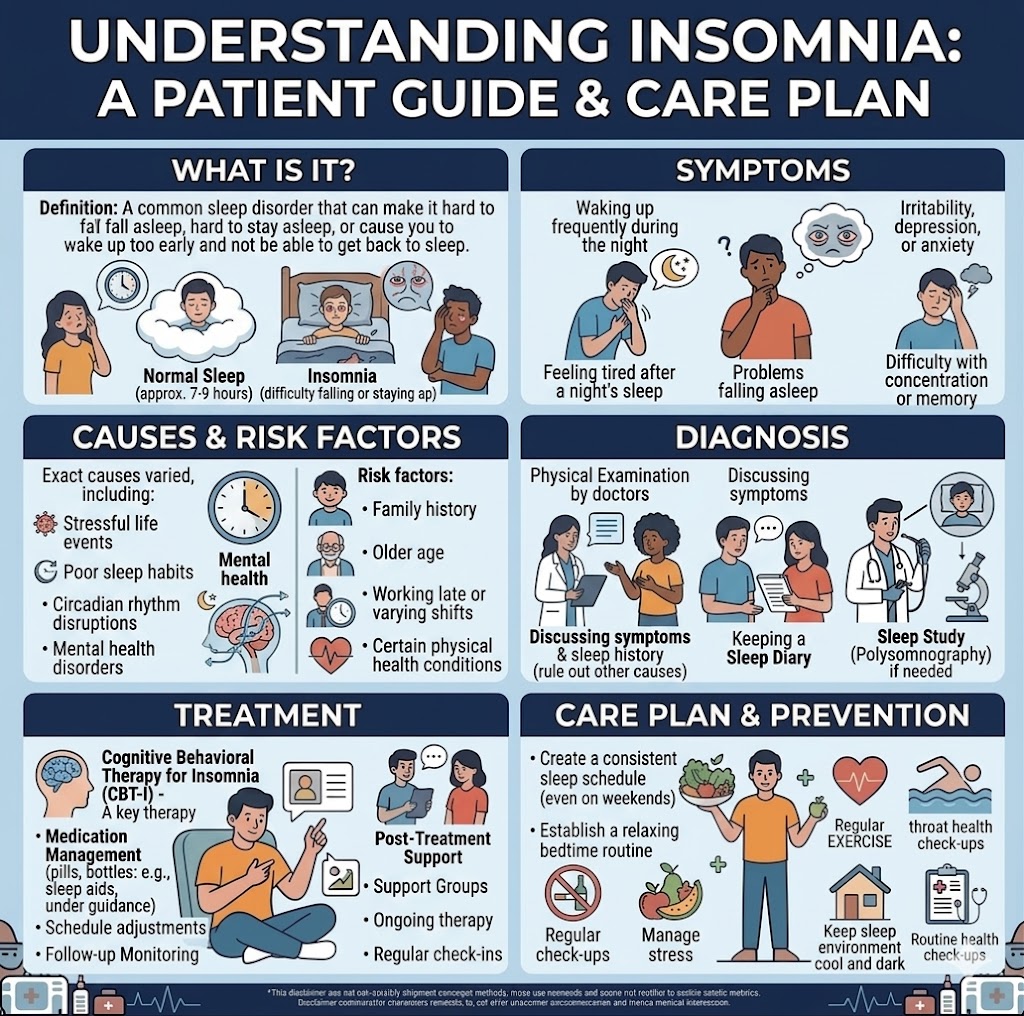
Insomnia is a common sleep disorder that makes it hard to fall or stay asleep, or causes you to wake up too early and be unable to return to sleep. This can leave you feeling tired, drained, and irritable, impacting your health, work performance, and overall quality of life. Most adults need 7 to 9 hours of sleep nightly. Insomnia can be short-term (days to weeks, often due to stress) or chronic (lasting three months or more, potentially linked to stress, life events, habits, other medical conditions, or medications). Persistent sleeplessness doesn't have to be endured; changes in daily habits and professional help can significantly improve sleep. Lack of adequate sleep can weaken your immune system, making you more prone to illness and affecting recovery. Long-term sleep deprivation also increases the risk of obesity, diabetes, depression, high blood pressure, stroke, and heart disease.
Understanding the Condition
Insomnia: Understanding Sleeplessness
Understanding the Condition
Common Symptoms
Difficulty Falling Asleep: Trouble initiating sleep at night.
Frequent Waking: Waking up multiple times during the night.
Early Waking: Waking much earlier than desired and being unable to return to sleep.
Daytime Fatigue: Feeling tired, sleepy, or low on energy during the day.
Mood Changes: Feeling irritable, depressed, or anxious.
Cognitive Issues: Difficulty paying attention, focusing, or remembering things.
Increased Errors/Accidents: Making more mistakes or experiencing more accidents.
Sleep-Related Worry: Ongoing concerns or anxiety about sleep.
Consultation Guide
Which Specialist to Meet
Consultation Guide
Insomnia is a common sleep disorder that makes it hard to fall or stay asleep, or causes you to wake up too early and be unable to return to sleep. This can leave you feeling tired, drained, and irritable, impacting your health, work performance, and overall quality of life. Most adults need 7 to 9 hours of sleep nightly. Insomnia can be short-term (days to weeks, often due to stress) or chronic (lasting three months or more, potentially linked to stress, life events, habits, other medical conditions, or medications). Persistent sleeplessness doesn't have to be endured; changes in daily habits and professional help can significantly improve sleep. Lack of adequate sleep can weaken your immune system, making you more prone to illness and affecting recovery. Long-term sleep deprivation also increases the risk of obesity, diabetes, depression, high blood pressure, stroke, and heart disease.
If insomnia significantly affects your daily life, consult a primary care physician, a sleep specialist, or a mental health professional. These experts can help identify the underlying causes and guide treatment.
Preparations Before Your Visit
Consult a Professional for Persistent Issues: If sleep problems continue despite lifestyle changes, seek advice from a healthcare provider to explore underlying causes and personalized treatment plans, ensuring long-term sleep health.
Diagnostic Procedures
Polysomnography (Sleep Study)
A comprehensive test used to diagnose various sleep disorders. It records several body functions during sleep to identify any disruptions in your sleep patterns.
What to Expect
This test is typically performed overnight in a sleep disorders unit, sleep center, or sometimes at home with specialized equipment. Sensors will be attached to your body to monitor your brain waves, blood oxygen levels, heart rate, breathing patterns, and eye and leg movements. If done at home, simpler devices usually record breathing, airflow, oxygen levels, and heart rate. The data collected helps specialists determine if and why your sleep is being interrupted, differentiating between normal sleep stages and potential disorders.
Treatment Options
Before your appointment, keep a detailed sleep diary for one to two weeks, noting your bedtime, wake time, awakenings, naps, and any factors that might affect your sleep. Also, prepare a list of all current medications (prescription and over-the-counter), supplements, medical conditions, and lifestyle habits (e.g., caffeine, alcohol intake, exercise routine).
Book a doctor visit near me
Cognitive Behavioral Therapy for Insomnia (CBT-I): A structured program that helps you identify and change thoughts and behaviors that prevent sound sleep. It involves learning techniques to control or eliminate negative thoughts and developing healthy sleep habits. (Duration: Typically 6-8 sessions over several weeks to months, with long-term benefits.)
Medications
Prescription Sleep Aids: Medications that can help you fall asleep easier or stay asleep longer. These are often used for short-term relief during periods of severe stress or travel disruptions. (Duration: Typically short-term (days to a few weeks) due to potential side effects and dependence risk. Some newer medications may be approved for longer use under strict medical guidance.)
Over-the-Counter Sleep Aids and Supplements: Certain non-prescription options, including herbal supplements, may help some individuals. Effectiveness varies, and they should be discussed with a doctor due to potential interactions or side effects. (Duration: Short-term use is generally recommended; long-term effectiveness and safety are less studied.)
Biofeedback: A technique using sensors to monitor physiological responses (like heart rate, breathing, muscle tension) to help you learn to control body functions and achieve a relaxed state conducive to sleep. (Duration: Varies; often a series of sessions until self-regulation skills are learned, then practiced independently.)
Addressing Underlying Conditions
Treatment of Medical/Mental Health Issues: Managing co-existing medical conditions (e.g., chronic pain, sleep apnea, restless legs syndrome) or mental health disorders (e.g., depression, anxiety) is crucial, as treating these can significantly improve insomnia. (Duration: Varies depending on the underlying condition, often long-term.)
Prevention & Long-Term Wellbeing
Lifestyle and Home Remedies
Sleep Hygiene Improvements: Establishing a consistent sleep schedule, creating a dark, quiet, and cool bedroom, avoiding large meals and excessive fluids before bed, and creating a relaxing bedtime ritual. (Duration: Ongoing, daily practice.)
Limiting Stimulants and Alcohol: Reducing or eliminating caffeine, nicotine, and alcohol, especially in the late afternoon or evening, as they can disrupt sleep cycles. (Duration: Ongoing, daily practice.)
Prevention and Long-Term Strategies
Maintain a Consistent Sleep Schedule: Go to bed and wake up at the same time every day, including weekends, to regulate your body's natural sleep-wake cycle.
Incorporate Regular Physical Activity: Engage in regular exercise, but avoid intense workouts close to bedtime, as this can stimulate the body.
Limit Daytime Naps: If you must nap, keep it short (20-30 minutes) and early in the day to avoid interfering with nighttime sleep.
Create a Sleep-Conducive Environment: Ensure your bedroom is dark, quiet, cool, and comfortable. Reserve your bed primarily for sleep and intimacy, avoiding work, eating, or excessive screen time there.
Develop a Relaxing Bedtime Ritual: Engage in calming activities before bed, such as a warm bath, reading a book, listening to soft music, or practicing mindfulness, to signal to your body that it's time to wind down.
Manage Stress Effectively: Practice stress-reduction techniques like meditation, deep breathing, or yoga throughout the day to prevent an overactive mind from keeping you awake at night.
Monitor Diet Before Bed: Avoid large or heavy meals and excessive fluids in the hours leading up to bedtime to prevent discomfort or frequent waking for bathroom trips.
Tags & Topics
Notice an error or need an update?
Help us keep medical information accurate. Report incorrect info or suggest an edit.


