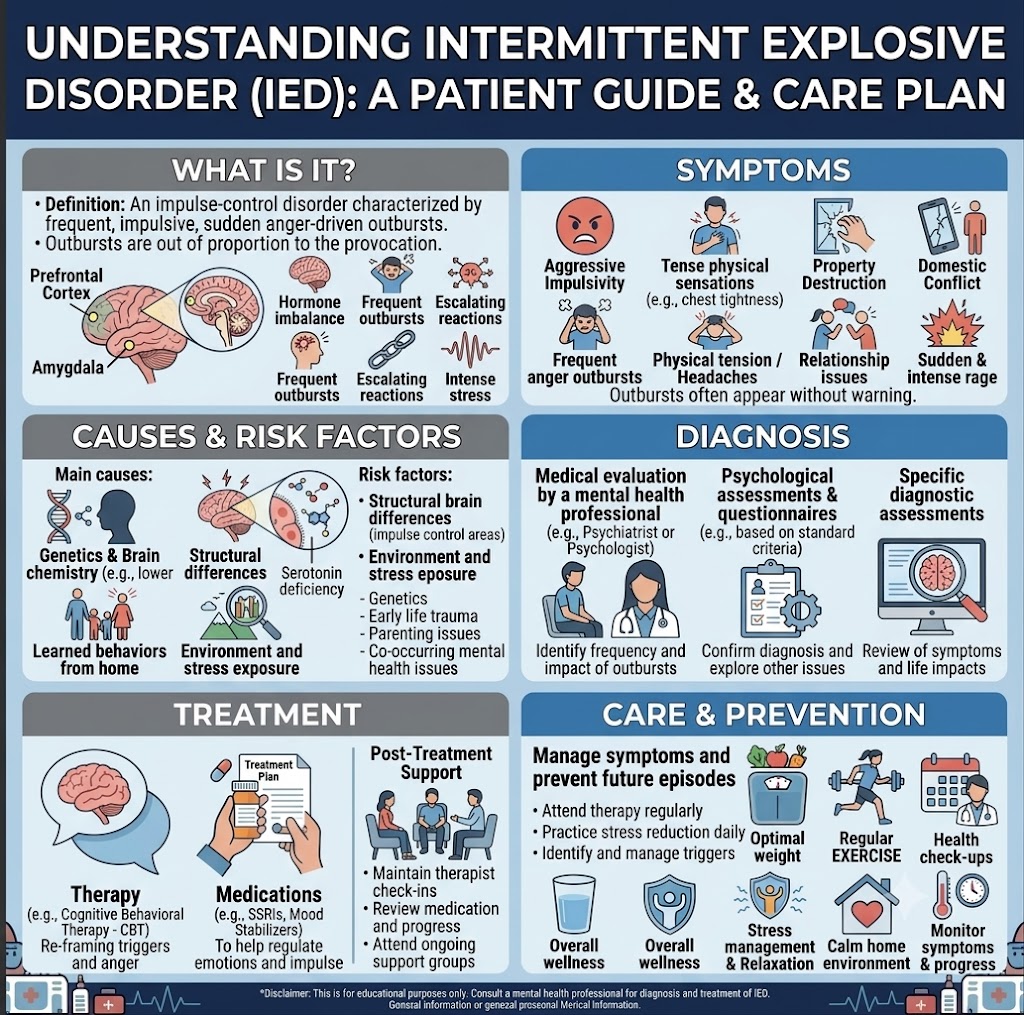
Intermittent Explosive Disorder (IED) is a mental health condition characterized by sudden, repeated episodes of impulsive, aggressive, often violent behavior or intense verbal outbursts that are vastly out of proportion to the situation. This can manifest as road rage, domestic disputes, property damage, or extreme temper tantrums. These unpredictable outbursts cause significant distress, damage relationships, lead to professional or academic problems, and may result in legal issues. IED is a long-term condition; while severity may lessen with age, treatment typically involves talk therapy and medications to manage aggressive impulses.
Understanding the Condition
Intermittent Explosive Disorder: Understanding and Managing Sudden Outbursts
Understanding the Condition
Common Symptoms
Sudden, Impulsive Outbursts: Sudden, impulsive aggressive or angry outbursts occur with little warning, lasting under 30 minutes. They can be frequent or spaced out, with milder verbal or physical aggression possibly occurring between major episodes.
General Irritability and Aggression: Persistent irritability, impulsiveness, aggression, or anger may be present most of the time.
Warning Signs (Before an Outburst): Before an episode, some may feel heightened irritability, increased tension, racing thoughts, rapid heartbeat, or chest tightness.
Intense Reactions: Outbursts are intensely disproportionate, often without thought for consequences. These include temper tantrums, angry speeches, heated arguments, slapping, shoving, physical fights, property damage, or threatening people/animals.
Consultation Guide
Which Specialist to Meet
Before your appointment, make a list of your symptoms, noting when they started, how often they occur, and what, if anything, seems to trigger them. Include important personal information like any major stressors or recent life changes. List all medications, vitamins, and supplements you are currently taking. Prepare a list of questions you want to ask your doctor. If you feel comfortable, consider asking a family member or close friend to accompany you to provide additional information and support.
Book a doctor visit near me
A mental health professional conducts a thorough interview, assessing your symptoms, medical history, and social context. They evaluate the frequency, intensity, and disproportionate nature of aggressive outbursts, and rule out other mental health issues or substance use.
An EEG measures brain electrical activity using scalp sensors. It's used to rule out neurological conditions like epilepsy or seizure disorders, which can cause symptoms similar to or co-occurring with IED, ensuring accurate diagnosis.
Consultation Guide
Intermittent Explosive Disorder (IED) is a mental health condition characterized by sudden, repeated episodes of impulsive, aggressive, often violent behavior or intense verbal outbursts that are vastly out of proportion to the situation. This can manifest as road rage, domestic disputes, property damage, or extreme temper tantrums. These unpredictable outbursts cause significant distress, damage relationships, lead to professional or academic problems, and may result in legal issues. IED is a long-term condition; while severity may lessen with age, treatment typically involves talk therapy and medications to manage aggressive impulses.
Diagnostic Procedures
You should start by consulting your primary care doctor, who can then refer you to a mental health professional such as a psychiatrist or psychologist. These specialists are equipped to diagnose and treat complex mental health conditions like Intermittent Explosive Disorder.
Preparations Before Your Visit
Clinical Evaluation and Psychiatric Assessment
What to Expect
You'll have conversations with a psychiatrist or psychologist. They'll ask detailed questions about your thoughts, feelings, behaviors, and life experiences, possibly using questionnaires. This is a verbal assessment without physical tests for IED.
Electroencephalogram (EEG)
What to Expect
Small electrodes are attached to your clean scalp with paste. The test is painless; you'll sit or lie while brain signals are recorded. You might be asked to close eyes or breathe deeply. The recording takes 20-40 minutes.
Treatment Options
Therapies
Cognitive Behavioral Therapy (CBT): CBT is talk therapy that teaches coping skills, anger management, and how to identify triggers and reframe destructive thoughts. It helps individuals respond calmly to situations. (Duration: Often involves a structured number of sessions, typically over several weeks to months, with ongoing practice of learned skills.)
Medications
Antidepressants: These medications, particularly selective serotonin reuptake inhibitors, can help manage mood, reduce irritability, and decrease the frequency and intensity of aggressive outbursts. (Duration: Ongoing as prescribed by your doctor, often for long periods to maintain stability.)
Mood Stabilizers: These can stabilize mood swings and reduce impulsive behaviors central to IED. (Duration: Ongoing as prescribed by your doctor, often for long periods to maintain stability.)
Anti-anxiety Medications: May be prescribed for anxiety contributing to outbursts, typically short-term or under careful monitoring. (Duration: Short-term for acute anxiety or ongoing as prescribed under careful monitoring.)
Stress Management Techniques: Practicing relaxation like deep breathing or mindfulness reduces overall stress and improves coping without outbursts. (Duration: Ongoing, regular practice as part of daily routine.)
Adhere to Treatment Plan: Consistently follow your mental health professional's plan, attending therapy and taking medications as directed, crucial for long-term management.
Practice Learned Coping Skills: Regularly apply anger management and stress reduction techniques from therapy to reinforce new, constructive responses.
Avoid Substance Use: Refrain from alcohol and illicit drugs, as they impair self-control and worsen aggressive tendencies.
Identify and Manage Triggers: Actively recognize personal outburst triggers. Develop strategies to avoid or use coping mechanisms when faced with them.
Integrate Stress Reduction: Incorporate daily activities like meditation, deep breathing, or hobbies to reduce stress and maintain emotional balance.
Regular Follow-Up Care: Maintain regular appointments with your mental health professional for ongoing assessment, treatment adjustments, and continuous support.
Prevention & Long-Term Wellbeing
Trigger Avoidance: Identify and, when possible, avoid situations or people that provoke anger, or minimize exposure. (Duration: Ongoing lifestyle adjustment.)
Healthy Lifestyle Choices: Regular exercise, a balanced diet, and sufficient sleep improve mood regulation and emotional stability. (Duration: Ongoing lifestyle adjustment.)
Avoid Alcohol and Drugs: Substance use lowers inhibitions and worsens impulsive aggression; complete avoidance is often recommended. (Duration: Ongoing.)
Prevention and Long-Term Wellbeing
Maintain Healthy Lifestyle: Prioritize a balanced diet, regular exercise, and adequate sleep; these support mental health and emotional regulation.
Cultivate Supportive Relationships: Work on healthy communication with loved ones and seek support from trusted friends or support groups for vital long-term management.
Tags & Topics
Notice an error or need an update?
Help us keep medical information accurate. Report incorrect info or suggest an edit.


