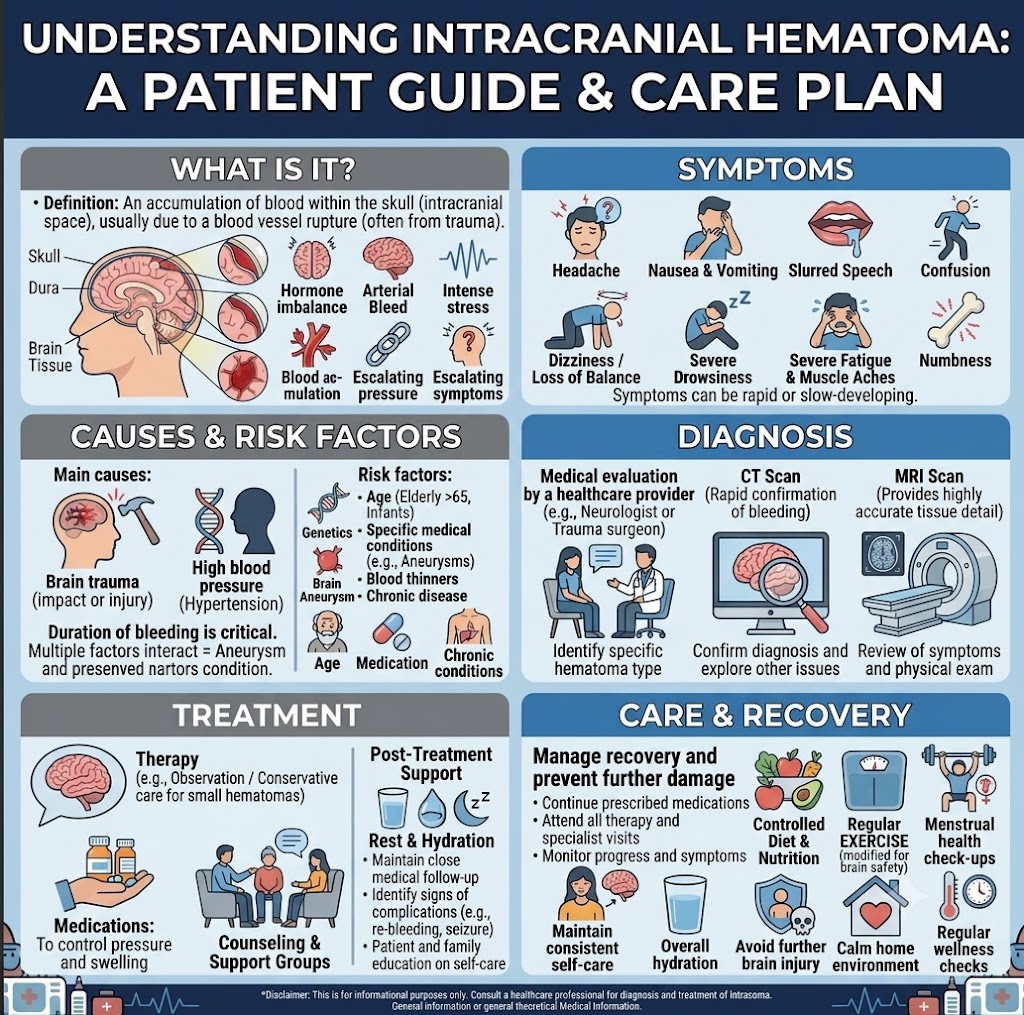
An intracranial hematoma is a serious condition where blood collects inside the skull, either within the brain tissue itself or in the spaces between the brain and the skull. This collection of blood creates pressure on the brain, which can be life-threatening. It typically results from a burst blood vessel in the brain or a severe head injury, such as those sustained in car accidents or falls. Even seemingly minor head injuries can sometimes lead to a hematoma, especially in certain individuals. An intracranial hematoma is a medical emergency that usually requires immediate treatment, often including surgery to remove the accumulated blood and relieve pressure on the brain.
Understanding the Condition
Intracranial Hematoma: Understanding Bleeding Inside the Skull
Understanding the Condition
Common Symptoms
Headache that worsens: A persistent and intensifying headache.
Increased drowsiness or confusion: Progressive sleepiness or difficulty staying awake and thinking clearly.
Pupils of different sizes: One pupil (the black center of the eye) appearing larger or smaller than the other.
Slurred speech: Difficulty speaking clearly.
Weakness or paralysis: Loss of movement or weakness on one side of the body, often opposite to the head injury.
Seizures: Uncontrolled brain activity causing sudden, unusual movements or loss of consciousness.
Loss of consciousness: Fainting or being unresponsive.
Consultation Guide
Which Specialist to Meet
Note the injury time, symptoms, medications (especially blood thinners), and medical history. Avoid food or drink if emergency surgery is possible.
Book a doctor visit near me
A Brain MRI uses a strong magnetic field and radio waves to create highly detailed images of the brain without radiation. It excels at diagnosing conditions like stroke, tumors, nerve damage, and evaluating causes of persistent symptoms such as headaches or vision changes.
Recognize Warning Signs: Be aware of new or worsening symptoms (e.g., persistent headaches, increasing drowsiness) and seek immediate medical attention if they occur.
Diagnostic Procedures
A Brain CT scan uses X-rays and computer technology to create detailed cross-sectional images ("slices") of the brain, skull, and blood vessels. It quickly detects bleeding, swelling, or tumors, often being the first test after a head injury. Contrast dye may be used to enhance specific areas.
What to Expect
You lie on a table sliding into a donut-shaped machine, needing to stay still. You'll hear humming/clicking. If contrast is used via an IV, a brief warm flush may occur. The process is quick and usually painless.
Brain Magnetic Resonance Imaging (MRI)
What to Expect
You lie on a table sliding into a long, tube-shaped machine. Remaining very still is crucial. Loud noises are common, so earplugs are provided. The enclosed space can be uncomfortable for some. Takes longer than CT, often 30-60 minutes. Contrast dye may also be used via an IV.
Treatment Options
An intracranial hematoma is a serious condition where blood collects inside the skull, either within the brain tissue itself or in the spaces between the brain and the skull. This collection of blood creates pressure on the brain, which can be life-threatening. It typically results from a burst blood vessel in the brain or a severe head injury, such as those sustained in car accidents or falls. Even seemingly minor head injuries can sometimes lead to a hematoma, especially in certain individuals. An intracranial hematoma is a medical emergency that usually requires immediate treatment, often including surgery to remove the accumulated blood and relieve pressure on the brain.
Immediate Medical Assessment and Stabilization: Rapid medical evaluation, monitoring vital signs, and stabilizing the patient in an emergency setting. (Duration: Initial stabilization takes minutes to hours.)
Surgical Procedures
Craniotomy: A surgical procedure to temporarily remove part of the skull. Performed to remove blood clots, stop bleeding, repair damaged vessels (like aneurysms or malformations), or relieve brain pressure. (Duration: Surgery lasts several hours; hospital stay varies from days to weeks.)
Medications
Pain Management and Seizure Prevention: Medications are prescribed to control pain and to prevent seizures, which can occur after a brain injury or surgery. (Duration: Pain management is as needed, typically days to weeks. Seizure prevention can be short- to long-term.)
Rehabilitative Therapies
Physical, Occupational, and Speech Therapy: Therapies aid in regaining lost functions and improving daily living skills after brain injury and treatment. (Duration: Weeks to months or longer, depending on individual recovery needs.)
Adherence to Treatment Plans: Diligently follow all prescribed medications and therapy recommendations to support healing and optimize outcomes.
Prevention & Long-Term Wellbeing
For suspected intracranial hematoma, immediately see an emergency physician. A neurosurgeon will manage surgical intervention, and a neurologist will provide ongoing neurological assessment. Rehabilitation specialists may assist with recovery.
Preparations Before Your Visit
Prevention
Head Protection: Always wear a properly fitted helmet during activities like cycling, motorcycling, skiing, contact sports, or horseback riding to reduce head injury risk.
Vehicle Safety: Use seat belts in vehicles and ensure children are correctly secured in age-appropriate car seats.
Child Safety Measures: Childproof homes by padding sharp edges, blocking stairways, securing heavy furniture, and preventing falls from unstable objects.
Manage Health Conditions: Address underlying conditions like high blood pressure and alcohol use disorder. If taking blood thinners, discuss head injury risks with your doctor.
Long-Term Monitoring
Regular Medical Follow-ups: Attend all scheduled appointments with specialists to monitor recovery and detect potential complications early.
Tags & Topics
Notice an error or need an update?
Help us keep medical information accurate. Report incorrect info or suggest an edit.


