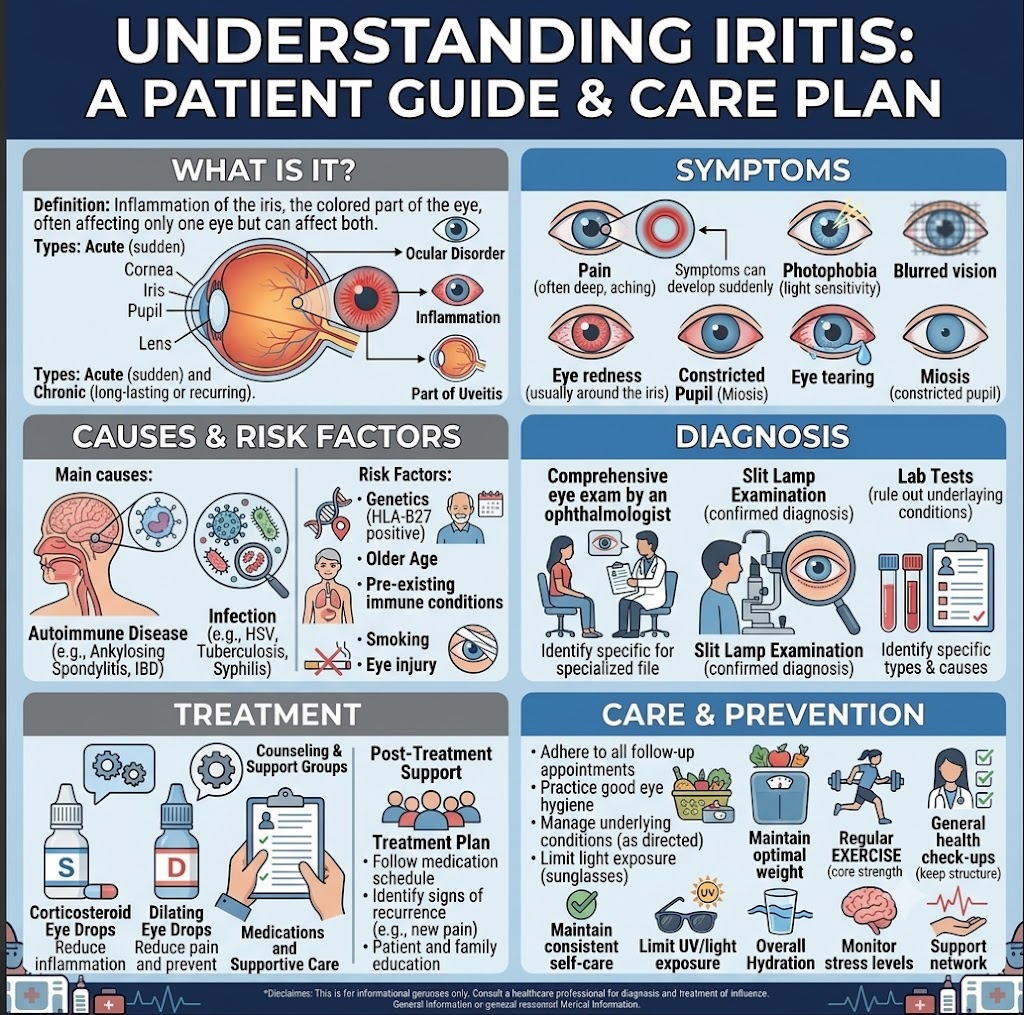
Iritis, also known as anterior uveitis, is an inflammation of the iris—the colored ring around your eye's pupil. The iris is part of the uvea, the eye's middle layer. It's the most common type of uveitis (inflammation of the uvea). While its cause is often unknown, it can stem from injury, infections, genetic factors, or other medical conditions. Untreated iritis can lead to serious complications like glaucoma or permanent vision loss. Seek medical attention promptly if you experience symptoms.
Understanding the Condition
Iritis: Understanding Inflammation of the Eye's Colored Ring
Understanding the Condition
Iritis, also known as anterior uveitis, is an inflammation of the iris—the colored ring around your eye's pupil. The iris is part of the uvea, the eye's middle layer. It's the most common type of uveitis (inflammation of the uvea). While its cause is often unknown, it can stem from injury, infections, genetic factors, or other medical conditions. Untreated iritis can lead to serious complications like glaucoma or permanent vision loss. Seek medical attention promptly if you experience symptoms.
Common Symptoms
Eye Redness: Unusual redness in the affected eye.
Discomfort or Achiness: Pain or a persistent ache in the eye.
Sensitivity to Light: Increased sensitivity to bright lights, causing discomfort or squinting.
Decreased Vision: Blurry vision or a noticeable decrease in how well you see.
Consultation Guide
Which Specialist to Meet
An eye specialist (ophthalmologist) should be consulted as soon as possible if you suspect iritis. In some cases, a general practitioner may be the first point of contact, who can then refer you to an ophthalmologist.
Preparations Before Your Visit
Before your visit, prepare a detailed list of your symptoms, including when they started, their severity, and whether they affect one or both eyes. Note any recent eye injuries, surgeries, or medical conditions you have. List all current medications, supplements, and vitamins. Be ready to discuss your medical history, including any family history of eye conditions or autoimmune diseases. Bring a list of questions you have for the doctor.
Book a doctor visit near me
Pupil-Dilating Eye Drops: These drops help relieve pain by relaxing the eye muscles and prevent the iris from sticking to the lens, a common complication of iritis. (Duration: Usually for several days to weeks, as symptoms improve.)
Prompt Medical Attention: Seek immediate medical attention for any new or worsening eye symptoms to prevent inflammation from becoming severe or leading to complications. Early treatment is key.
Recognize and Report Recurrence: Be aware of the symptoms of iritis and seek medical care immediately if they reappear. Early intervention for recurrent episodes can prevent severe complications.
Monitor for Complications: Your eye specialist will monitor for potential long-term complications such as cataracts, glaucoma, or retinal issues, which may require additional management. This involves periodic comprehensive eye exams.
Consultation Guide
Antiviral or Antibiotic Medications: If an infection is identified as the cause of iritis, specific medications will be prescribed to target the virus or bacteria. (Duration: Duration varies depending on the specific infection, often several days to weeks.)
Pain Relief: Over-the-counter pain relievers can help manage discomfort. (Duration: Continue as needed during the active inflammation phase.)
Protective Eyewear: Wearing dark glasses can help reduce discomfort from light sensitivity. (Duration: Use continuously while light sensitivity persists.)
Warm Compresses: Applying warm compresses to the affected eye can help soothe discomfort. (Duration: Use as needed for comfort.)
Addressing Underlying Conditions
Specific Treatment for Root Cause: If iritis is caused by an underlying medical condition (e.g., an autoimmune disease or systemic infection), treating that condition is crucial for resolving the eye inflammation and preventing recurrence. (Duration: This treatment duration will vary widely based on the specific underlying condition and may be long-term.)
Wear Eye Protection: Use appropriate protective eyewear during activities that could cause eye injury (e.g., sports, certain occupations, gardening) to prevent trauma-induced iritis.
Avoid Tobacco Use: If you smoke, consider quitting. Studies have shown that smoking can increase your risk of developing iritis and negatively impact overall eye health.
Diagnostic Procedures
Comprehensive Eye Exam
A thorough examination of your eyes, including checking your vision, how your pupils react to light, and measuring the pressure inside your eye.
What to Expect
You will undergo standard vision tests, like reading an eye chart. The doctor will shine a light into your eyes to check pupil response and may use a special instrument to measure eye pressure, often with a gentle puff of air or a soft probe after numbing drops.
Slit-Lamp Examination
This is a detailed examination using a special microscope (slit-lamp) to get a magnified, three-dimensional view of the front of your eye, including the iris, lens, and cornea. This helps the doctor identify specific signs of inflammation.
What to Expect
You will rest your chin on a support and your forehead against a band. The doctor will shine a bright light into your eye while looking through the microscope. You might receive eye drops to dilate your pupils, which temporarily blurs your vision and makes you more sensitive to light, but allows a better view of the internal structures. The exam is painless, though the light can be very bright.
An X-ray is an imaging test that uses radiation to create pictures of structures inside your body. For iritis, it's not a primary diagnostic tool for the eye inflammation itself but may be used to investigate underlying conditions or injuries that could be causing the iritis, such as a chest X-ray to look for sarcoidosis or to detect foreign bodies after eye trauma.
What to Expect
You will be asked to remove any metal objects or jewelry. You’ll sit or lie on a table, and the X-ray machine will be positioned over the area being examined. You might need to hold still or hold your breath briefly. The process is quick and generally painless.
Treatment Options
Medications
Corticosteroid Eye Drops: These drops are used to reduce inflammation in the eye. (Duration: Typically for several weeks, with the dosage gradually decreasing as inflammation subsides.)
Oral Corticosteroids: For severe cases of iritis or when eye drops are not sufficient, oral medications may be prescribed to reduce inflammation throughout the body. (Duration: A short course, typically a few weeks, with gradual tapering under medical supervision.)
Manage Underlying Health Conditions: Work closely with your doctor to effectively manage any chronic inflammatory or autoimmune diseases (such as certain types of arthritis or inflammatory bowel disease) that can trigger iritis. Adhere to prescribed treatments for these conditions.
Practice Good Hygiene and Prevent Infections: Promptly treat viral infections like cold sores and seek medical care for other infections that could potentially spread to the eye. Avoid touching your eyes with unwashed hands.
Prevention & Long-Term Wellbeing
Prevention
Regular Eye Check-ups: Even after initial recovery, regular follow-up appointments with your eye specialist are crucial, especially if you have had recurrent iritis or an underlying medical condition. The frequency will be determined by your doctor.
Tags & Topics
Notice an error or need an update?
Help us keep medical information accurate. Report incorrect info or suggest an edit.


