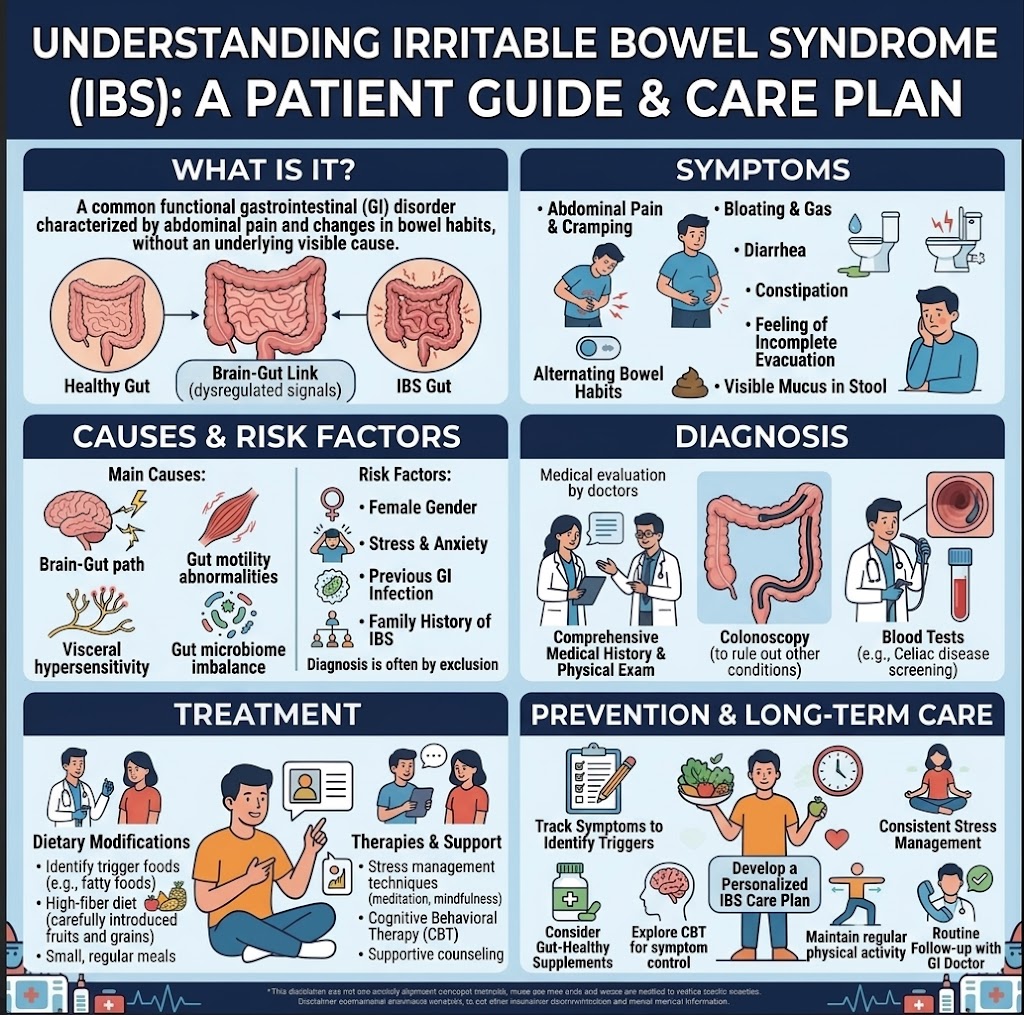
Irritable Bowel Syndrome (IBS) is a common, long-lasting condition affecting the large intestine, also known as the bowel or colon. It causes symptoms like belly pain, cramping, bloating, gas, and changes in bowel habits, such as diarrhea, constipation, or both. While IBS can be uncomfortable and needs ongoing management, it typically doesn't cause permanent damage to the bowel tissue or increase the risk of serious diseases like colorectal cancer. Most people experience mild to moderate symptoms that can be managed through diet, lifestyle changes, and stress reduction. For those with more severe symptoms, medical treatments and counseling are available.
Understanding the Condition
Irritable Bowel Syndrome (IBS): A Comprehensive Guide
Understanding the Condition
Irritable Bowel Syndrome (IBS) is a common, long-lasting condition affecting the large intestine, also known as the bowel or colon. It causes symptoms like belly pain, cramping, bloating, gas, and changes in bowel habits, such as diarrhea, constipation, or both. While IBS can be uncomfortable and needs ongoing management, it typically doesn't cause permanent damage to the bowel tissue or increase the risk of serious diseases like colorectal cancer. Most people experience mild to moderate symptoms that can be managed through diet, lifestyle changes, and stress reduction. For those with more severe symptoms, medical treatments and counseling are available.
Common Symptoms
Abdominal Pain, Cramping, and Bloating: These sensations in the belly are often related to bowel movements, sometimes feeling better after passing stool.
Changes in Bowel Habits: This can involve stools that are more frequent or less frequent than usual, or alternating periods of diarrhea and constipation.
Changes in Stool Appearance: Stools may vary in size, consistency (e.g., harder, looser), or shape (e.g., narrower, pencil-thin).
Feeling of Incomplete Bowel Emptying: A persistent sensation that you haven't fully emptied your bowels even after a movement.
Excess Gas and Mucus in Stool: Increased flatulence and visible mucus in bowel movements.
Serious Symptoms (Seek immediate medical attention): While the above are common IBS symptoms, some symptoms may signal a more serious condition requiring urgent medical attention. Consult a healthcare professional immediately if you experience: unexplained weight loss, diarrhea that occurs at night, bleeding from the rectum, anemia due to iron deficiency, vomiting without a clear cause, or pain that doesn't get better after passing gas or stool.
Consultation Guide
Which Specialist to Meet
Before your visit, it's helpful to keep a detailed diary of your symptoms, including when they occur, what makes them better or worse, and how they relate to food or stress. Also, list any medications you're taking and prepare a list of questions for your doctor.
Book a doctor visit near me
These tests check for markers of inflammation, infection, celiac disease, or anemia to rule out other conditions that can mimic IBS symptoms.
Examines the *entire* large intestine for polyps, inflammation, or other abnormalities. It's often done if 'red flag' symptoms are present or if a sigmoidoscopy reveals concerning findings.
Dietary Modifications: Identifying and avoiding foods that trigger symptoms. Common triggers include wheat, dairy, citrus fruits, beans, cabbage, and carbonated drinks. A low-FODMAP diet, which limits certain types of carbohydrates, may be recommended under dietitian supervision. (Duration: Ongoing, as part of long-term management)
Regular Physical Activity: Engaging in moderate exercise can help improve bowel function and reduce stress. (Duration: Ongoing)
Symptom-Specific Medications: Various medications are available to address specific IBS symptoms. These include drugs to control diarrhea (e.g., anti-diarrheals), relieve constipation (e.g., laxatives), reduce abdominal pain and cramping (e.g., antispasmodics), or target overall gut function. (Duration: As needed, or daily for ongoing symptom control, under medical guidance)
Stress Reduction Techniques: Techniques such as meditation, yoga, deep breathing exercises, or mindfulness can help manage symptoms, as stress often worsens IBS. (Duration: Ongoing)
Cognitive Behavioral Therapy (CBT): CBT can help you learn new ways to cope with IBS symptoms, manage stress, and reduce anxiety related to the condition. (Duration: Typically several weeks to months, with potential for ongoing self-practice)
Hypnotherapy: Hypnosis, guided by a trained therapist, can help relax the gut muscles and change how the brain interprets gut signals, reducing pain and discomfort. (Duration: Often 6-12 sessions initially, with potential for booster sessions)
Acupuncture: Involves inserting thin needles into specific body points. It's believed to stimulate nerves and muscles, potentially boosting natural painkillers, and is primarily used for pain relief and overall wellness. (Duration: Varies, often a series of sessions over several weeks)
Identify and Avoid Triggers: Pay close attention to foods, drinks, and situations that consistently worsen your IBS symptoms. Keep a food diary to pinpoint your specific triggers.
Maintain a Regular Eating Schedule: Eating meals at consistent times can help regulate bowel function.
Stay Hydrated: Drink plenty of water throughout the day, especially if you experience constipation.
Avoid Overeating: Large meals can trigger symptoms in some individuals.
Limit Caffeine and Alcohol: These can irritate the digestive system and worsen symptoms.
Quit Smoking: Smoking is detrimental to overall health, including gut health.
Consultation Guide
Uses X-rays to create detailed cross-sectional images of internal organs, helping to rule out other causes of abdominal pain like tumors or diverticulitis.
Diagnostic Procedures
What to Expect
A quick procedure where a small blood sample is drawn, usually from a vein in your arm, causing minimal discomfort.
Analyzes stool samples for bacteria, parasites, or hidden blood to identify infections or inflammatory bowel conditions.
What to Expect
You'll collect a sample at home using provided instructions and submit it to a laboratory for analysis.
Flexible Sigmoidoscopy
Uses a thin, flexible tube with a camera (a sigmoidoscope) to examine the rectum and the lower part of the large intestine, looking for polyps or inflammation.
What to Expect
What to Expect
Requires thorough bowel cleansing beforehand. You'll usually receive sedation to keep you comfortable. A scope is inserted into the rectum and advanced through the colon. Polyps or suspicious tissues can be removed or biopsied during the procedure. The exam usually takes 30-60 minutes.
CT Scan (Computed Tomography Scan)
What to Expect
You lie on a table that moves into a large, donut-shaped scanner. You might receive a contrast dye (orally or intravenously) to enhance image clarity. The scan is painless and typically takes 10-30 minutes.
Treatment Options
Medications
Regular Medical Follow-ups: Maintain consistent communication with your doctor to adjust treatment plans and monitor your condition.
Prevention & Long-Term Wellbeing
Your primary care doctor is often the first point of contact. They may refer you to a **Gastroenterologist** (a doctor specializing in digestive system disorders), a **Registered Dietitian** for dietary guidance, or a **Mental Health Professional** if stress or anxiety are significant factors.
Preparations Before Your Visit
Requires bowel preparation (special diet, laxative/enema). The lubricated tube is gently inserted into the rectum. You may feel pressure or mild cramping. The procedure typically takes 10-20 minutes.
Dietary and Lifestyle Changes
Prevention and Long-Term Management
Incorporate Fiber: Gradually increase dietary fiber (from fruits, vegetables, whole grains) to help regulate bowel movements, being mindful of individual tolerance.
Manage Stress Effectively: Utilize relaxation techniques, engage in hobbies, and ensure adequate sleep. Consider professional counseling if stress is a major factor.
Regular Exercise: Physical activity can stimulate normal bowel contractions and improve mood.
Tags & Topics
Notice an error or need an update?
Help us keep medical information accurate. Report incorrect info or suggest an edit.


