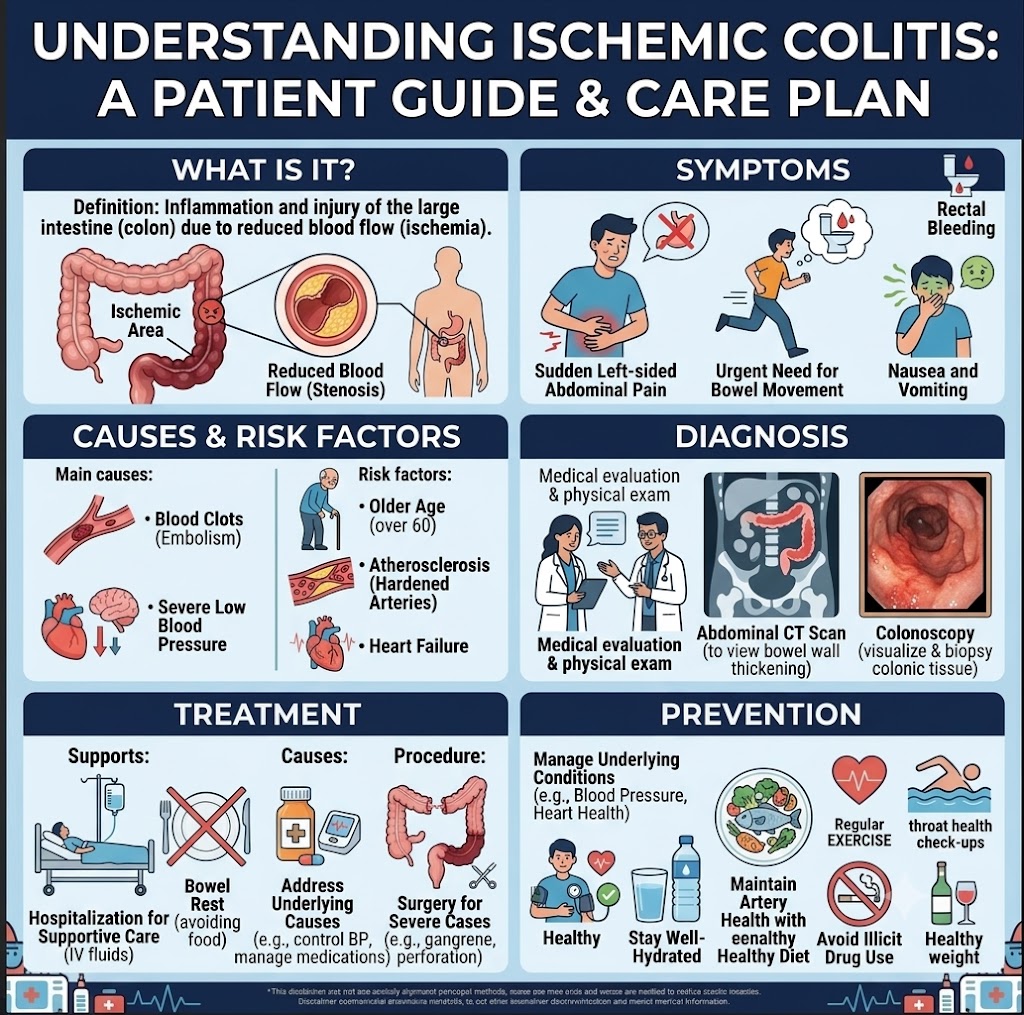
Ischemic colitis occurs when blood flow to a portion of the large intestine, known as the colon, temporarily decreases. This reduction in blood supply prevents the colon's cells from receiving enough oxygen, leading to potential damage and swelling of the intestinal tissues. Common causes include narrowed blood vessels supplying the colon or periods of low blood pressure. While it can affect any part of the colon, it most frequently causes discomfort in the lower left abdomen. In many instances, ischemic colitis resolves on its own within a few days, but some cases may require medical intervention.
Understanding the Condition
Ischemic Colitis: Understanding Reduced Blood Flow to the Colon
Understanding the Condition
Common Symptoms
Belly Pain: Pain, tenderness, or cramping in the abdominal area, which can start suddenly or develop gradually over time.
Bloody Stool: Bright red or dark maroon blood visible in the stool. Sometimes, only blood is passed without any solid stool.
Urgent Bowel Movement: A strong and sudden feeling of needing to have a bowel movement.
Serious Symptoms: If these symptoms occur on the right side of the belly, there is a higher risk of serious complications. This type of right-sided colitis is less common but is often linked to other health issues like high blood pressure or kidney disease, and may require surgery or carry a higher risk of severe outcomes.
Consultation Guide
Which Specialist to Meet
Before your visit, prepare a detailed list of your symptoms, including when they started, their severity, and any triggers. Bring a complete list of all medications, supplements, and illicit drugs you use. Be ready to discuss your full medical history, including any existing health conditions and past surgeries. Prepare a list of questions you have for the doctor.
Book a doctor visit near me
Monitor for Recurrence: Be aware of symptoms and seek medical attention if they reappear. While many recover fully, some may experience repeat episodes.
Consultation Guide
Ischemic colitis occurs when blood flow to a portion of the large intestine, known as the colon, temporarily decreases. This reduction in blood supply prevents the colon's cells from receiving enough oxygen, leading to potential damage and swelling of the intestinal tissues. Common causes include narrowed blood vessels supplying the colon or periods of low blood pressure. While it can affect any part of the colon, it most frequently causes discomfort in the lower left abdomen. In many instances, ischemic colitis resolves on its own within a few days, but some cases may require medical intervention.
Addressing Obstructions: Surgical intervention to correct bowel obstructions or strictures (narrowing of the colon) caused by ischemic damage. (Duration: Recovery typically takes several weeks to months)
Regular Check-ups: Maintain regular doctor visits to monitor your overall health and address any emerging risk factors proactively.
Clotting Disorder Evaluation: If no clear cause for ischemic colitis is found, especially in younger individuals, your doctor may recommend tests for blood-clotting disorders.
Follow-up Care: Adhere to your doctor's recommendations for follow-up appointments and any prescribed long-term management strategies.
Diagnostic Procedures
Initially, you should consult your primary care physician. Depending on the severity and diagnosis, they may refer you to a gastroenterologist (a doctor specializing in digestive system disorders) or, in more severe cases, a general surgeon.
Preparations Before Your Visit
A colonoscopy is a procedure used to examine the entire length of the large intestine (colon) and rectum. A long, flexible tube with a tiny camera (colonoscope) is inserted to look for abnormalities like inflammation, swollen tissues, or areas of damage. Tissue samples (biopsies) can be taken, or small growths (polyps) can be removed during the procedure.
What to Expect
What to Expect
You will lie on a motorized table that slides into a large, doughnut-shaped scanner. You may be asked to hold your breath briefly at certain times. Sometimes, a contrast dye (given orally or intravenously) is used to enhance the visibility of certain structures; if so, you might feel a warm flush or a metallic taste. The scan is usually painless and takes about 10-30 minutes, depending on the area being examined. You will need to remain still during the scan.
Ultrasound (Sonography)
An ultrasound uses high-frequency sound waves to create real-time images of internal body structures. These sound waves bounce off organs and tissues, and a computer then converts these echoes into visual images. It can help assess blood flow and identify structural changes in the colon or surrounding areas.
What to Expect
For an abdominal ultrasound, you will lie on an examination table. A clear gel will be applied to your skin over the area to be examined. A small, handheld device called a transducer will be pressed against your skin and moved around the area. The transducer sends and receives sound waves. You might feel slight pressure from the transducer. The procedure is typically painless and takes about 15-30 minutes. Some ultrasounds may require a full bladder or fasting beforehand, depending on the area being examined.
Treatment Options
Medication Review: Under medical guidance, stopping or adjusting certain medications that might be contributing to reduced blood flow to the colon. (Duration: As advised by your doctor)
Medications
Pain Management: Medicines to alleviate abdominal pain and discomfort. (Duration: As needed, typically for a few days to weeks)
Antibiotics: If there's a risk of infection or if infection is confirmed, antibiotics may be prescribed to prevent further complications. (Duration: Typically 7-14 days)
Treating Underlying Conditions: Medications to manage conditions that contribute to poor blood flow, such as high blood pressure, heart failure, or clotting disorders. (Duration: Long-term, as directed by a specialist)
Surgical Procedures
Removing Damaged Tissue: Surgery may be necessary to remove sections of the colon that have been severely damaged, developed tissue death (gangrene), or have a hole (perforation). (Duration: Recovery typically takes several weeks to months)
Review Medications: Discuss all your medications with your doctor, especially if you have had ischemic colitis, to identify and potentially adjust any that might contribute to reduced blood flow.
Avoid Illicit Drugs: Refrain from using illicit drugs like cocaine and methamphetamine, which can severely constrict blood vessels and reduce blood flow.
Prevention & Long-Term Wellbeing
Before the procedure, you'll need to follow a strict diet and bowel preparation to cleanse your colon, typically involving drinking a special liquid. You will likely receive sedation to help you relax or sleep through the procedure. You'll lie on your side, and the doctor will gently guide the colonoscope through your rectum into your colon. The camera sends images to a monitor. The procedure usually takes 30-60 minutes. Afterward, you may feel some cramping or gas, which should resolve quickly. You'll need someone to drive you home due to the sedation.
CT Scan (Computerized Tomography Scan)
A CT scan uses specialized X-ray equipment and computer processing to create detailed cross-sectional images, or 'slices,' of bones, blood vessels, and soft tissues inside the body. It provides more detailed views than standard X-rays and can help identify inflammation, blockages, or other issues within the colon and surrounding areas.
Home Remedies & Lifestyle Adjustments
Hydration: Drinking plenty of fluids is crucial, especially if you're experiencing dehydration, to help maintain adequate blood pressure and circulation. (Duration: Ongoing during recovery and for prevention)
Prevention
Stay Hydrated: Drink sufficient fluids, particularly during strenuous activities or in warm climates, to maintain healthy blood pressure and flow.
Manage Underlying Health Conditions: Work with your healthcare provider to effectively manage conditions such as high blood pressure, diabetes, high cholesterol, and heart disease, as these can impact blood flow.
Tags & Topics
Notice an error or need an update?
Help us keep medical information accurate. Report incorrect info or suggest an edit.


