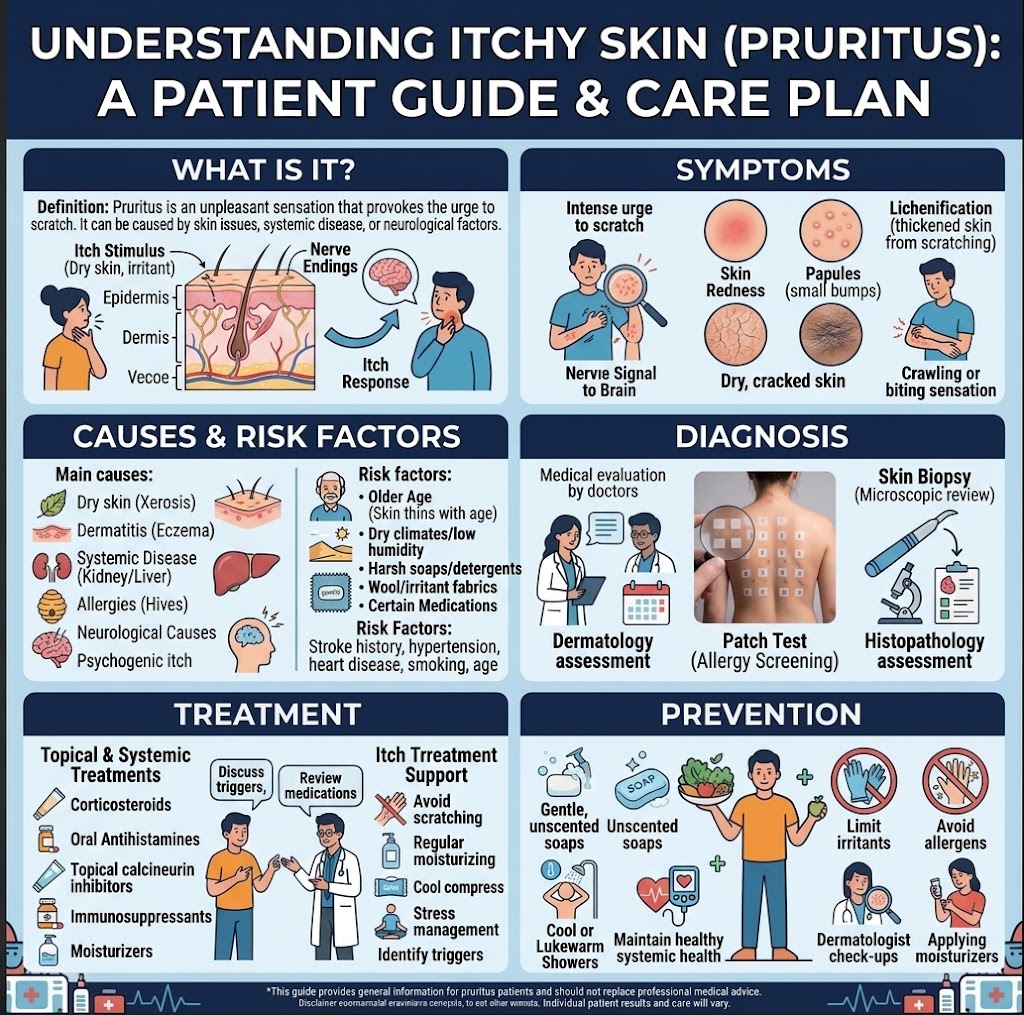
Itchy skin, or pruritus (proo-RIE-tus), is an irritating sensation making you want to scratch. Often caused by dry skin, it's common in older adults. Your skin might look normal, or be red, rough, or bumpy. Repeated scratching can lead to thicker skin, bleeding, and infections. While temporary relief comes from moisturizers and gentle skin care, lasting relief requires identifying and treating the root cause. Severe or long-lasting itching can significantly impact sleep and overall well-being.
Understanding the Condition
Itchy Skin (Pruritus)
Understanding the Condition
Common Symptoms
Localized or Widespread Itch: Itching can affect small areas (e.g., scalp, arm) or cover the entire body.
Visible Skin Changes: Skin may appear inflamed (red/swollen), have scratch marks, bumps, spots, blisters, or be dry, cracked, leathery, or scaly.
No Visible Changes: Itching can occur without any other noticeable skin alterations.
Intense and Persistent Itch: Itching can be severe and prolonged, creating an 'itch-scratch cycle' where scratching worsens the itch, making it hard to stop.
Consultation Guide
Which Specialist to Meet
Start with your primary healthcare provider. They can assess symptoms and refer you to a dermatologist or other specialist if needed. Seek medical advice if itching lasts over two weeks, is severe enough to disrupt daily life or sleep, appears suddenly, covers your whole body, or comes with other symptoms like weight loss, fever, or night sweats.
Preparations Before Your Visit
List all your symptoms (onset, triggers, what helps/worsens), medications, supplements, and skin products. Be ready to discuss your medical history and recent life changes.
Book a doctor visit near me
This involves a visual check of your skin and a discussion of your symptoms and medical background to help narrow down possible causes.
This imaging test may be ordered if an underlying internal disease in your chest (e.g., lung issues, heart problems, certain cancers) is suspected as the cause of widespread or unexplained itching, especially with other systemic symptoms.
Cool Compresses/Baths: Apply cool, wet compresses or take lukewarm baths with oatmeal/baking soda to soothe itch. (Duration: As needed for symptom relief)
Avoid Irritants: Identify and avoid triggers (chemicals, fabrics, hot water) that irritate your skin. (Duration: Ongoing)
Loose Clothing: Wear soft, loose, cotton clothing to minimize irritation. (Duration: Ongoing)
Consultation Guide
Itchy skin, or pruritus (proo-RIE-tus), is an irritating sensation making you want to scratch. Often caused by dry skin, it's common in older adults. Your skin might look normal, or be red, rough, or bumpy. Repeated scratching can lead to thicker skin, bleeding, and infections. While temporary relief comes from moisturizers and gentle skin care, lasting relief requires identifying and treating the root cause. Severe or long-lasting itching can significantly impact sleep and overall well-being.
These detect internal conditions like liver/kidney disease, anemia, diabetes, thyroid issues, or certain cancers, which can cause widespread itching.
Specific Disease Treatment: If an internal disease is the cause, direct treatment of that condition (medications, diet, etc.) is essential. (Duration: Can be long-term, depending on the chronic nature of the underlying disease)
Nerve Disorder Management: Focuses on treating the root nerve condition. (Duration: Ongoing, depending on the condition)
Diagnostic Procedures
Physical Examination and Medical History
What to Expect
What to Expect
A brief pinch as a small blood sample is drawn from a vein in your arm. The sample is then sent to a lab for analysis.
If a specific skin condition or unidentifiable rash is suspected, a tiny skin sample is removed for microscopic study.
What to Expect
After numbing, a small tool removes a skin piece. Stitches and a bandage may be needed. You'll feel pressure, not pain during removal.
If allergies or irritants are suspected, patch testing helps identify specific triggers.
What to Expect
Patches with potential allergens are placed on your skin (e.g., back) for a few days, then removed and examined for reactions. Avoid getting the area wet during this time.
What to Expect
You stand or sit for imaging. A technologist positions you, and you hold your breath briefly for each picture. It's quick, painless, with a lead apron for protection.
Treatment Options
Your doctor examines your skin and asks detailed questions about your itching, health conditions, medications, lifestyle, and potential irritant exposures.
Home Remedies and Self-Care
Moisturizing: Apply thick, fragrance-free moisturizers daily, especially after bathing, for skin hydration. (Duration: Ongoing, as part of daily skin care)
Gentle Cleansing: Use mild, fragrance-free soaps and lukewarm (not hot) baths or showers. (Duration: Ongoing, as part of daily skin care)
Medicated Creams/Ointments: Contain agents to reduce inflammation and itching. (Duration: Varies (days to weeks), as directed by a healthcare provider)
Moist Dressings: Applied over medicated creams to enhance absorption and provide cooling. (Duration: As directed by a healthcare provider)
Anti-itch Medicines: Oral medications, such as certain antihistamines, or other agents for nerve-related itching or systemic inflammation. (Duration: Short-term for acute relief or longer-term for chronic conditions, as prescribed)
Addressing Underlying Conditions
Psychiatric Support: Counseling or medication for anxiety/depression may be recommended if linked to itching. (Duration: As determined by a mental health professional)
Adhere to Treatment Plans: Follow prescribed regimens for underlying conditions causing itch.
Regular Check-ups: Maintain routine doctor visits to monitor your condition and adjust treatments as needed.
Prevention & Long-Term Wellbeing
Maintain Skin Hydration
Regular Moisturizing: Apply a rich, fragrance-free moisturizer daily, especially after bathing, to prevent dryness.
Humidify Indoor Air: Use a humidifier in dry environments to add moisture and prevent skin dehydration.
Gentle Skin Care Practices
Short, Lukewarm Showers/Baths: Limit time to 5-10 minutes with lukewarm water to preserve natural skin oils.
Mild Cleansers: Opt for soap-free, gentle cleansers for sensitive skin.
Pat Dry, Don't Rub: Gently pat skin dry with a soft towel after washing to avoid irritation.
Identify and Avoid Triggers
Allergen/Irritant Avoidance: Learn and avoid substances (fabrics, detergents, perfumes) that provoke itching.
Stress Management: Practice relaxation techniques (yoga, meditation) as stress can worsen itching.
Comfortable Clothing: Wear loose-fitting, soft cotton clothing.
Sun Protection: Protect skin from excessive sun exposure.
Long-Term Monitoring
Tags & Topics
Notice an error or need an update?
Help us keep medical information accurate. Report incorrect info or suggest an edit.


