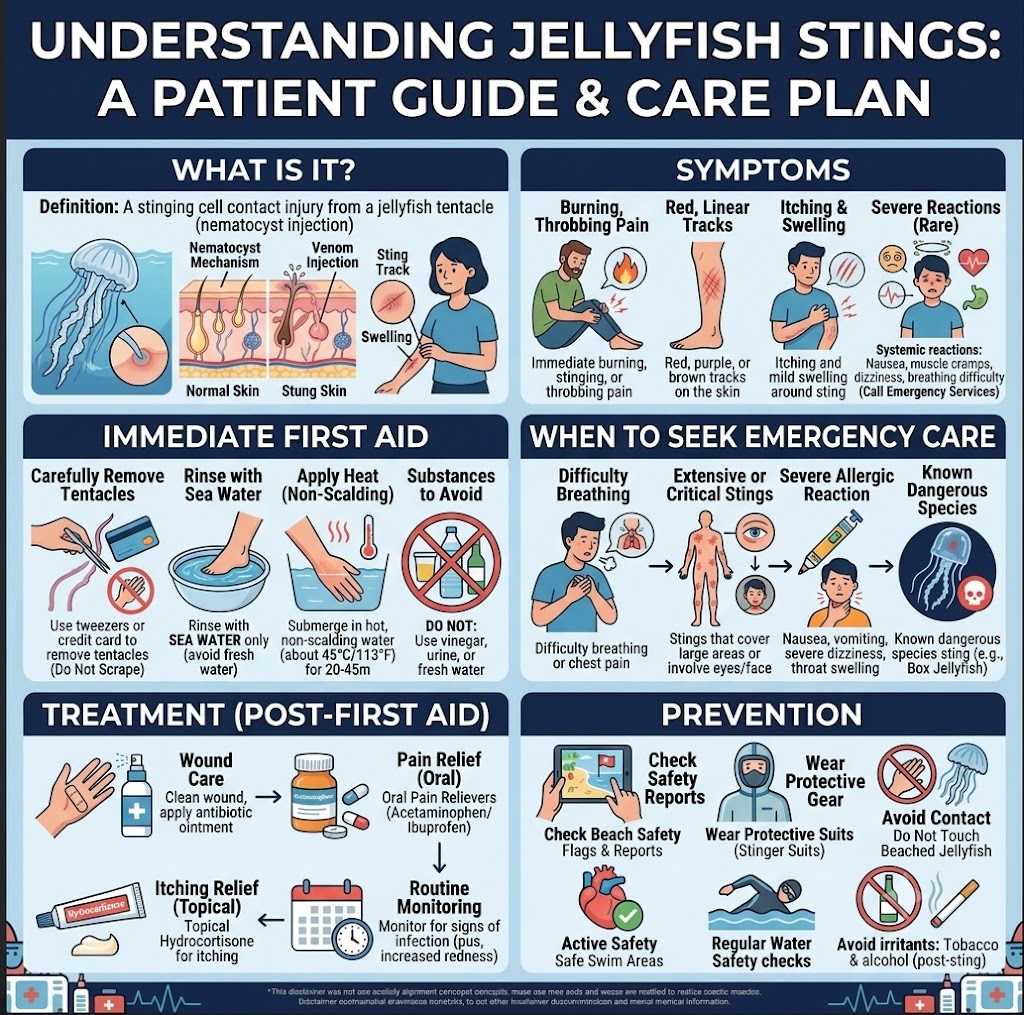
Jellyfish stings are a common concern for individuals enjoying ocean activities like swimming, wading, or diving. These fascinating marine creatures have long tentacles equipped with thousands of microscopic stinging cells, each containing venom. When brushed against, these cells fire tiny, barbed tubes that pierce the skin and inject venom. Even jellyfish washed ashore can still sting. While most stings cause immediate pain and visible marks on the skin that typically resolve with home treatment within days or weeks, certain species, like the Box jellyfish or Portuguese man-of-war, can cause more widespread (systemic) illness affecting the entire body and, in rare instances, be life-threatening. Severe reactions require urgent medical attention.
Understanding the Condition
Common Symptoms
Common Symptoms
Severe Symptoms: These symptoms indicate a severe, whole-body reaction and may appear rapidly or several hours after the sting. They can affect multiple body systems:* **Digestive Issues:** Stomach pain, nausea, and vomiting.* **Muscle Problems:** Intense muscle pain or uncontrollable spasms.* **Neurological Effects:** Feeling faint, dizzy, or confused.* **Breathing Difficulties:** Trouble taking a breath.* **Heart Problems:** Irregular heartbeat or other cardiac issues.
Consultation Guide
Which Specialist to Meet
Before your visit, be prepared to describe where and when the sting occurred, what the jellyfish looked like (if you saw it), your exact symptoms (including their severity and how they've changed), and any home treatments you've already tried. Inform your doctor about any pre-existing medical conditions, allergies, or medications you are currently taking.
Book a doctor visit near me
For most jellyfish stings, diagnosis is primarily made by a healthcare professional through a visual examination and by discussing your symptoms. The doctor will assess the sting site for characteristic marks, swelling, and any remaining tentacle fragments.
During the examination, the doctor will carefully look at the affected skin area. They might use a magnifying glass to check for tiny, embedded stingers. They will also assess your overall condition, checking your vital signs (such as blood pressure, heart rate, and breathing) and asking detailed questions about your pain level and other symptoms to determine the severity of the sting. This process is typically quick and non-invasive.
If your symptoms suggest a severe, whole-body reaction (such as significant muscle pain, digestive issues, confusion, or suspected heart problems), blood tests may be ordered. These tests can help assess organ function (e.g., kidney or liver), electrolyte balance, and markers of inflammation or allergic response in your body.
Pain Relievers: Over-the-counter pain medications can help manage mild to moderate pain and discomfort. (Duration: As needed for symptoms, typically for a few days to a week.)
Anti-itch Medications: Oral antihistamines or topical creams containing mild corticosteroids can reduce itching and inflammation associated with the sting. (Duration: As needed for symptoms, usually for a few days to a week.)
Further Stinger Removal: If home methods are insufficient, a healthcare professional may meticulously remove any remaining microscopic stingers using specialized tools or techniques. (Duration: Performed during a clinic visit or emergency room visit.)
Consultation Guide
Jellyfish stings are a common concern for individuals enjoying ocean activities like swimming, wading, or diving. These fascinating marine creatures have long tentacles equipped with thousands of microscopic stinging cells, each containing venom. When brushed against, these cells fire tiny, barbed tubes that pierce the skin and inject venom. Even jellyfish washed ashore can still sting. While most stings cause immediate pain and visible marks on the skin that typically resolve with home treatment within days or weeks, certain species, like the Box jellyfish or Portuguese man-of-war, can cause more widespread (systemic) illness affecting the entire body and, in rare instances, be life-threatening. Severe reactions require urgent medical attention.
Rinsing the Sting Area: Immediately rinse the sting area with vinegar (especially recommended for Box jellyfish stings) or seawater. Avoid rinsing with fresh water, which can cause remaining stinging cells to release more venom. (Duration: Immediate application, continued for several minutes.)
Stinger Removal: Carefully remove any visible tentacles or stingers using tweezers or a gloved hand. Do not rub the area, as this can trigger more venom release. (Duration: As soon as possible after rinsing.)
Heat Application: Soaking the affected area in hot water (as hot as tolerable, typically 104-113°F or 40-45°C) can help reduce pain and inactivate venom. (Duration: For 20-45 minutes, or until pain subsides; can be repeated as needed.)
Diagnostic Procedures
What to Expect
What to Expect
A healthcare professional will draw a small sample of blood, usually from a vein in your arm. You might feel a brief prick or sting as the needle is inserted. The blood sample is then sent to a laboratory for analysis. This procedure typically takes only a few minutes.
Electrocardiogram (ECG or EKG)
If a severe jellyfish sting is suspected to be affecting your heart, an ECG may be performed. This test records the electrical activity of your heart to detect any irregularities in its rhythm or structure, helping to identify potential cardiac complications.
What to Expect
Small, sticky electrodes will be attached to specific points on your chest, arms, and legs. These electrodes are connected to a machine that records your heart's electrical signals. You will lie still for a few minutes while the recording takes place. The procedure is painless and non-invasive.
Monitor for Delayed Skin Reactions: Be aware that some individuals may develop delayed skin reactions, such as persistent rashes, blisters, or other irritation, days or weeks after a sting. If this occurs, seek medical advice for proper diagnosis and management.
Treatment Options
Jellyfish Stings: Understanding, Treatment, and Prevention
Understanding the Condition
For typical, mild stings, a primary care physician (family doctor or general practitioner) or an urgent care doctor can provide appropriate treatment. In cases of severe reactions, especially those involving difficulty breathing, significant pain, or heart problems, immediate emergency medical attention is crucial, involving paramedics and emergency room doctors. For persistent skin issues or concerns about severe allergic reactions, a dermatologist or allergist may be consulted.
Preparations Before Your Visit
Medications
Supportive Care: For severe systemic reactions, medical teams provide supportive care, which may include intravenous fluids, medications to manage blood pressure, pain, nausea, and breathing assistance. (Duration: Immediate and ongoing as necessary, depending on the severity of the reaction.)
Antivenom Administration: In very rare cases of highly venomous stings (e.g., from certain box jellyfish species), a specific antivenom may be administered to counteract the venom's effects. (Duration: Typically a single dose, administered in a medical setting.)
Prevention & Long-Term Wellbeing
Prevention
Wear Protective Clothing: When swimming or diving in areas where jellyfish stings are possible, wear a wet suit or other protective clothing, such as 'skin suits' or 'stinger suits' made of thin, high-tech fabric. Consider protective footwear as stings can also occur while wading in shallow water.
Gather Local Information: Before entering coastal waters, speak to lifeguards, local residents, or officials with a local health department. Inquire about recent jellyfish sightings, known jellyfish seasons, and if specific dangerous types (like Box jellyfish common in Pacific/Indian oceans or Portuguese man-of-war in warmer seas) have been reported.
Avoid Water During Jellyfish 'Blooms': Stay out of the water in areas where jellyfish are known to be present in large numbers, often referred to as a 'jellyfish bloom'.
Do Not Touch Washed-Up Jellyfish: Jellyfish that have washed up on a beach may still be capable of releasing venomous stingers if touched, even if they appear dead.
Long-Term Monitoring
Follow-up After Severe Stings: If you experienced a severe systemic reaction requiring emergency care, schedule a follow-up appointment with your doctor. This ensures complete recovery and allows you to discuss any potential lasting effects or future precautions.
Tags & Topics
Notice an error or need an update?
Help us keep medical information accurate. Report incorrect info or suggest an edit.


