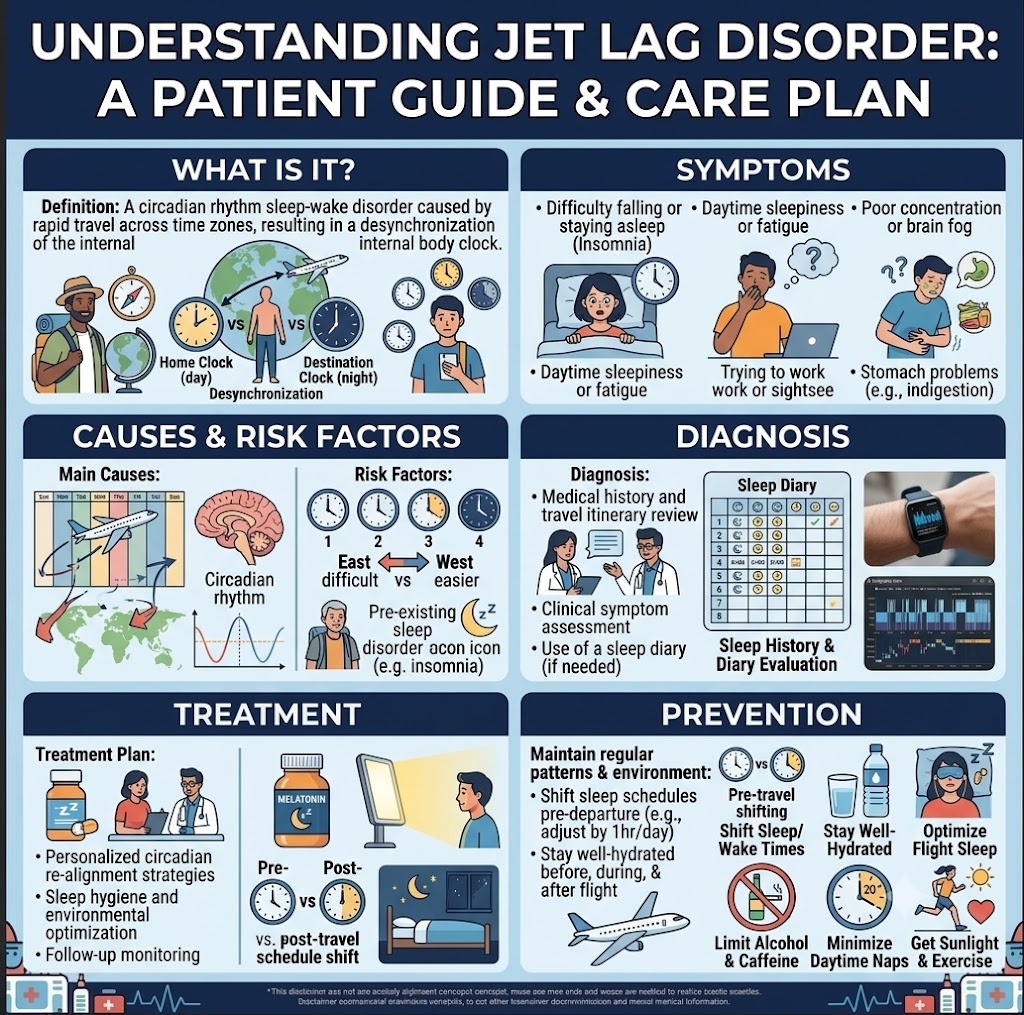
Jet lag, also known as jet lag disorder, is a temporary sleep problem that can affect individuals who rapidly travel across multiple time zones. It occurs because your body's natural internal clock, called circadian rhythms, remains aligned with your original time zone rather than adjusting immediately to your new destination's time. These rhythms dictate when you feel awake and when you feel sleepy. The more time zones you cross, the more likely and severe your jet lag symptoms tend to be. While generally temporary, jet lag can cause significant discomfort and disrupt your travel experience.
Understanding the Condition
Jet Lag Disorder: Navigating Your Body's Internal Clock
Understanding the Condition
Jet lag, also known as jet lag disorder, is a temporary sleep problem that can affect individuals who rapidly travel across multiple time zones. It occurs because your body's natural internal clock, called circadian rhythms, remains aligned with your original time zone rather than adjusting immediately to your new destination's time. These rhythms dictate when you feel awake and when you feel sleepy. The more time zones you cross, the more likely and severe your jet lag symptoms tend to be. While generally temporary, jet lag can cause significant discomfort and disrupt your travel experience.
Common Symptoms
Sleep Disturbances: Difficulty falling asleep at local night, waking up much earlier than desired, or experiencing fragmented sleep.
Daytime Tiredness: Persistent fatigue, drowsiness, and a general lack of energy during the day.
Cognitive Difficulties: Trouble concentrating, focusing, or performing tasks at your usual mental capacity, leading to reduced alertness.
Digestive Issues: Stomach problems such as constipation, diarrhea, or a general feeling of nausea due to disrupted meal times and internal body functions.
General Discomfort: A general feeling of being unwell, irritable mood, or other emotional changes. Symptoms typically appear within a day or two of crossing at least two time zones and can last longer with more extensive travel, particularly when flying east. Recovery often takes about one day per time zone crossed.
Consultation Guide
Which Specialist to Meet
While most cases of jet lag are temporary and resolve on their own, if you are a frequent traveler experiencing severe or persistent jet lag that significantly impacts your daily life, a sleep specialist or a primary care physician can provide guidance. They can help rule out other underlying sleep disorders and suggest personalized strategies.
Preparations Before Your Visit
Before your appointment, it is helpful to keep a brief sleep diary documenting your sleep patterns, wake times, and any symptoms you experience for a few days before and after travel. Be prepared to discuss your typical travel schedules, destinations, and the specific nature, severity, and duration of your jet lag symptoms.
Book a doctor visit near me
The diagnosis of jet lag disorder is primarily based on your reported symptoms and recent history of rapid travel across multiple time zones. There are no specific laboratory tests or imaging scans to diagnose jet lag itself.
During your visit, the doctor will conduct a thorough medical history, asking detailed questions about your travel schedule, the direction and number of time zones crossed, and the specific symptoms you are experiencing. They will inquire about the onset, duration, and severity of your sleep problems, daytime fatigue, digestive issues, and other related discomforts. The doctor may also review your general health, medications, and any other sleep-related concerns to differentiate jet lag from other conditions.
Sleep Diary or Actigraphy (for persistent cases)
For individuals with chronic or severe jet lag, or when other sleep disorders need to be considered, your doctor might recommend keeping a sleep diary or using a small wearable device called an actigraph.
If a sleep diary is recommended, you will be asked to record your sleep and wake times, naps, and any specific symptoms over several days or weeks. An actigraph, typically worn on the wrist, passively monitors your activity levels to estimate your sleep and wakefulness patterns without requiring active input. These tools help the doctor gain a clearer understanding of your body's natural rhythms, how they are affected by travel, and the effectiveness of any attempted adjustments.
Prioritize Pre-Trip Rest: Ensure you are well-rested before your journey. Starting your trip sleep-deprived can significantly worsen jet lag symptoms.
Strategic Arrival Time: If your schedule allows, arrive at your destination a few days early, especially for important events or business meetings. This provides your body with extra time to acclimatize.
Smart Light Exposure at Destination: Upon arrival, strategically expose yourself to bright light. After traveling west, seek evening light to help stay awake later. After traveling east, aim for morning light to promote an earlier wake-up. If crossing more than eight time zones, specific timing is crucial: for eastbound travel, avoid bright morning light and seek late afternoon light. For westbound travel, avoid late evening light.
Maintain New Schedule Immediately: Set your watch or phone to the new time upon departure. Once you arrive, try to adhere to the local sleep, wake, and meal times as much as possible, regardless of how you feel.
Stay Hydrated and Avoid Stimulants: Drink plenty of water throughout your travel and upon arrival to counter dehydration. Limit or avoid alcohol and caffeine, as they can interfere with sleep and further dehydrate you.
Optimize In-Flight Sleep: If it's nighttime at your destination, try to sleep on the plane using earplugs, an eye mask, and comfortable clothing. If it's daytime at your destination, try to stay awake and engage in light activities.
Long-Term Wellbeing for Frequent Travelers
Establish a Consistent Sleep Schedule at Home: Maintain regular sleep and wake times when not traveling to keep your internal clock robust and easier to adjust.
Consult a Sleep Specialist: Frequent flyers or individuals experiencing chronic, severe jet lag symptoms may benefit from consulting a sleep specialist to develop a personalized strategy, which might include timed light therapy or specific medication protocols to manage the effects of repeated time zone changes.
Diagnostic Procedures
Clinical Assessment and Travel History
What to Expect
What to Expect
Treatment Options
Medications
Short-Term Sleep Aids: For severe sleep disturbances, your doctor might recommend a short-acting prescription medication to help you sleep for a few nights, aiding in the adjustment to the new time zone. (Duration: Typically used for 1-3 nights as directed by a healthcare professional.)
Hormone-Based Supplements: Certain over-the-counter supplements that influence sleep-wake cycles may be considered. These can help signal to your brain when it's time to sleep. Consult your doctor for appropriate timing and dosage. (Duration: Used short-term for 1-5 nights, as advised by a healthcare professional.)
Prevention & Long-Term Wellbeing
Home Remedies and Lifestyle Adjustments
Strategic Light Exposure: Carefully timing your exposure to bright light (especially sunlight) can help reset your internal clock. Expose yourself to light in the morning when traveling east to adjust to an earlier time, and in the evening when traveling west to adjust to a later time. (Duration: Gradual adjustment over several days to a week post-travel.)
Adjusting Sleep and Meal Times: Attempt to sleep and eat meals according to the local time at your destination as soon as you arrive, resisting the urge to sleep until local nighttime. (Duration: Immediate upon arrival, continuing until fully adjusted.)
Hydration and Avoiding Stimulants: Drink plenty of water before, during, and after your flight to counteract dehydration from dry cabin air. Avoid alcohol and caffeinated beverages, as they can disrupt sleep and worsen dehydration. (Duration: Throughout the travel period and for several days post-arrival.)
Optimized Sleep Environment: Ensure your sleeping environment is dark, quiet, and cool. Using eye masks, earplugs, or noise-canceling headphones on the plane and at your destination can help. (Duration: During flights and for several nights post-arrival.)
Prevention Strategies
Gradual Schedule Adjustment Before Trip: Before an eastbound trip, try going to bed and waking up an hour earlier each day for a few days. For westbound travel, shift your schedule an hour later each day. Adjusting meal times similarly can also help.
Mindful Travel Planning: If possible, schedule important activities later in the day during the first few days post-travel to allow for better adjustment. Plan for recovery time.
Tags & Topics
Notice an error or need an update?
Help us keep medical information accurate. Report incorrect info or suggest an edit.


