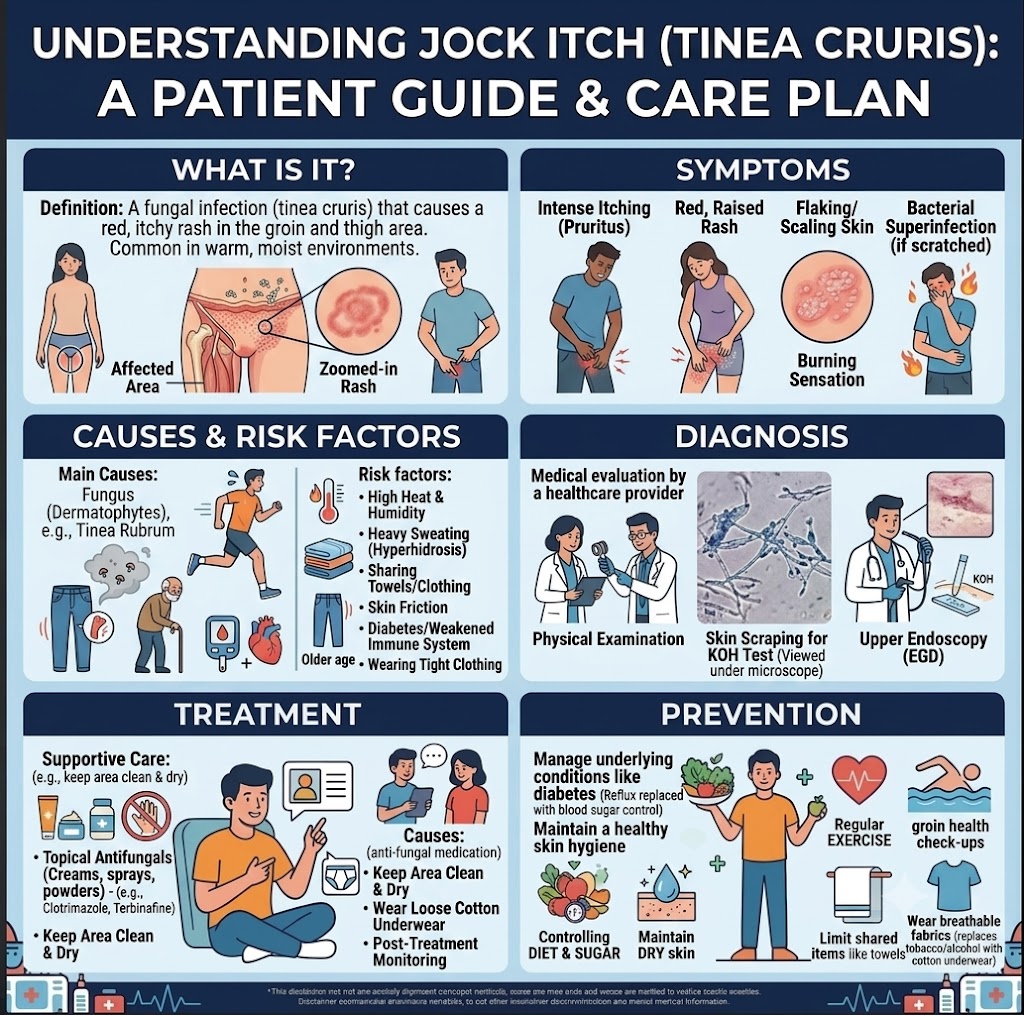
Jock itch, medically known as tinea cruris, is a common fungal infection affecting the skin. It typically causes an itchy rash in warm, moist body areas, most commonly around the groin and inner thighs. The rash often has a distinctive ring-like shape. While common in athletes, hence its name, it can affect anyone who sweats a lot. This condition ranges from mild to severe and usually resolves within 1 to 3 weeks with over-the-counter antifungal treatments and proper self-care.
Understanding the Condition
Jock Itch: Understanding and Managing a Common Fungal Skin Infection
Understanding the Condition
Common Symptoms
Persistent Itch: An often intense and bothersome itching sensation in the affected area.
Spreading Rash: The rash typically begins in the crease of the groin and can extend down the upper thighs and buttocks.
Ring-Shaped Appearance: The rash may appear as a full or partial ring, often with a clearer area in its center as it spreads outwards.
Blistered Border: Small, raised blisters or bumps might be present along the edges of the rash.
Scaly Skin: The affected skin can look flaky, peeling, or scaly.
Varied Rash Color: The color of the rash can differ based on your skin tone, appearing red, brown, purple, or gray.
Before your appointment, gather the following information:* **Detailed Symptoms:** Note when your symptoms started, how they've changed, and any factors that seem to improve or worsen them.* **Medication List:** Compile a list of all prescription and over-the-counter medications, vitamins, and supplements you are currently taking.* **Previous Treatments:** Document any self-care methods or non-prescription creams you've tried and their effectiveness.* **Medical History:** Be prepared to discuss any other medical conditions you have.* **Questions:** Write down any questions you have for your doctor to ensure all your concerns are addressed during the visit.
Book a doctor visit near me
Topical Antifungal Medications: These are creams, lotions, powders, or sprays that are applied directly to the skin. They work by stopping the growth of the fungus causing the infection. (Duration: Typically applied once or twice daily for 1 to 3 weeks, or as directed by your doctor. It's important to complete the full course of treatment, even if symptoms improve sooner, to ensure the infection is fully cleared and to help prevent recurrence.)
Observe for Recurrence: Be vigilant for any return of symptoms, especially if you are prone to jock itch. Fungal infections can sometimes recur if conditions are favorable.
Prompt Re-treatment: If jock itch symptoms reappear, start self-care with over-the-counter antifungal products promptly. If symptoms don't improve quickly or worsen, seek medical advice.
Consultation Guide
Jock itch, medically known as tinea cruris, is a common fungal infection affecting the skin. It typically causes an itchy rash in warm, moist body areas, most commonly around the groin and inner thighs. The rash often has a distinctive ring-like shape. While common in athletes, hence its name, it can affect anyone who sweats a lot. This condition ranges from mild to severe and usually resolves within 1 to 3 weeks with over-the-counter antifungal treatments and proper self-care.
Maintain Dryness: Ensure your groin and inner thigh areas are always clean and completely dry. Pat the skin thoroughly dry with a clean towel after showering, swimming, or engaging in activities that cause sweating. Drying your feet last can prevent spreading any existing foot fungus to the groin.
Optimal Clothing Choices: Wear loose-fitting, breathable underwear (such as cotton) and outer clothing to reduce moisture and friction. Change clothes, especially underwear, daily or more often if you sweat heavily. Wash workout clothes after each use.
Prompt Showering: Shower immediately after strenuous exercise or activities that cause excessive sweating to remove moisture and fungal spores from the skin.
Foot Hygiene: If you have athlete's foot, treat it promptly to prevent the fungus from spreading to your groin. Wear waterproof sandals or flip-flops in public showers, locker rooms, and around public pools to protect your feet from fungal exposure.
Avoid Sharing Personal Items: To prevent the transmission of fungi, do not share towels, clothing, or other personal hygiene items with others.
Regular Laundry Practices: Regularly wash workout clothes, underwear, and towels. Using hot water, if appropriate for the fabric, can help kill fungal spores.
Diagnostic Procedures
You can typically start by consulting your primary care physician (PCP). If the condition is persistent, severe, or difficult to diagnose, your PCP may refer you to a dermatologist, who is a medical doctor specializing in skin conditions.
Preparations Before Your Visit
A healthcare provider will visually inspect the rash. Jock itch often has a distinctive appearance, allowing for a diagnosis based on this visual assessment alone.
What to Expect
Your doctor will ask you to expose the affected area for a careful visual inspection. This is usually a quick and painless procedure.
Skin Scraping (Potassium Hydroxide (KOH) Preparation)
If the diagnosis is not clear from the physical exam, or if the rash is not responding to initial treatments, your doctor may take a small sample of skin from the affected area. This sample is then treated with a special solution (potassium hydroxide) that dissolves skin cells but leaves fungal elements intact, making them visible under a microscope.
What to Expect
The doctor will gently scrape a small amount of skin from the edge of the rash using a sterile scalpel blade or the edge of a glass slide. This procedure is generally painless, though you might feel a slight scratching sensation. The sample is then prepared and viewed under a microscope, sometimes while you wait, or sent to a lab for more detailed analysis.
Treatment Options
Warning Signs for Medical Attention: Seek medical care if the rash becomes painful, if you develop a fever, or if the rash hasn't improved after a week of self-care with non-prescription antifungal products. Also, consult a doctor if the rash hasn't fully cleared after three weeks of treatment.
Consultation Guide
Which Specialist to Meet
Medications
Oral Antifungal Medications: For more severe, widespread, or persistent cases that do not respond to topical treatments, your doctor might prescribe an antifungal medication to be taken by mouth. These medications work throughout the body to eliminate the fungal infection. (Duration: Varies depending on the specific medication and the severity of the infection, usually ranging from 1 to 4 weeks, with follow-up as advised by your doctor. Your doctor will monitor for any potential side effects.)
Prevention & Long-Term Wellbeing
Home Care and Lifestyle Changes
Keep Skin Dry: Thoroughly dry your groin area and inner thighs after showering, bathing, or sweating. Use a clean towel and pat gently. Dry your feet last to avoid spreading potential fungal infections from your feet to the groin. (Duration: Continuous practice as part of daily hygiene.)
Wear Clean, Breathable Clothing: Change underwear daily, or more often if you sweat heavily. Opt for cotton or other moisture-wicking fabrics that allow skin to breathe and stay drier. Wash workout clothes after each use. (Duration: Continuous practice.)
Choose Loose-Fitting Clothes: Select underwear, athletic supporters, and sports uniforms that fit well and are not too tight. Loose-fitting clothing, such as boxer shorts, can reduce chafing and moisture retention compared to briefs or tight-fitting garments. (Duration: Continuous practice.)
Avoid Sharing Personal Items: Do not share clothing, towels, or other personal items with others, and avoid borrowing such items to prevent the spread of fungi. (Duration: Continuous practice.)
Prevention
Continuous Hygiene Practices: Continue with good hygiene and prevention strategies even after the initial infection has cleared to minimize the risk of recurrence.
Immune System Health: If you have a weakened immune system or other underlying health conditions that increase your risk, discuss long-term prevention strategies and monitoring with your doctor.
Tags & Topics
Notice an error or need an update?
Help us keep medical information accurate. Report incorrect info or suggest an edit.


