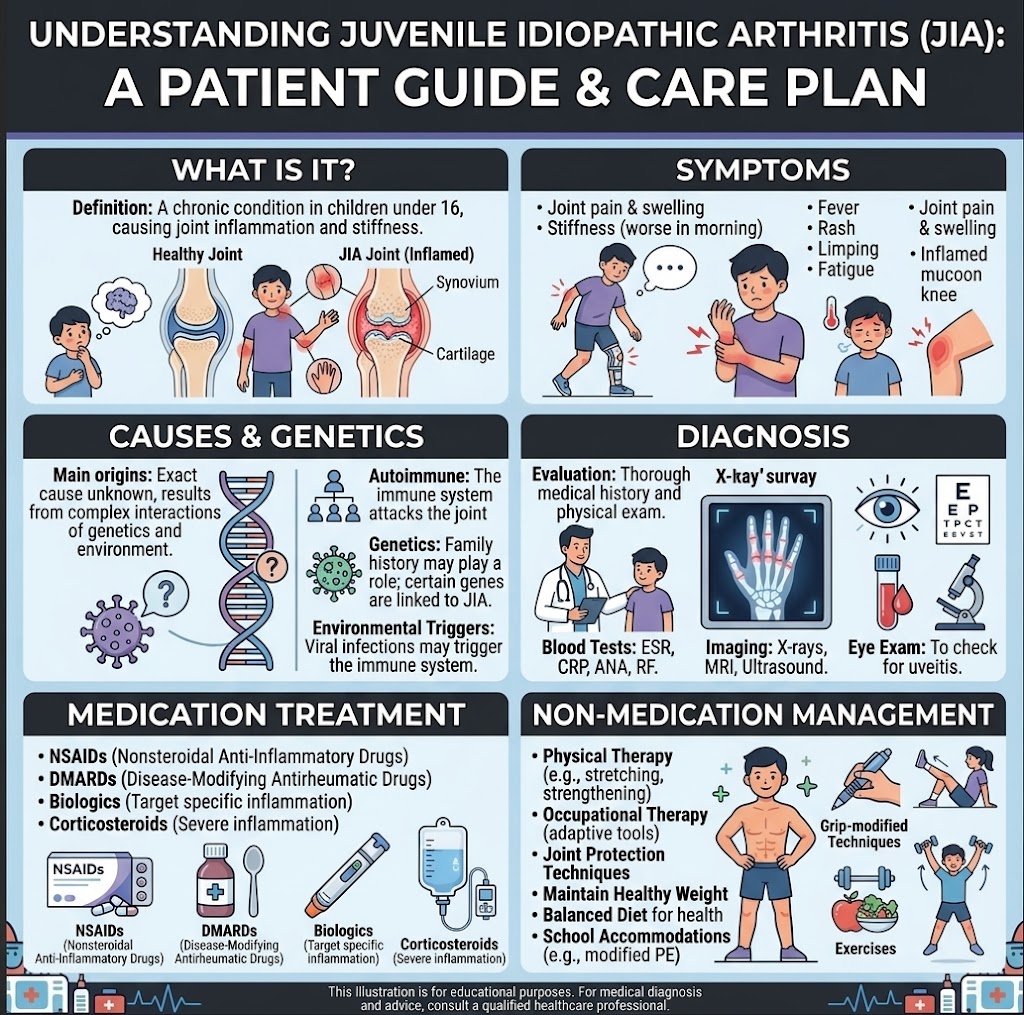
Juvenile Idiopathic Arthritis (JIA) is the most common form of arthritis affecting children under 16. It occurs when the body's immune system mistakenly attacks its own joints and tissues, leading to persistent pain, swelling, and stiffness. While some children experience symptoms for only a few months, others live with them for many years. Without proper management, JIA can cause serious complications such as growth problems, permanent joint damage, and eye inflammation. Treatment focuses on controlling symptoms, improving physical function, and preventing long-term damage.
Understanding the Condition
Juvenile Idiopathic Arthritis: A Guide for Parents
Understanding the Condition
Juvenile Idiopathic Arthritis (JIA) is the most common form of arthritis affecting children under 16. It occurs when the body's immune system mistakenly attacks its own joints and tissues, leading to persistent pain, swelling, and stiffness. While some children experience symptoms for only a few months, others live with them for many years. Without proper management, JIA can cause serious complications such as growth problems, permanent joint damage, and eye inflammation. Treatment focuses on controlling symptoms, improving physical function, and preventing long-term damage.
Common Symptoms
Joint Pain and Stiffness: Your child might not complain directly about pain, but you may notice them limping, especially first thing in the morning or after naps. They might also appear clumsier than usual, indicating stiffness in their joints that makes movement difficult.
Joint Swelling: Joints may look swollen or larger than usual. This swelling is often first noticed in larger joints, such as the knee, making it visibly puffy.
Systemic Signs (in some types): Some forms of JIA can cause high fever, swollen lymph nodes (glands), or a rash on the body, particularly on the trunk. These symptoms tend to worsen in the evenings and suggest the immune system is highly active throughout the body.
Variable Impact: JIA can affect a single joint or multiple joints. There are several subtypes (like systemic, oligoarticular, and polyarticular), which are distinguished by the number of affected joints and the presence of fever or rash. Symptoms can fluctuate, with periods of heightened activity (flare-ups) and times when symptoms are minimal.
Consultation Guide
Which Specialist to Meet
If your child has joint pain, swelling, or stiffness lasting more than a week, especially with a fever, consult your pediatrician promptly. They may refer you to a pediatric rheumatologist, a doctor specializing in childhood arthritis. An ophthalmologist (eye doctor) will also be crucial for regular eye exams, as JIA can cause eye inflammation without noticeable symptoms.
Preparations Before Your Visit
Before the visit, prepare a detailed list of your child's symptoms: when they started, how often they occur, what makes them better or worse, and any other changes in your child's health or behavior. Bring a complete medical history of your child and your family, along with a list of all current medications, including over-the-counter drugs and supplements.
Book a doctor visit near me
Anti-inflammatory Drugs: These medications help reduce pain and inflammation in the joints. (Duration: Used as needed for symptom control, or regularly for ongoing management.)
Heat and Cold Therapy: Applying warm packs or baths can help ease stiff joints, while cold packs can reduce swelling and pain, especially during flare-ups. (Duration: As needed for symptom relief.)
Regular, Gentle Exercise: Under guidance from a physical therapist or doctor, engaging in appropriate, low-impact exercises helps maintain joint flexibility and muscle strength without overstressing joints. (Duration: Daily or several times a week, ongoing.)
Adequate Rest: Ensuring your child gets enough sleep and rest periods throughout the day can help manage fatigue and reduce strain on inflamed joints. (Duration: Ongoing, as part of daily routine.)
Consultation Guide
This blood test measures the level of C-reactive protein (CRP), a substance produced by the liver that increases when there's inflammation in the body. A high-sensitivity (hs-CRP) test can detect even smaller increases. While it indicates the presence of inflammation, it doesn't specify its cause.
An X-ray is a fast and painless imaging test that uses radiation to create pictures of structures inside the body, particularly bones. It helps doctors identify joint damage, bone erosion, or growth abnormalities caused by JIA, as dense materials like bones appear white.
Joint Replacement Surgery: In rare and severe cases where joint damage is extensive and causes significant disability, surgery to replace a severely damaged joint may be considered to restore function. (Duration: A single procedure, followed by rehabilitation.)
Home Remedies & Support
Diagnostic Procedures
Antinuclear Antibody (ANA) Test
This blood test checks for antinuclear antibodies, which are proteins your immune system sometimes mistakenly produces to attack your body's own cells. A positive result suggests an autoimmune reaction and can guide further specific antibody tests, but it doesn't confirm JIA on its own.
What to Expect
A healthcare professional will take a small blood sample from a vein in your child's arm. Fasting might be needed if other blood tests are ordered simultaneously; your doctor will give specific instructions. It's important to inform your doctor about any medications your child is taking, as some can affect test accuracy. The procedure is quick, and your child can typically return to normal activities immediately afterward.
C-reactive Protein (CRP) Test
What to Expect
A blood sample will be drawn from your child's arm. Generally, no special preparation is required for this test. The process is quick, and your child can usually resume their regular activities right away.
Rheumatoid Factor Test
This blood test checks for proteins called rheumatoid factors, which are produced by the immune system and can target healthy tissues. High levels are often linked to autoimmune diseases like arthritis, but some healthy individuals may test positive, and some people with JIA may test negative.
What to Expect
A small blood sample will be taken from a vein in your child's arm. The procedure usually takes only a few minutes. Your child might experience slight tenderness in the arm for a few hours afterward but can typically return to most normal activities.
Sed Rate (Erythrocyte Sedimentation Rate or ESR)
The sed rate is a blood test that measures how quickly red blood cells settle to the bottom of a test tube. When there's inflammation in the body, red blood cells tend to clump together, making them heavier and causing them to fall faster. A higher sed rate indicates greater inflammatory activity, helping to diagnose or monitor inflammatory conditions alongside other tests.
What to Expect
A blood sample will be taken from your child's arm. There are no specific fasting or other preparations usually needed for this test. The process is quick, and your child can typically go back to their usual activities afterward.
What to Expect
Your child will be asked to lie down on a table or stand, and a technician will position the affected body part. It's important for your child to remain still for a few moments while the X-ray is taken. The procedure is quick and painless. Your child can resume normal activities immediately.
Corticosteroids: Strong anti-inflammatory medications that can quickly reduce severe inflammation and pain. Due to potential side effects like affecting growth, they are usually used for the shortest possible duration. (Duration: Short-term use during flare-ups or until other medications take effect.)
Physical Therapy: A physical therapist helps your child maintain joint flexibility, strength, and range of motion through specific exercises and activities. (Duration: Regular sessions for months to years, depending on the child's needs and disease activity.)
Occupational Therapy: An occupational therapist helps your child adapt to daily activities like dressing, eating, and writing, especially if joint issues make these tasks challenging. They can recommend tools or strategies to make daily life easier. (Duration: As needed, often for several weeks or months to learn adaptive strategies.)
Treatment Options
Medications
Disease-Modifying Anti-Rheumatic Drugs (DMARDs): These medications work by slowing down the disease process and protecting joints from damage over time. (Duration: Typically prescribed for long-term use, often for many years.)
Biologic Therapies: A newer class of powerful medications that target specific parts of the immune system to reduce inflammation. They are often used when standard DMARDs are not effective enough. (Duration: Ongoing, often long-term treatment, administered via injection or infusion.)
Joint Injections: Medication, often a corticosteroid, is injected directly into an affected joint to reduce inflammation and pain quickly in that specific area. (Duration: As needed for specific inflamed joints, typically a few times a year for a given joint.)
Surgical Procedures
Regular Medical Check-ups: Consistent visits with a pediatric rheumatologist are essential to monitor disease activity, assess treatment effectiveness, adjust medications as needed, and screen for potential complications.
Ophthalmologist Visits: Regular eye exams by an ophthalmologist are crucial, as eye inflammation can occur silently in some JIA types and, if untreated, can lead to serious vision problems like cataracts, glaucoma, or even blindness.
Growth Monitoring: JIA itself and some medications can affect a child's growth and bone development. Regular monitoring by the medical team helps address any growth concerns promptly.
Prevention & Long-Term Wellbeing
Long-Term Monitoring and Management
Lifestyle and Support
Healthy Lifestyle Choices: Encourage a balanced, nutritious diet and maintain a healthy weight to reduce stress on joints. Ensure adequate rest and appropriate physical activity to support overall health and well-being.
Emotional Support: Living with a chronic condition can be challenging for children and their families. Providing emotional support, connecting with support groups, and seeking counseling can help manage the psychological impact.
Tags & Topics
Notice an error or need an update?
Help us keep medical information accurate. Report incorrect info or suggest an edit.


