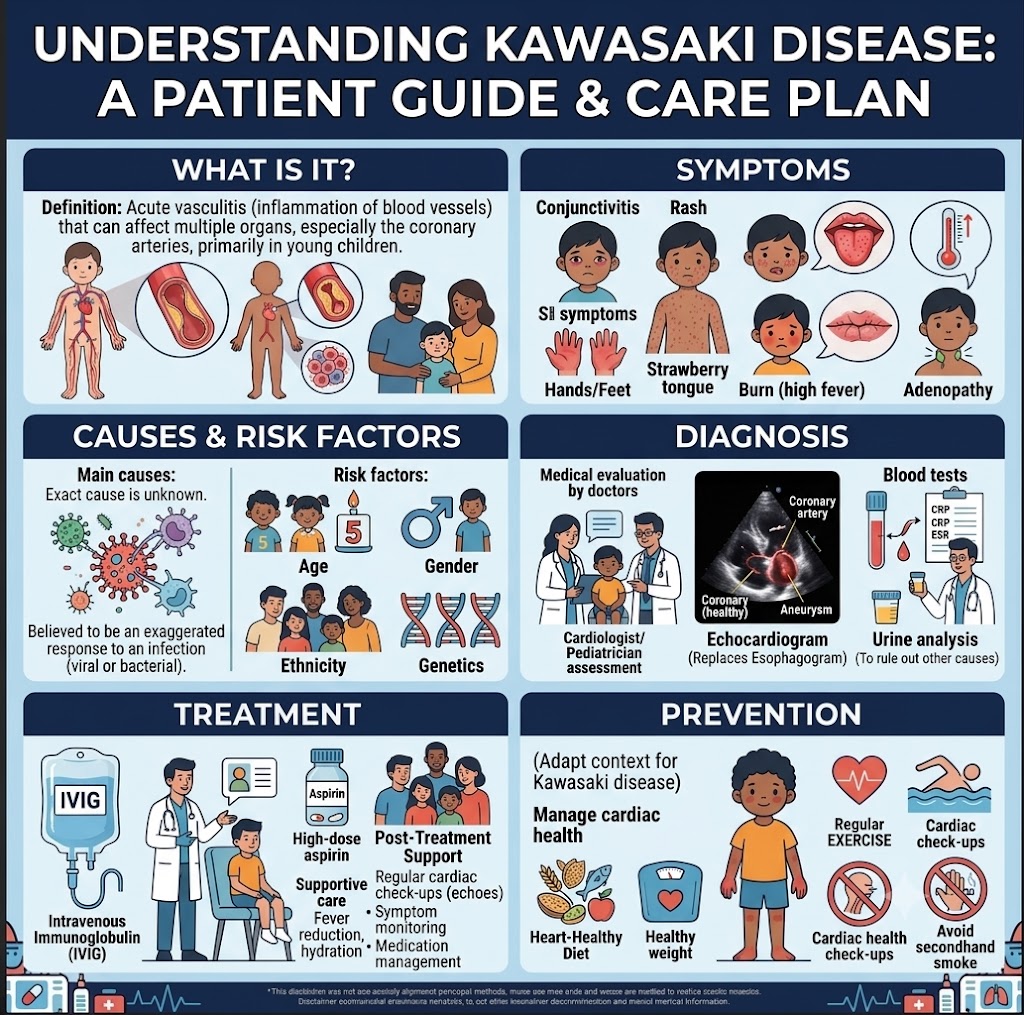
Kawasaki disease is a serious condition primarily affecting young children, typically under five years old. It causes inflammation, or swelling, in the walls of small to medium-sized blood vessels throughout the body. Most notably, it often affects the arteries that supply blood to the heart. This condition is not contagious, and its exact cause is unknown, though experts believe it may be triggered by an infection or environmental factors in children with certain genetic predispositions. Early recognition and treatment are crucial to prevent lasting health problems, especially those affecting the heart.
Understanding the Condition
Kawasaki Disease: Understanding a Childhood Illness
Understanding the Condition
Common Symptoms
Persistent High Fever: A fever higher than 102.2 degrees Fahrenheit (39 degrees Celsius) that lasts for five or more days.
Skin Rash: A rash that can appear on the main part of the body or in the genital area.
Swollen Neck Gland: An enlarged lymph node, often noticeable as a swollen bump, usually on one side of the neck.
Red, Dry, Cracked Lips and Swollen Tongue: Lips that appear very red, dry, and cracked, along with a tongue that looks unusually red and swollen, sometimes described as 'strawberry' tongue.
Red Eyes: Eyes that are very red and irritated, but without any thick discharge.
Swollen and Peeling Hands/Feet: Red and swollen skin on the palms of the hands and the soles of the feet. Later, the skin on the fingers and toes may begin to peel.
Other Possible Symptoms: Children might also experience belly pain or joint pain. It's important to remember that symptoms might not appear all at once. Even if a symptom goes away, it's vital to inform your child's healthcare professional.
Consultation Guide
Which Specialist to Meet
If you suspect your child has Kawasaki disease, you should first consult with your primary care pediatrician. They may then refer you to a pediatric cardiologist, a heart specialist for children, or an infectious disease specialist if further evaluation and management of potential heart complications are needed.
Preparations Before Your Visit
Before your visit, make a detailed list of all your child's symptoms, including when they started and how long they lasted. Note any fever readings and bring your child's medical history and any medications they are currently taking. Be prepared to discuss recent illnesses, travel, and any family medical history.
Book a doctor visit near me
Consultation Guide
Kawasaki disease is a serious condition primarily affecting young children, typically under five years old. It causes inflammation, or swelling, in the walls of small to medium-sized blood vessels throughout the body. Most notably, it often affects the arteries that supply blood to the heart. This condition is not contagious, and its exact cause is unknown, though experts believe it may be triggered by an infection or environmental factors in children with certain genetic predispositions. Early recognition and treatment are crucial to prevent lasting health problems, especially those affecting the heart.
Diagnostic Procedures
Complete Blood Count (CBC)
A routine blood test that measures the different types of cells in the blood, including red blood cells, white blood cells, and platelets. This test can reveal signs of inflammation or infection, which can be indicators of various health conditions.
What to Expect
During a CBC, a healthcare professional will draw a small sample of blood, usually from a vein in your child's arm. The area will be cleaned, and a thin needle will be inserted to collect the blood into a tube. Your child might feel a brief pinch or sting. The process is quick, typically lasting only a few minutes.
An echocardiogram is a non-invasive test that uses sound waves to create moving pictures of the heart. It provides detailed images of the heart's structure, chambers, valves, and how blood flows through them. This helps doctors detect any swelling of the blood vessels, particularly the heart arteries, and assess heart muscle function.
What to Expect
For an echocardiogram, your child will lie on an exam table. A healthcare professional will apply a special gel to your child's chest and then move a small handheld device, called a transducer, over the area. The transducer sends out sound waves and records the echoes, which are translated into images on a screen. The procedure is painless and usually takes about 30 to 60 minutes. Sensors may be attached to the chest or legs to monitor heart rhythm.
Electrocardiogram (ECG or EKG)
An ECG is a quick and painless test that records the electrical activity of the heart. It shows how fast and regularly the heart is beating and can detect any abnormalities in the heart's rhythm or damage to the heart muscle. This helps in identifying potential heart complications related to Kawasaki disease.
What to Expect
During an ECG, small, sticky patches called electrodes will be placed on your child's chest and sometimes on their arms or legs. These patches are connected by wires to an ECG machine, which records the electrical signals. Your child will need to lie still for a few minutes while the recording is made. The test is completely painless, and the electrodes are easily removed afterward.
No Known Prevention: Currently, there is no known way to prevent Kawasaki disease. The focus is on early diagnosis and timely treatment to minimize complications.
Cardiac Follow-up for All Children: Even if no heart complications are initially found, all children with Kawasaki disease should have follow-up visits with a pediatric cardiologist. These check-ups are important for monitoring the heart's health over time.
Specialized Care for Heart Complications: Children who develop heart artery problems will require ongoing, specialized care from a pediatric cardiologist, potentially for many years or even into adulthood, to manage and monitor their condition.
Treatment Options
Medications
Intravenous Immunoglobulin (IVIG): A critical treatment involving an infusion of antibodies. This helps reduce inflammation in the blood vessels and lowers the risk of heart complications. (Duration: Typically administered as a single infusion over 10-12 hours, ideally within 10 days of fever onset.)
Aspirin Therapy: Initially, a high dose is used to reduce fever and inflammation, followed by a low dose to prevent blood clots, especially if heart artery issues are present. (Duration: High-dose aspirin is usually given until the fever resolves (about 2-3 days). Low-dose aspirin may be continued for 6-8 weeks or much longer if heart complications are detected.)
Monitoring and Follow-up
Regular Cardiac Monitoring: Ongoing check-ups with a pediatric cardiologist are essential to monitor for any developing heart problems, even after initial treatment. (Duration: As advised)
Home Remedies & Comfort Measures
Fever Management: Use cool compresses, light clothing, and ensure adequate fluid intake (if advised by a doctor) to help manage fever and keep your child comfortable. (Duration: As advised)
Skin Care: For peeling skin, keep the area clean and moisturized. Consult your doctor for appropriate creams or lotions. (Duration: As advised)
Prevention & Long-Term Wellbeing
Prevention
Heart-Healthy Habits: Encourage a balanced diet rich in fruits, vegetables, and whole grains, along with regular physical activity, to support overall heart health, especially for children who have experienced Kawasaki disease.
Avoidance of Smoking: Protect children from exposure to tobacco smoke, as it can negatively impact cardiovascular health.
Tags & Topics
Notice an error or need an update?
Help us keep medical information accurate. Report incorrect info or suggest an edit.


