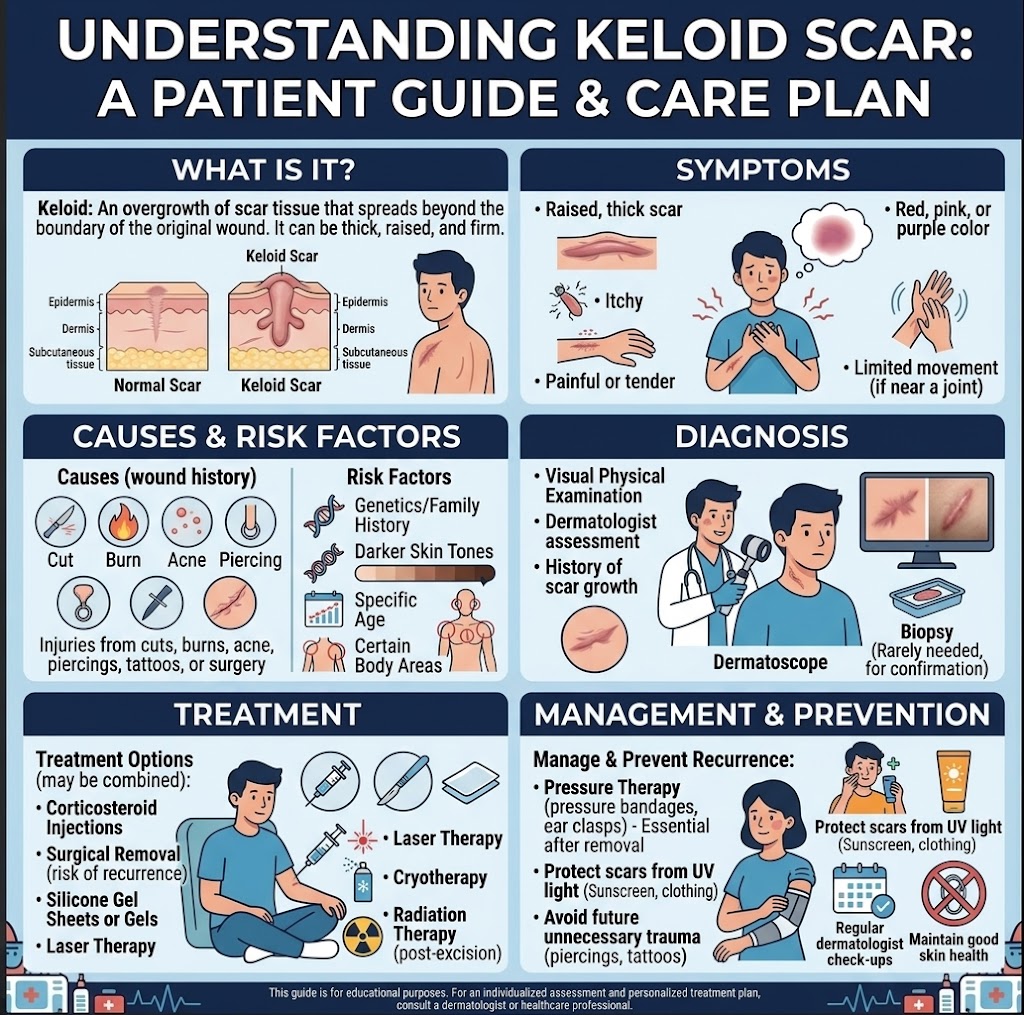
A keloid scar is a raised, thickened area of skin that forms after a skin injury heals. Unlike typical scars, keloids grow beyond the original wound boundaries. They are commonly found on earlobes, shoulders, cheeks, and the chest, but can appear anywhere skin is damaged. While not harmful to physical health, keloids can cause cosmetic concerns or emotional distress. Early treatment and preventive measures are crucial, though keloids can sometimes reappear even after treatment.
Understanding the Condition
Common Symptoms
Before your appointment, note when and where your keloid(s) appeared, any previous treatments, and your personal or family history of keloids. Be ready to discuss your general health, current medications, and any concerns you have about the keloid's appearance or symptoms. Prepare a list of questions for your doctor.
Book a doctor visit near me
Topical Scar Treatments: Prescription gels or creams that can help improve scar appearance and reduce symptoms like itching. (Duration: Ongoing daily use as directed by a doctor.)
Cryotherapy: Freezing the keloid with liquid nitrogen to destroy the excess tissue and reduce its size. (Duration: Multiple sessions (e.g., every 2-3 weeks) over several months.)
Consultation Guide
A keloid scar is a raised, thickened area of skin that forms after a skin injury heals. Unlike typical scars, keloids grow beyond the original wound boundaries. They are commonly found on earlobes, shoulders, cheeks, and the chest, but can appear anywhere skin is damaged. While not harmful to physical health, keloids can cause cosmetic concerns or emotional distress. Early treatment and preventive measures are crucial, though keloids can sometimes reappear even after treatment.
Radiation Therapy (Adjunctive): This treatment uses high-energy beams, most often X-rays, to target and inhibit the growth of cells that cause keloids. In the context of keloids, it is typically used immediately after surgical removal to prevent recurrence. External beam radiation is the common type, where a large machine precisely aims energy beams from outside your body at the treated area. The goal is to damage the genetic material of rapidly dividing cells (like those causing keloids) more severely than healthy surrounding tissue, which can repair itself more easily. (Duration: A short course, typically given daily for a few days to a few weeks immediately following surgery.)
Emotional Support: Living with keloids can sometimes affect self-esteem or cause emotional distress. Consider seeking support from counseling or support groups if needed.
Sun Protection: Protect existing keloids from sun exposure, as sunlight can alter their color or make them more noticeable. Use sunscreen or protective clothing when outdoors.
Diagnostic Procedures
A skin biopsy is a procedure where a small sample of skin cells or tissue is removed from your body. This sample is then examined under a microscope in a laboratory to confirm the diagnosis of a keloid, rule out other skin conditions, or identify any abnormal cells.
What to Expect
Before the procedure, the area to be biopsied will be cleaned, and a local anesthetic will be injected to numb the skin; you should only feel a slight sting, not pain, during the sample collection. During a **shave biopsy**, a sharp razor or scalpel is used to shave off only the top layers of the skin. Stitches are usually not required, and the wound often looks like a scrape. During a **punch biopsy**, a special circular tool is used to remove a small, deeper core of skin tissue. Depending on the size of the removed sample, one or more stitches may be needed to close the wound. During an **excisional biopsy**, a scalpel is used to cut out the entire keloid or a larger area of affected skin, along with a small margin of healthy skin around it. Stitches are always required to close the wound after this type of biopsy. After the procedure, the biopsy site will be covered with a bandage. You might experience mild soreness, bruising, or bleeding, which can be managed with proper wound care as instructed by your doctor. Avoid strenuous activities that might stretch the skin around the biopsy site. Lab results typically take several days to a few weeks.
Treatment Options
Keloid Scars: Understanding, Treatment, and Prevention
Understanding the Condition
Appearance: A thick, often irregular scar that extends beyond the original wound area. It differs from a hypertrophic scar, which stays within the original wound boundaries and can fade over time without treatment.
Texture and Feel: The skin may appear shiny, hairless, lumpy, and feel firm, rubbery, or sometimes soft.
Color: Colors can range from reddish to brown or purplish, depending on your natural skin tone.
Size: Size varies greatly, influenced by the initial injury and how long the keloid continues to grow.
Formation Time: Keloid scars can emerge months to years after the initial skin injury.
Consultation Guide
Which Specialist to Meet
Begin by consulting your general practitioner. For an existing keloid or if you're considering treatment, a skin specialist (dermatologist) is the most appropriate expert. If surgical removal or radiation therapy is discussed, you might also consult a surgeon or a radiation oncologist.
Preparations Before Your Visit
Medications
Corticosteroid Injections: Direct injections into the keloid to reduce inflammation, slow cell growth, and shrink the scar. (Duration: Typically given every 3-4 weeks for several months, depending on the keloid's response.)
Laser Therapy: Using focused light to reduce redness and flatten the keloid, often combined with other treatments. (Duration: Several sessions, typically spaced weeks apart.)
Surgical Removal: Cutting out the keloid. This often carries a high risk of the keloid returning larger if not combined with other therapies. (Duration: A single procedure, often followed by adjunctive treatments like corticosteroid injections or radiation therapy to reduce recurrence risk.)
Avoid Unnecessary Skin Injury: If you are prone to keloids, consider avoiding elective procedures like body piercings, tattoos, or non-essential surgeries. Even minor injuries, such as ingrown hairs or scratches, can trigger keloid formation.
Inform Medical Professionals: Always inform your doctor or surgeon about your history of keloids before any planned surgery. They can employ techniques during the procedure and recommend meticulous post-operative care strategies to minimize the risk of keloid formation at the surgical site.
Self-Monitoring: Regularly examine your skin for any new or growing scars, especially in areas prone to keloids. Keloids are not contagious or cancerous.
Early Intervention: If you notice a new keloid forming or an existing one changing, consult a dermatologist promptly. Early treatment can often be more effective in managing growth and appearance.
Prevention & Long-Term Wellbeing
Home Remedies & Prevention
Pressure Therapy: Applying sustained pressure to a healing wound using special dressings, clips, or earrings. (Duration: Continuous application for several months (6-18 months, especially for earlobes post-piercing) can help prevent keloid growth or flatten new ones.)
Silicone Gels/Sheets: Applying silicone gel or sheets directly to the scar to help flatten it and improve its appearance. (Duration: Daily use for at least 3-6 months.)
Prevention
Diligent Wound Care: After any skin injury (cuts, burns, acne lesions), keep the wound clean and moist with mild soap and water. Apply a thin layer of a plain healing ointment (like petroleum jelly) and cover it. Your doctor might recommend a pressure dressing or silicone gel pad during healing. For adults, these preventive steps should continue for six months after injury, and for children, up to 18 months.
Post-Piercing Care: If you get ear piercings, especially on earlobes, applying pressure earrings immediately after piercing can significantly help prevent keloids.
Tags & Topics
Notice an error or need an update?
Help us keep medical information accurate. Report incorrect info or suggest an edit.


