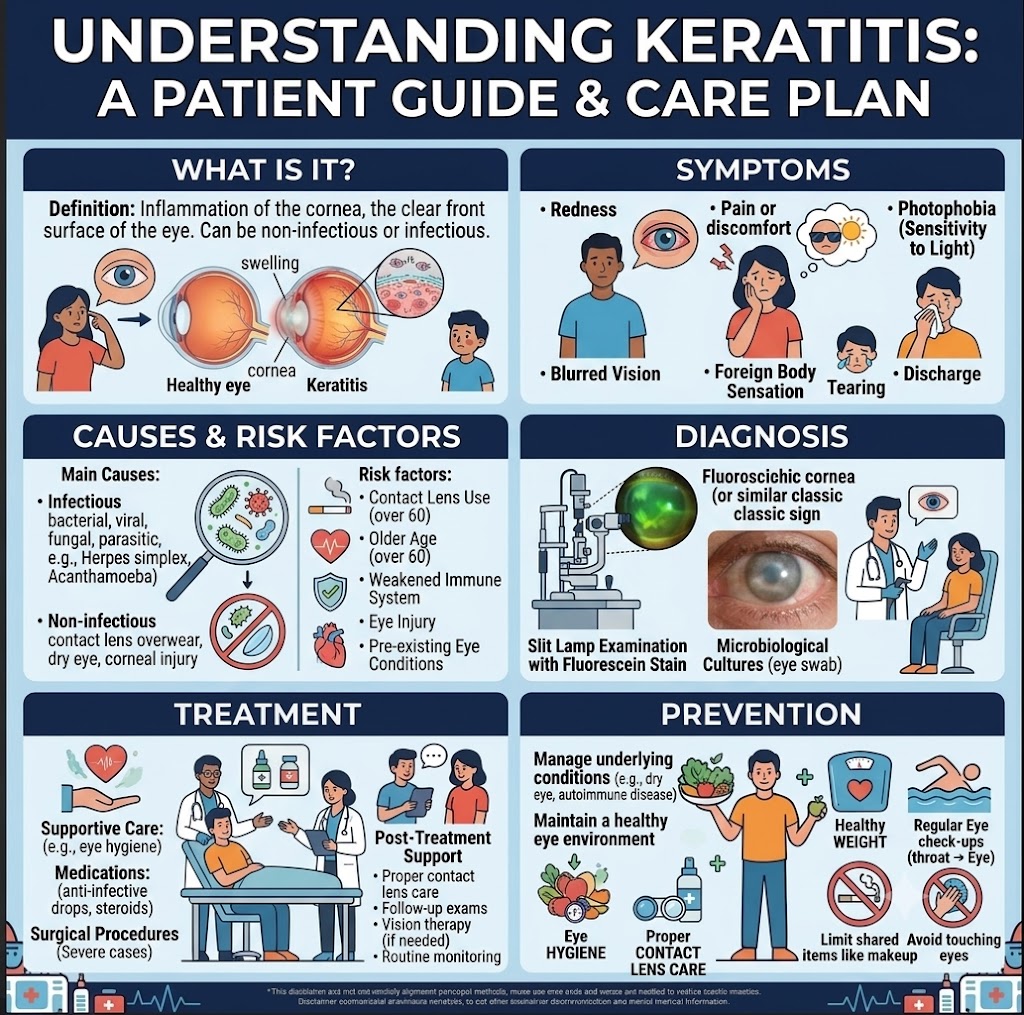
Keratitis is an inflammation of the cornea, the clear, dome-shaped front surface of your eye that covers the pupil and iris. It's like the eye's protective window. This condition can stem from various causes, including minor eye injuries like wearing contact lenses too long or getting something in your eye (non-infectious keratitis). More seriously, it can be caused by infections from bacteria, viruses, fungi, or parasites (infectious keratitis). Factors increasing risk include improper contact lens use, a weakened immune system, previous eye injuries, or the use of certain corticosteroid eye drops. Prompt medical attention is crucial, as mild to moderate cases can often be treated effectively without permanent vision loss. However, if left untreated or if the infection is severe, keratitis can lead to serious complications such as chronic inflammation, corneal scarring, painful open sores on the cornea (ulcers), and potentially temporary or permanent vision reduction, even blindness.
Understanding the Condition
Keratitis: Understanding and Protecting Your Vision
Understanding the Condition
Common Symptoms
Eye Redness: Persistent redness in one or both eyes.
Excessive Tearing or Discharge: Increased tear production or a pus-like discharge from the eye.
Pain or Irritation: Discomfort or a painful sensation, making it difficult to open the eyelid.
Blurred Vision: Vision that appears hazy or unclear.
Decreased Vision: A noticeable reduction in the sharpness of your sight.
Light Sensitivity (Photophobia): Pain or discomfort in bright light.
Feeling of Something in the Eye: A gritty or foreign body sensation.
Consultation Guide
Which Specialist to Meet
Before your visit, be prepared to discuss your symptoms in detail, including when they started and any recent activities that might have caused them, such as contact lens use, swimming, or eye injury. Bring your contact lenses (if you wear them) and their case, and a list of any medications you are currently taking. Be ready to ask questions about your condition and treatment options.
Book a doctor visit near me
Pain Relief Medications: Over-the-counter pain relievers can help manage discomfort. In severe cases, your doctor may prescribe stronger pain medication. (Duration: Used as needed for symptom relief during the acute phase of the condition.)
Procedures and Therapies
Therapeutic Contact Lenses: Sometimes, a special contact lens is used as a bandage to protect the cornea, reduce pain, and promote healing, especially after injury or for certain corneal conditions. (Duration: Worn continuously for a few days to several weeks, changed or removed by the eye specialist.)
Prompt Symptom Recognition: Familiarize yourself with the symptoms of keratitis and seek immediate medical attention if they appear, as early intervention is key to preventing complications.
Consultation Guide
Keratitis is an inflammation of the cornea, the clear, dome-shaped front surface of your eye that covers the pupil and iris. It's like the eye's protective window. This condition can stem from various causes, including minor eye injuries like wearing contact lenses too long or getting something in your eye (non-infectious keratitis). More seriously, it can be caused by infections from bacteria, viruses, fungi, or parasites (infectious keratitis). Factors increasing risk include improper contact lens use, a weakened immune system, previous eye injuries, or the use of certain corticosteroid eye drops. Prompt medical attention is crucial, as mild to moderate cases can often be treated effectively without permanent vision loss. However, if left untreated or if the infection is severe, keratitis can lead to serious complications such as chronic inflammation, corneal scarring, painful open sores on the cornea (ulcers), and potentially temporary or permanent vision reduction, even blindness.
Antimicrobial Eye Drops: Depending on the cause, antibiotic, antiviral, or antifungal eye drops are prescribed to eliminate bacterial, viral, or fungal infections, respectively. They work by killing or stopping the growth of the harmful microorganisms. (Duration: Treatment typically ranges from several days to several weeks, depending on the severity and type of infection. It's crucial to complete the full course as prescribed.)
Corneal Transplant: In severe cases where keratitis has caused significant, permanent scarring or damage to the cornea, vision may be restored by surgically replacing the damaged cornea with a healthy donor cornea. (Duration: A single surgical procedure, followed by a long recovery period of several months to a year, with ongoing follow-up care.)
No Swimming or Showering with Contact Lenses: Water, especially from oceans, lakes, rivers, and hot tubs, can harbor microorganisms that can cause severe eye infections. Remove your contact lenses before swimming or showering.
Protect Your Eyes from Injury: Wear protective eyewear during activities that pose a risk of eye injury, such as sports, gardening, or working with tools or chemicals.
Diagnostic Procedures
An ophthalmologist, who is a medical doctor specializing in eye and vision care, is the appropriate specialist to diagnose and treat keratitis. If an infection is severe or complex, they may consult with an infectious disease specialist.
Preparations Before Your Visit
Comprehensive Eye Examination (Slit Lamp Examination)
The ophthalmologist will use a special microscope called a slit lamp to examine the front and inside of your eye. This allows for a magnified view of your cornea, iris, and other structures to identify signs of inflammation, injury, or infection.
What to Expect
You will sit comfortably with your chin on a rest and your forehead against a band. The doctor will shine a bright, narrow beam of light into your eye while looking through the microscope. This exam is painless and typically takes only a few minutes. You may be asked to look in different directions.
Fluorescein Stain Test
A small amount of a harmless, orange dye called fluorescein is applied to the surface of your eye. This dye adheres to any damaged or irregular areas on the cornea, making them glow under a blue light during the slit lamp exam, highlighting abrasions, ulcers, or inflammation.
What to Expect
The doctor will place a drop of the dye or touch a strip containing the dye to the corner of your eye. You might feel a slight, temporary stinging or watering. Your eyes will then be examined under a blue light with the slit lamp. The dye usually clears from your eye within a few minutes.
Corneal Culture and Scraping
What to Expect
After numbing your eye with anesthetic drops, the doctor will gently scrape a very small amount of tissue from the surface of your cornea using a sterile instrument. You may feel slight pressure but no pain. The procedure is quick, and the sample is then sent for microscopic examination and culture, which can take a few days for results.
Treatment Options
If an infection is suspected, especially if it's severe or unresponsive to initial treatment, the doctor may take a tiny sample of cells from your cornea. This sample is then sent to a lab to identify the specific type of bacteria, virus, fungus, or parasite causing the infection, which helps guide targeted treatment.
Medications
Oral Medications: In some severe cases of infectious keratitis, or for certain viral infections, oral antiviral or antifungal medications may be prescribed in addition to eye drops. (Duration: Duration varies based on the specific infection and its severity, often ranging from one to several weeks.)
Corticosteroid Eye Drops: For non-infectious keratitis, or in some cases of infectious keratitis once the primary infection is under control, these drops can reduce inflammation and discomfort. However, they must be used cautiously under strict medical supervision as they can worsen certain infections. (Duration: Typically used for a few days to a few weeks, with careful tapering as advised by your doctor.)
Corneal Debridement: For specific types of viral keratitis, the doctor may gently remove the infected superficial corneal cells to help the eye heal and improve the effectiveness of antiviral medications. (Duration: A one-time procedure, followed by medication and healing time.)
Surgical Procedures
Manage Underlying Health Conditions: If you have a weakened immune system due to illness or medication, be extra vigilant about eye health and consult your doctor about any concerns promptly.
Long-Term Wellbeing and Monitoring
Regular Eye Check-ups: Maintain routine comprehensive eye examinations, especially if you have a history of keratitis or wear contact lenses, to monitor eye health and detect any issues early.
Adherence to Treatment and Follow-up: Strictly follow your doctor's treatment plan and attend all follow-up appointments to ensure complete healing and monitor for any recurrence, particularly with viral forms of keratitis.
Prevention & Long-Term Wellbeing
Prevention
Strict Contact Lens Hygiene: Always wash, rinse, and thoroughly dry your hands before handling contact lenses. Use only sterile, fresh contact lens solutions specifically designed for your lens type. Never use saliva or tap water. Replace your lenses and lens case as recommended by your eye care provider (typically every 3-6 months for cases).
Avoid Over-Wearing Contact Lenses: Do not wear contact lenses longer than prescribed, and ideally, choose daily disposable lenses. Absolutely avoid sleeping in contact lenses unless specifically approved by your eye doctor for therapeutic reasons.
Tags & Topics
Notice an error or need an update?
Help us keep medical information accurate. Report incorrect info or suggest an edit.


